

Communicating Better Online As Couple and Friend
Elena stared at Devin’s reply: a single “k.”
Instant panic. Was Devin angry or just busy?
Later, Devin shrugged. “It meant OK. I was walking to class!”
Welcome to the reality of digital connection, where tiny messages carry major emotion. On-campus friendships and romances often live through text or DMs, but screens also blur tone and intent. The result? Misunderstandings that can snowball into text fights no one intended.
Why We Misread Each Other
Much of emotional meaning comes from tone and body language clues our devices can’t deliver. The American Psychological Association notes that about 70 percent of emotion in conversation arrives through nonverbal signals. Without them, people guess.
Cornell University’s Language and Emotion Lab which studies online interaction found that when feedback like eye contact is missing, we fill blanks with assumptions, often negative ones. Stress magnifies this bias, so “sure” can sound cold and delayed replies feel like rejection.
Our brains seek certainty, so we create stories faster than we clarify facts a setup for emotional error.
How Campus Life Adds Pressure
College schedules are fragmented; texts replace talks between classes or jobs. Group chats ping without pause, and pace breeds projection. The APA’s Stress in America 2023 report showed Gen Z to be both the most connected and the most communication-stressed generation.
The gap between send and receive becomes a breeding ground for insecurity. We’re always reachable but not always understood.
To protect mental space in these digital loops, grounding skills like those in Micro-Moments of Calm can help students pause before they assume.

Everyday Texting Traps
- Periods and Tone. A final period after “Sure.” may sound sharp to some readers. Intent is neutral; interpretation is not.
- Reply Delays. A busy schedule reads as disinterest when the receiver feels anxious.
- Emoji Differences. Same emoji, different meaning across phones confusion guaranteed.
- Brevity Bias. Short answers get read as cold because context is missing.
In short, texting is a low-context tool trying to carry high-context emotion.
Most Fights Aren’t About Texts
Research in the APA Journal of Applied Psychology shows that screen arguments often stem from emotional uncertainty rather than poor word choice. When someone feels unsure about affection or trust, a message’s ambiguity can ignite that fear.
Before over-analyzing typing bubbles, check in with your own stress level. The real issue may be security, not spelling.
Boundaries and self-knowledge developed through Defining Enough: Self-Compassion and Self-Image make self-regulation easier mid-conversation.
Better Ways to Communicate Through Screens
1. Start from Neutral
Assume friendly intent until context confirms otherwise. This mindset reduces stress and helps messages land more accurately.
2. Clarify Before You React
Try asking: “Hey, I might be reading that wrong did you mean it like that?”
Curiosity resets tone and avoids round two.
3. Add Warmth With Words
Tiny changes help: “I really appreciate that!” reads better than “That’s fine.”
Even a smiley face can signal sincerity; Cornell data shows expressive texts cut misreads by 40%.
4. Switch Mediums When It Matters
For apologies or serious topics, choose voice or video. Tone and timing restore empathy faster than texts alone (confirmed by APA findings on synchronous communication).
5. Slow Down Before Sending
Typing while distracted invites snapping or typos that sound curt. Give difficult messages your full focus, as you would face-to-face.
A Quick Recovery Story
Elena: “I thought your ‘k’ meant you were mad.”
Devin: “Nope just busy. Next time, emoji?”
Elena: “Deal.”
They laughed, and the conflict ended in connection a micro-example of repair that echoes advice from Couple Communication: Talk That Heals and Connects.
Creating Your Digital Safety Net
- Shared Language. Agree what texts or emojis mean. If “k” means “busy, not mad,” say so.
- Expectation Windows. Set normal reply times to avoid panic.
- Check Feelings Before Typing. If upset, pause. Calm texting beats angry correcting.
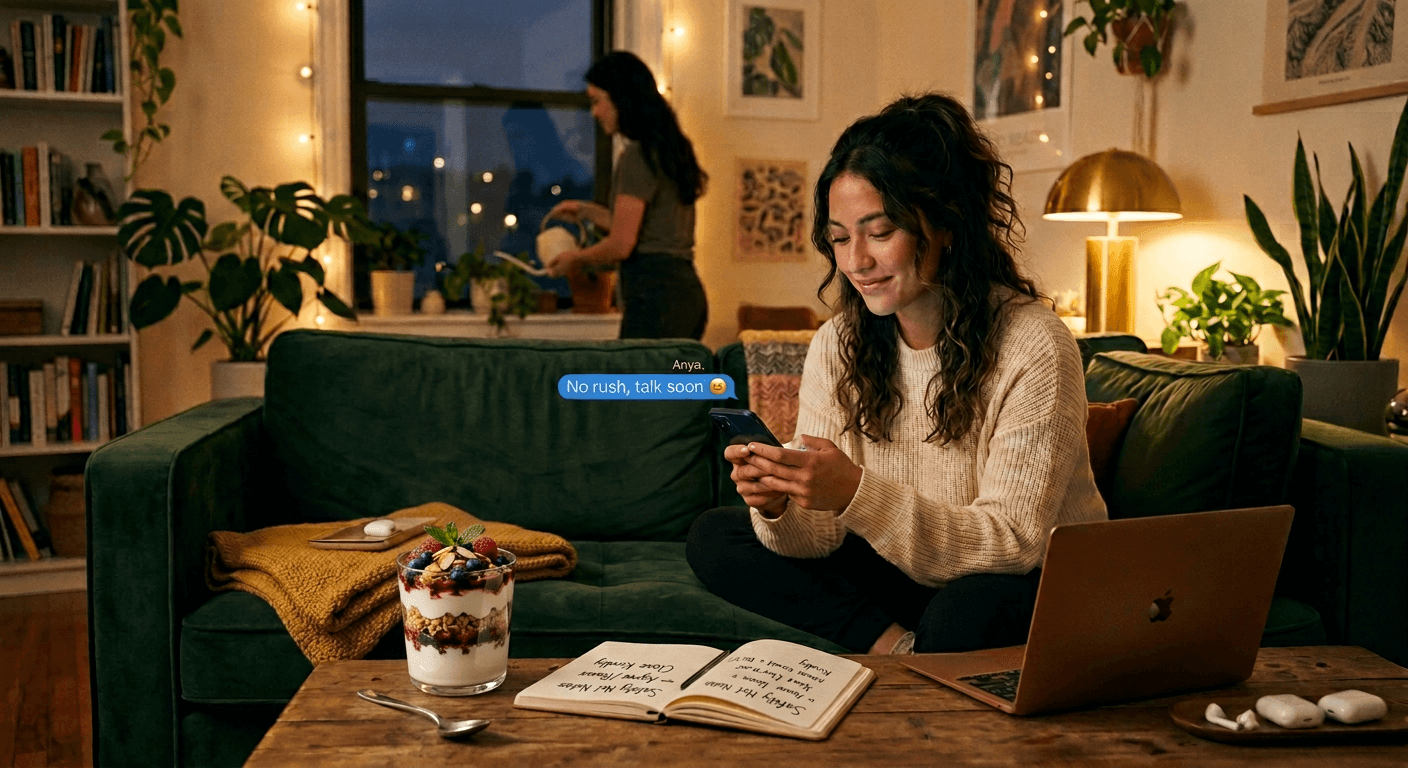
- Close Kindly. End hard threads with “I’ll talk more later” it keeps goodwill intact.
Healthy communication habits like these are central to relationships covered in Intentional Dating — Building Meaningful Connections.
Before You Press Send
Ask yourself:
- Am I connecting or correcting?
- Could this sound harsher on screen?
- Would I say it like this in person?
If you hesitate on any answer, edit the tone or pick up the phone.
The New Campus Norm
Students across America are rethinking digital etiquette. Universities now offer workshops on mindful texting and conflict resolution, recognizing that mental health and communication habits intertwine.
This shift mirrors the empathy-first culture discussed in Emotional Safety: The Foundation of True Intimacy.
Fewer screenshots of arguments, more growth through grace that’s the evolution in progress.
Try This Reflection
- Revisit a recent confusing text thread.
- Write two possible meanings for the message one negative, one neutral.
- Notice the emotional shift when you choose the neutral view.
That quick mental reframe is a core stress-management tool simple but relationship-saving.
The Bottom Line
Texts aren’t the problem; translation is. When we slow down, ask questions, and add warmth, screens stop being barriers and become bridges.
Every message is a chance to practice empathy and curiosity instead of defense. Even in a digital age, the real goal is unchanged to understand and be understood.
Summary
Digital misreads stem from missing nonverbal cues and quick assumptions. APA and Cornell research show that intentional toning, empathy, and clarification prevent text conflicts and strengthen trust.
This article is for educational purposes only and is not a substitute for professional psychological or therapeutic help.