
HHS and American Urological Association Partner to Raise Awareness on Safe Estrogen Therapy for Women After Menopause
Many women experience uncomfortable and sometimes serious urinary or sexual problems after menopause. However, too few know that a well-researched, low-dose treatment already exists to help. On March 12, 2026, the U.S. Department of Health and Human Services (HHS), through its Office on Women’s Health (OWH), announced a new collaboration with the American Urological Association (AUA) to change that.
Through a new Memorandum of Understanding (MOU), HHS and the AUA will work together to increase clinician and public understanding of local estrogen therapy a treatment that restores vaginal and urinary health in postmenopausal women suffering from genitourinary syndrome of menopause (GSM) or recurrent urinary-tract infections (UTIs).
“This collaboration represents an important step forward in addressing a significant and often undertreated women’s health concern,” said Dr. Dorothy Fink, Principal Deputy Assistant Secretary for Health and Director of the Office on Women’s Health. “Many postmenopausal women are not aware that local estrogen therapy is a safe and effective treatment for GSM and recurrent UTIs.”
Why This Matters: A Common but Overlooked Problem
After menopause, the body’s natural estrogen levels decline. This decrease thins the tissues of the vagina, urethra, and bladder lining. Moreover, it reduces natural lubrication and alters protective bacteria in the genital tract. As a result, many women develop GSM a medical term that includes dryness, burning, painful intercourse, urinary urgency, and recurrent infections.
Recurrent UTIs are not only painful. Indeed, they can lead to emergency hospital visits, antibiotic overuse, and even life-threatening infections like urosepsis.
Yet experts emphasize that these problems are not an unavoidable part of aging. Local estrogen therapy delivered through vaginal creams, rings, or tablets has been shown to:
- Strengthen vaginal and urinary tissues
- Restore healthy pH and bacterial balance
- Reduce recurrent UTIs
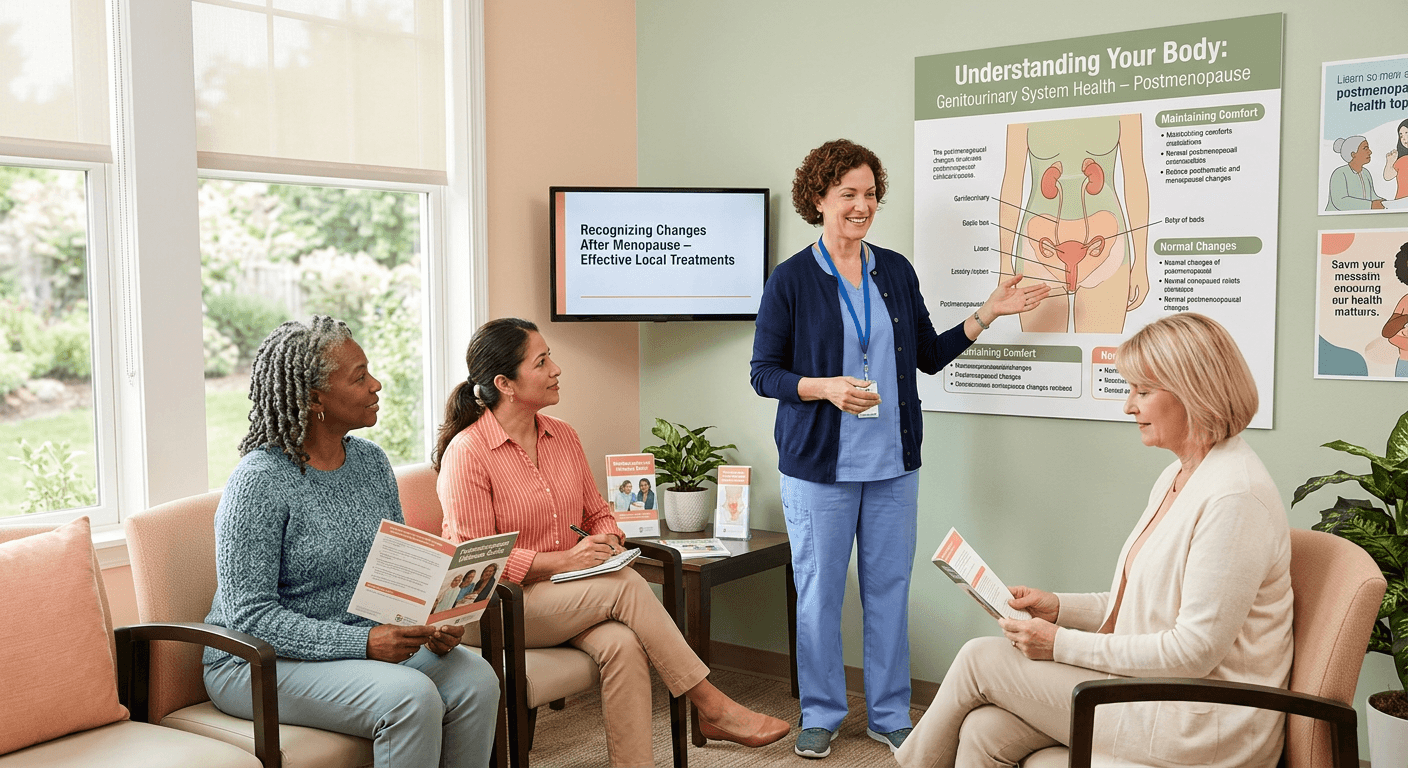
Open discussion reflects HHS estrogen therapy menopause initiatives that empower women through knowledge. - Ease dryness and pain during intimacy
- Reduce urinary urgency and leakage
- Improve daily comfort and quality of life
Importantly, local estrogen acts where it’s applied. Generally, it does not raise overall hormone levels, differentiating it from systemic hormone-replacement therapy. Studies over several decades show that low-dose local estrogen is safe and highly effective for most women. This preventive approach aligns with the broader principles discussed in preventive checkups and insurance coverage.
What the Collaboration Will Do
Under the new agreement expected to continue for up to five years HHS and the AUA will:
- Develop clear educational resources for clinicians, pharmacists, and nurses on diagnosing GSM and prescribing evidence-based local estrogen products.
- Create public-facing materials to raise awareness among postmenopausal women. Consequently, these materials encourage women to discuss symptoms they may have assumed were untreatable.
- Evaluate program outcomes to see how shared education improves care and reduces unnecessary antibiotic use.
The AUA’s members more than 24,000 urology specialists nationwide will share research and contribute training expertise to reach both professionals and patients.
How Women Can Benefit Right Now
While national education campaigns will take shape throughout 2026, the MOU is designed to empower women and healthcare providers immediately.
Here’s what women can do today:
Recognize the symptoms.
Persistent vaginal dryness, pain during intimacy, burning, or frequent UTIs after menopause are medical conditions, not simply “normal aging.”
Talk openly with a clinician.
Family doctors, gynecologists, and urologists can determine whether low-dose local estrogen is appropriate. Many formulations creams, vaginal tablets, or flexible rings are already FDA-approved and widely available. Building emotional safety to discuss intimate health concerns with healthcare providers improves care outcomes.
Ask about alternatives to repeated antibiotics.
If infections keep returning, estrogen therapy can often reduce recurrence more effectively than long-term antibiotic use. Furthermore, it helps combat antibiotic resistance.
Prioritize comfort and wellbeing.
Better urogenital health doesn’t just lower infection risk. Instead, it can improve confidence, intimacy, and sleep. Just as working mothers need recovery strategies, all women deserve effective treatment for disruptive symptoms.
By encouraging conversations about these therapies, HHS and the AUA hope more women will seek help rather than suffering in silence.
What It Means for Clinicians
The partnership also aims to fill persistent knowledge gaps among healthcare professionals. Surveys show many clinicians especially in primary-care and internal-medicine settings remain uncertain about when and how to recommend local estrogen therapy.
Through joint webinars, evidence briefs, and updated clinical tools, the initiative seeks to normalize the treatment within mainstream care. When implemented widely, it may help:
- Reduce emergency-department visits due to infection

Clinicians unite under HHS estrogen therapy menopause guidelines for safer, informed care. - Cut antibiotic prescriptions
- Improve patient satisfaction scores in menopause care
- Align clinician practices with U.S. Preventive Services Task Force and AUA guideline recommendations
Beyond the Clinic: A Broader Women’s-Health Impact
The collaboration fits within HHS’s larger effort to modernize women’s health policy by translating scientific evidence into daily practice. GSM and recurrent UTIs are estimated to affect half of all postmenopausal women. Nevertheless, they remain underdiagnosed and undertreated.
By focusing on education rather than promoting specific products, the agencies emphasize patient safety, scientific integrity, and access to reliable information. This approach proves especially important amid widespread online misinformation about hormones.
Ultimately, the initiative is about giving women agency. Specifically, it helps them understand that the changes they experience are physiological and treatable. This empowerment mirrors the principles in defining enough and self-compassion recognizing that seeking treatment is self-care, not vanity.
The Takeaway
For millions of women after menopause, symptoms like urinary discomfort and painful intimacy are common but not inevitable. The new partnership between HHS and the American Urological Association is designed to change the conversation from grim acceptance to informed options.
By combining government outreach with medical-society expertise, this national collaboration aims to ensure that women and clinicians alike have the facts, confidence, and tools to use local estrogen therapy safely and effectively improving health, preventing infections, and restoring comfort in daily life.
HHS and the American Urological Association launched a five-year partnership to increase awareness of safe local estrogen therapy for postmenopausal women. The treatment addresses genitourinary syndrome of menopause and recurrent UTIs, which affect half of postmenopausal women. Educational resources will help clinicians and patients understand that these symptoms are treatable medical conditions, not inevitable aging.
Source
This content is for educational purposes and does not substitute for professional psychological or therapeutic help.