

Who Am I Outside of Being a Parent? Reclaiming Identity After Kids
Reclaiming identity after kids begins with a simple but painful question: where did I go? There’s a particular kind of loneliness that comes from looking at old photographs of yourself the person who stayed out late with friends, traveled on impulse, spent Sunday mornings reading in coffee shops and struggling to remember what that felt like. Not because the memories are gone, but because the person in those photos seems like someone you used to know rather than someone you are.
You love your children with a fierceness that still surprises you. You wouldn’t trade them for anything. Yet sometimes in the quiet moments between bedtime and your own exhaustion, you wonder what happened to the person you used to be.
If you’ve asked yourself this question, you’re not alone, if you’ve felt guilty for even thinking it, you’re not selfish, if you’re not sure how to talk about missing yourself while also loving your role as a parent, you’re navigating one of the most common and least discussed aspects of becoming a parent: the profound shift in identity that no one adequately warns you about.
We cover this topic because the silence around parental identity loss does real harm. Parents, and mothers in particular, are handed a cultural script that treats self-erasure as devotion. What the research on parental burnout and identity actually shows is that sustainable, healthy parenting is not built on self-sacrifice. It is built on integration. That distinction is what this guide is organized around.
You’re Not Alone: Why So Many Parents Feel This Way
The Identity Shift That No One Warns You About
Before you had children, you probably knew abstractly that parenthood would change your life. You expected sleepless nights, financial pressure, logistical complexity. What you might not have expected was how completely it would reshape your sense of self—not just your schedule or priorities, but your actual identity.
Who you are, what matters to you, how you spend your time and mental energy, how others see you, how you see yourself all of this shifts dramatically. Psychologists who study parental identity describe this as one of the most significant developmental shifts adults experience. The transition isn’t just adding a new role. It’s a fundamental reorganization of your life around another person’s needs, often at the expense of activities, relationships, and aspects of yourself that previously defined who you were.
Why This Experience Is Especially Common (and Intense) for Mothers
While parents of all genders can experience identity shifts after having children, research and lived experience consistently show that mothers report this more intensely and more frequently. This isn’t biological inevitability it’s largely cultural and structural.
Sociologists have documented what’s called “intensive mothering ideology” the cultural expectation that mothers should devote themselves completely to their children’s wellbeing. Good mothering, according to this ideology, requires total self-sacrifice. A mother’s identity should be seamlessly absorbed into her maternal role.
Fathers, meanwhile, often receive social permission to maintain more of their pre-parent identity, hobbies, and social lives. Add to this the practical reality that mothers typically still carry more domestic and emotional labor, even in dual-career households. These conditions make identity loss almost structurally inevitable for many mothers.
This doesn’t mean fathers don’t experience identity questions. It means the cultural and practical factors that intensify this experience affect mothers disproportionately.
The intensive mothering ideology described here is worth examining beyond its individual effects, because it functions as a structural problem disguised as a personal one. When mothers experience identity loss, the default response, culturally and clinically, is to offer individual strategies: journal more, carve out time, practice self-care. These are genuinely useful. But they do not address the underlying condition, which is that the current distribution of domestic labor, emotional labor, and social expectation systematically strips maternal identity in ways that no amount of individual effort fully reverses. Naming this is not an excuse for inaction. It is an honest account of why the work of reclaiming identity is harder for some parents than the available advice suggests, and why the absence of structural support is not a personal failing.
The Difference Between Identity Evolution and Identity Loss
Distinguishing between healthy identity evolution and identity loss matters. All adults experience evolution as they move through life stages. Identity loss feels more like disappearing than growing.
Healthy evolution might look like this: your interests shift, you develop new priorities, you integrate your parental role with other aspects of yourself. Identity loss looks different: you can’t remember what you used to enjoy, every conversation centers on your kids because nothing else fills your life, you feel invisible as an individual person.
The distinction matters because identity evolution is normal and expected. Identity loss signals that something’s out of balance that parenting has consumed so much of your life that there’s no space left for you as a whole person. Recognizing this distinction is the first step in reclaiming identity after kids.
When Love for Your Children Coexists with Grief for Your Former Self
One of the most confusing aspects of parental identity loss is that it doesn’t mean you don’t love your children or regret becoming a parent. You can experience both simultaneously deep, genuine love for your kids and deep, genuine grief for aspects of yourself that seem to have disappeared.
These feelings don’t cancel each other out. They often coexist in ways that create internal conflict and guilt. “I love my children more than anything” and “I miss who I was before I had them” are both true. Holding both truths at once is emotionally complicated, but it doesn’t make you a bad parent. It makes you human.
What Happens to Identity When You Become a Parent
The Intensity of Early Parenting and Total Role Absorption
In the early years of parenting particularly with newborns and toddlers the demands are so consuming that role absorption almost happens by default. Your child needs you constantly, your sleep is disrupted, your body is recovering if you gave birth, your mental energy divides among feeding schedules, developmental milestones, safety vigilance, and keeping a tiny human alive.
During this phase, maintaining much identity outside of parenting feels nearly impossible because there’s simply no time, energy, or mental space. You’re in survival mode. The problem isn’t that this happens it’s that for many parents, especially mothers, this total absorption never really ends. Demands shift as children age, but the expectation that you’ll continue centering their needs above your own identity often persists.
When All Your Time, Energy, and Mental Space Goes to Someone Else
Even when your children are older and less physically demanding, parenting often continues to occupy most of your mental and emotional bandwidth. You’re tracking school schedules, managing extracurriculars, monitoring social dynamics, planning meals, coordinating logistics, worrying about their development, anticipating their needs.
This mental load the invisible work of constantly thinking about and organizing family life leaves little cognitive space for you. You might technically have a free hour, but your brain is still running through tomorrow’s schedule, worrying about your child’s friendship struggles, or planning the weekend. This experience is particularly common among working mothers who carry both professional responsibilities and the majority of household management, leading to what researchers call the “second shift survival” phenomenon.
When all your mental energy goes to someone else’s life, your own sense of self gets crowded out.
Social Expectations and the “Good Parent” Narrative
Cultural narratives about “good parents” especially “good mothers” reinforce the idea that your children should be your primary source of meaning and fulfillment. Wanting time for yourself signals selfishness. Prioritizing your own interests makes you less devoted.
These messages show up everywhere: in social media portrayals of blissful, all-consuming motherhood; in judgment of mothers who work or pursue hobbies; in praise for those who “sacrifice everything” for their children. The persistent question “Doesn’t your child miss you?” gets directed at mothers but rarely fathers.
These expectations make it harder to claim space for yourself without guilt, which accelerates identity loss.
How Isolation and “Losing Your People” Affects Identity
Many parents, especially in the early years, experience significant social isolation. Your childless friends might drift away because your schedules don’t align or you can’t participate in spontaneous plans. You might find yourself primarily socializing with other parents, where conversations revolve around children.
This isn’t inherently bad, but when your social world becomes exclusively parent-focused, you lose connections that reflected other aspects of your identity. The friend who knew you as the person who loved live music, the colleague who valued your professional insights, the hiking buddy who saw your adventurous side when those connections fade, you lose mirrors for parts of yourself that aren’t about parenting.
The Guilt That Comes with Wanting Something for Yourself
Perhaps the most painful aspect of parental identity loss is the guilt that accompanies even thinking about reclaiming yourself. You feel guilty for wanting time alone, for missing your pre-parent life, for resenting the constant demands, for not finding complete fulfillment in parenting.
This guilt is culturally manufactured it’s what happens when you internalize messages that good parents are selfless and that your needs don’t matter as much as your children’s. But it’s powerful, and it keeps many parents from even attempting to reconnect with themselves. Wanting that reconnection feels like failing at parenthood. Understanding that asking for help is strength, not weakness can help challenge this internalized guilt.
Signs You’re Experiencing Parental Identity Loss
You Can’t Remember What You Used to Enjoy
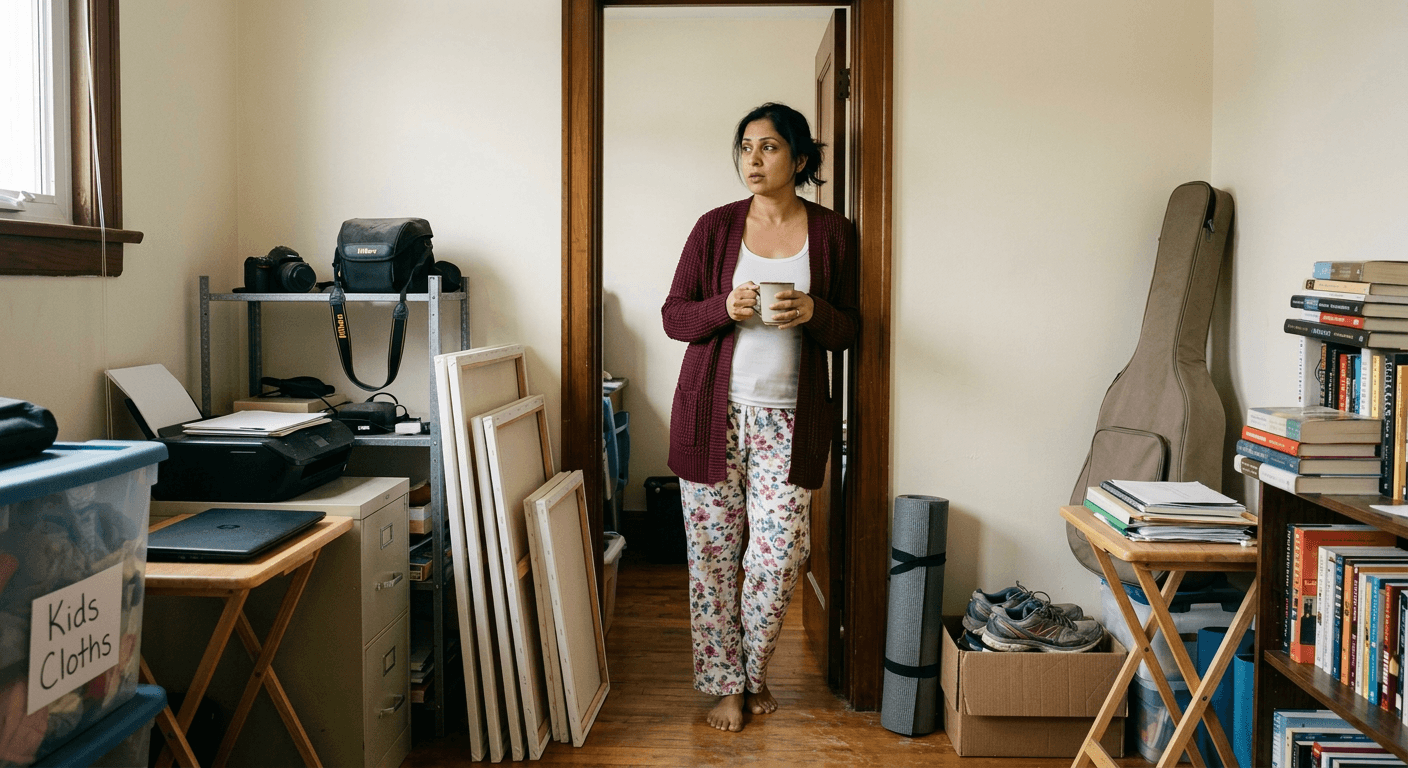
Someone asks what you like to do for fun, and you draw a blank. Or you think of activities you used to enjoy reading, hiking, painting, playing music and realize you haven’t done any of them in months or years. When you try to remember what brought you joy before kids, the memories feel distant and inaccessible, like they belong to someone else’s life.
Conversations Feel Limited to Kid-Related Topics
You notice that nearly every conversation you have centers on your children their schedules, their development, their challenges, their achievements. When topics shift to other subjects, you struggle to contribute because you don’t have much else happening in your life. You’ve become the parent who can only talk about being a parent.
You Feel Invisible or Like You’ve Disappeared
In social situations, people ask about your kids but rarely about you. Introductions label you as “Emma’s mom” or “the kids’ parent” rather than by your own name. You feel like a role rather than a person, like your individual identity has been absorbed into your function as someone’s caregiver.
You Struggle to Answer “What Do You Do?” Beyond Parenting
When someone asks what you do whether you work outside the home or not you find yourself defining your entire existence through your children. Even if you have a job, you might answer primarily in terms of your parenting role. Parenting has consumed so much of your identity that you’ve lost track of other aspects of yourself.
You Feel Resentful (Then Guilty for Feeling Resentful)
You notice resentment creeping in toward your children for needing you constantly, toward your partner if their life seems less changed than yours, toward the circumstances that leave you feeling depleted and invisible. Then you feel guilty for the resentment because you love your children and you “chose this.” The cycle of resentment and guilt becomes its own source of pain.
You Don’t Recognize the Person in the Mirror
When you catch glimpses of yourself in photographs, in mirrors, in unexpected moments of self-awareness you feel disconnected from who you’ve become. This isn’t just physical (though body changes can be part of it), but fundamental. You look at yourself and think “I don’t know who this person is anymore.”
Why Reclaiming Identity After Kids Isn’t Selfish
You Can Love Your Kids and Miss Your Former Self
These two realities aren’t mutually exclusive. You can be completely devoted to your children’s wellbeing, love them with every part of yourself, and still grieve what you’ve lost in becoming their parent. Both things are true. Both things are allowed.
The cultural narrative that positions these as contradictory that if you really loved your children you wouldn’t miss anything about your pre-parent life is false and harmful. It creates shame around normal, human feelings.
Taking Care of Yourself Isn’t Taking Away from Your Children
The zero-sum framing of parental care that any time or energy you devote to yourself is stolen from your children is fundamentally flawed. You’re not choosing between yourself and your kids. You’re recognizing that you can’t sustainably give from a completely depleted place.
When you have some sense of yourself as a whole person, when you’ve maintained at least some connections to activities and interests that matter to you, you typically have more capacity to be present and patient with your children. Taking care of yourself supports rather than undermines your parenting. Learning to practice delegating without guilt is part of this essential self-care.
Why “Losing Yourself” Isn’t Actually Good for Your Kids
Children benefit from seeing their parents as whole people with interests, boundaries, and lives beyond caregiving. When you completely subsume your identity into parenting, you teach your children that this is what adults especially mothers are supposed to do. You model that your needs don’t matter, that personal identity should be sacrificed for others.
Most parents don’t want their children to grow up believing their worth depends entirely on their usefulness. Most parents don’t want their children to disappear into future roles. Yet that’s what total self-sacrifice models.
Modeling Wholeness and Self-Care for Your Children
When you maintain or reclaim aspects of your identity when you pursue interests, set boundaries, take time for yourself you demonstrate to your children that adults can have rich, multifaceted lives. Being both a devoted parent and a whole person with your own needs and desires is possible and desirable.
This is especially important if you’re raising daughters, who will receive countless cultural messages about self-sacrifice and maternal devotion. Showing them that mothers deserve personhood too is powerful counter-messaging.
Challenging the Cultural Myth of “Complete Self-Sacrifice”
The idea that good parents, especially good mothers, should completely sacrifice themselves for their children isn’t ancient wisdom it’s relatively recent cultural ideology. This ideology serves economic and patriarchal systems more than it serves families.
Family psychologists and researchers increasingly recognize that this expectation is harmful. It contributes to parental burnout, resentment, and mental health struggles, and it doesn’t actually benefit children in the ways we’ve been told it does. Challenging this myth isn’t selfish. It’s choosing a more sustainable, honest, and ultimately healthier approach to parenting.
The Different Stages of Parental Identity Questions
New Parent Shock: Who Am I Now?
The transition to parenthood whether it’s your first child or adding another often involves identity shock. Everything changes at once: your schedule, your body (if you gave birth), your relationships, your priorities, your sense of capability and control. In those early months, the question “Who am I now?” is less philosophical and more practical you’re trying to figure out how to function in this completely altered reality.

During this stage, some identity loss is nearly inevitable because the demands are so consuming. The concern is when this temporary total absorption becomes permanent.
Toddler Years: Where Did I Go?
As your child becomes a toddler, the physical demands might shift but the intensity often remains. You’re chasing, staying vigilant about safety, managing tantrums, and still getting limited sleep. Many parents describe this phase as when they first notice they’ve completely disappeared. They’ve been in survival mode so long that they realize they can’t remember who they were before, and they have no time or energy to figure it out.
School Age: Who Could I Be With More Time?
When children start school, many parents suddenly have more time during the day. This can be clarifying—you have space to notice what’s missing but also disorienting. If you’ve spent years with your entire identity centered on constant caregiving, newfound time can feel empty rather than liberating. You might realize you don’t know what to do with yourself when you’re not actively parenting.
Teen Years and Approaching Empty Nest: What’s Next for Me?
As children become more independent, the identity questions shift again. Your active parenting role is diminishing. They need you differently less hands-on care, more emotional support and guidance. This creates space to reclaim yourself, but it also raises urgent questions about who you are and what you want as you approach the next life stage. Research on emotional maturity in marriage after 35 shows that this period often triggers profound personal reflection for parents.
Empty Nest: Rediscovering and Reinventing
When children leave home, the identity shift can feel seismic, particularly for parents whose primary identity has been active parenting. Some parents experience genuine crisis during this transition. They’ve organized their entire life around their children, and now that structure is gone. Others find it liberating, a chance to finally reclaim interests and pursuits they’d set aside.
Often it’s both grief for the ending of intensive parenting and excitement about what becomes possible next.
Small Ways to Start Reclaiming Identity After Kids
Remembering What You Liked Before Kids (Journaling Prompts)
Start with simple reflection: What did you enjoy before you had children?, what made you feel alive, engaged, or peaceful?, what were you good at?, what did people compliment you on? and what did you look forward to?
Don’t pressure yourself to immediately resurrect these interests. Just remember them. Write them down. Acknowledge that these aspects of yourself existed and that their absence is real.
Claiming Small Pockets of Time (Even 15 Minutes)

Beginning to reclaim identity after kids doesn’t require hours of uninterrupted time. Start smaller: fifteen minutes reading something you choose, not parenting articles. Ten minutes listening to music you love. Five minutes journaling. Twenty minutes on a hobby that’s just yours.
These small moments won’t solve identity loss, but they create tiny spaces where you exist as yourself, not just as someone’s parent. Even micro-moments of calm can help you reconnect with your sense of self.
Reconnecting with Old Friends (Not Just Other Parents)

Reach out to friends from before parenthood people who knew you in other contexts, who see you as more than your parental role. You don’t need to pretend your life hasn’t changed or avoid talking about your kids. But spending time with people who remember other aspects of you can help you reconnect with those parts of yourself.
Trying “Micro-Hobbies” That Fit Your Current Life
If your old hobbies don’t fit your current reality you loved backpacking but can’t disappear for weekends; you played in a band but can’t commit to evening practices consider scaled-down versions. Micro-hobbies are activities you can do in small increments: sketching, knitting, gardening in containers, learning something through short online videos, cooking one new recipe.
The goal isn’t performance or mastery. It’s engaging in something because you enjoy it, not because it serves your children or household.
Saying “I” Instead of “We” (Practicing Individual Voice)
Notice how often you speak in terms of “we” when you mean “I.” “We had a tough day” when you mean “I had a tough day.” “We’re tired” when you mean “I’m tired.” This linguistic pattern reflects identity absorption you’ve gotten so used to thinking of yourself as part of a unit that you’ve lost individual voice.
Practice using “I” when talking about your own experiences, preferences, and feelings. It’s a small reclamation of individual identity.
Setting One Small Boundary Around Your Time or Space
Boundaries don’t have to be dramatic. Start with one small thing: This hour is mine. This evening I’m not checking school emails. This corner of the house is my space. This weekend morning I’m going for a walk alone.
Practice claiming something as yours, even when it feels uncomfortable or selfish. Notice what happens both in terms of how others respond and how you feel about asserting your needs.
Navigating the Practical Challenges
When You Don’t Have Childcare or “Free Time”
Much identity reclamation advice assumes you have childcare, a supportive partner, or discretionary time. Many parents don’t have these resources. If you’re a single parent, if childcare is financially impossible, if your partner works long hours or isn’t supportive, reclaiming identity becomes significantly harder.
In these circumstances, you might need to get creative: swapping childcare with other parents, including children in some of your interests when possible, using naptime or early mornings. Accept that for now, your efforts will be very small and that’s okay. Small still matters.
When Your Partner Doesn’t Understand Why You Need This
If you have a partner whose identity seems relatively unchanged by parenthood who still plays sports, sees friends, pursues hobbies they might not understand why you’re struggling. The response might be “Just do what you want to do” without recognizing the barriers that make it more complicated for you: mental load, guilt, lack of time, societal expectations.
Talking about this requires both explaining your experience and being specific about what you need: “I need you to take over completely on Saturday mornings so I can have time without being on call” is clearer than “I need more time for myself.”
Financial Constraints and Identity Reclamation
Many identity-reclaiming activities cost money you might not have: therapy, gym memberships, classes, childcare to pursue hobbies, career retraining. When finances are tight, these options can feel impossibly out of reach.
Free or low-cost options include: library books, free online courses, walking or home exercise, journaling, reconnecting with friends through video calls, exploring interests through YouTube or podcasts, joining online communities around your interests.
Managing Guilt When You Do Take Time for Yourself
Even when you intellectually know you deserve time for yourself, actually taking it often triggers intense guilt. You might feel like you’re neglecting your children, being selfish, or failing at parenting.
Managing this guilt requires practice challenging the thoughts that drive it. Remind yourself: “My children are fine with their other parent for a few hours.” “Taking care of myself makes me a better parent.” “I wouldn’t judge another parent for doing this.” Notice that the guilt often diminishes with repetition the first few times you take time for yourself feel hardest.
When Cultural or Family Expectations Conflict with Your Needs
In some cultural or family contexts, the expectation of total parental self-sacrifice particularly for mothers is even more intense. Your own parents might express disapproval if you pursue interests outside parenting. Your cultural community might judge you for prioritizing yourself.
Navigating this requires deciding which expectations you’re willing to challenge and which battles matter most to you. Sometimes it involves setting boundaries with family, finding support outside your immediate community, or accepting that you’ll face criticism for choices you believe are necessary for your wellbeing.
Bigger Questions: Work, Career, and Purpose
Reconsidering Career After Being Home with Kids
If you stepped away from work to raise children and you’re now considering returning, the identity questions multiply. Who are you professionally after years out of the workforce? Do you want to return to your previous field or try something new? How do you handle the gap in your resume? What does it mean to start over in your thirties, forties, or fifties?
There’s no universal answer. Some parents find that returning to work even part-time significantly supports their sense of identity. Others discover that the career that once defined them no longer fits who they’ve become.
Finding Fulfillment While Staying Home
If you’re staying home with children whether by choice, necessity, or some combination you might struggle with the cultural devaluing of this work. “Just” a stay-at-home parent. The question “What do you do?” that assumes only paid work counts. The isolation and lack of adult interaction.
Finding fulfillment in this role while also maintaining identity often requires being intentional about staying connected to interests, relationships, and aspects of yourself that aren’t about caregiving. It also sometimes involves advocating for recognition that this work is valuable, even though society often doesn’t treat it that way.
When Working Doesn’t Feel Like Enough Identity Either
Having a job doesn’t automatically solve identity questions. Many working parents find that they’ve shifted from total identity absorption in parenting to splitting themselves between two demanding roles parent and employee with still no space for themselves as whole people.
If you’re working but still feeling identity loss, it might be that you need interests or connections beyond both work and parenting. It might also be that the particular work you’re doing doesn’t align with who you want to be.
Exploring New Interests That Weren’t Part of Your Pre-Parent Life
Sometimes reclaiming identity after kids isn’t about returning to who you were before it’s about discovering who you’re becoming now. You might develop entirely new interests that didn’t exist in your pre-parent life. You might find that becoming a parent has changed you in ways that make old interests no longer fit.
This is identity evolution rather than reclamation, and it’s equally valid. You’re not trying to go backward. You’re creating space for growth. Understanding your authentic identity and belonging in this new phase of life is part of this journey.
Redefining “Purpose” Beyond Productivity or Parenting
Much of the identity struggle relates to purpose what gives your life meaning beyond raising your children? Western culture tends to equate purpose with productivity, achievement, or career. But purpose can also be connection, creativity, learning, service, presence, or simply being.
Exploring what actually matters to you not what you think should matter or what others value can help clarify what kind of identity you want to build.
The Partner and Relationship Dimension
When Your Partner’s Identity Seems Unchanged
One of the most painful dynamics many parents, especially mothers, experience is watching their partner’s life remain relatively intact while their own has been completely reorganized.
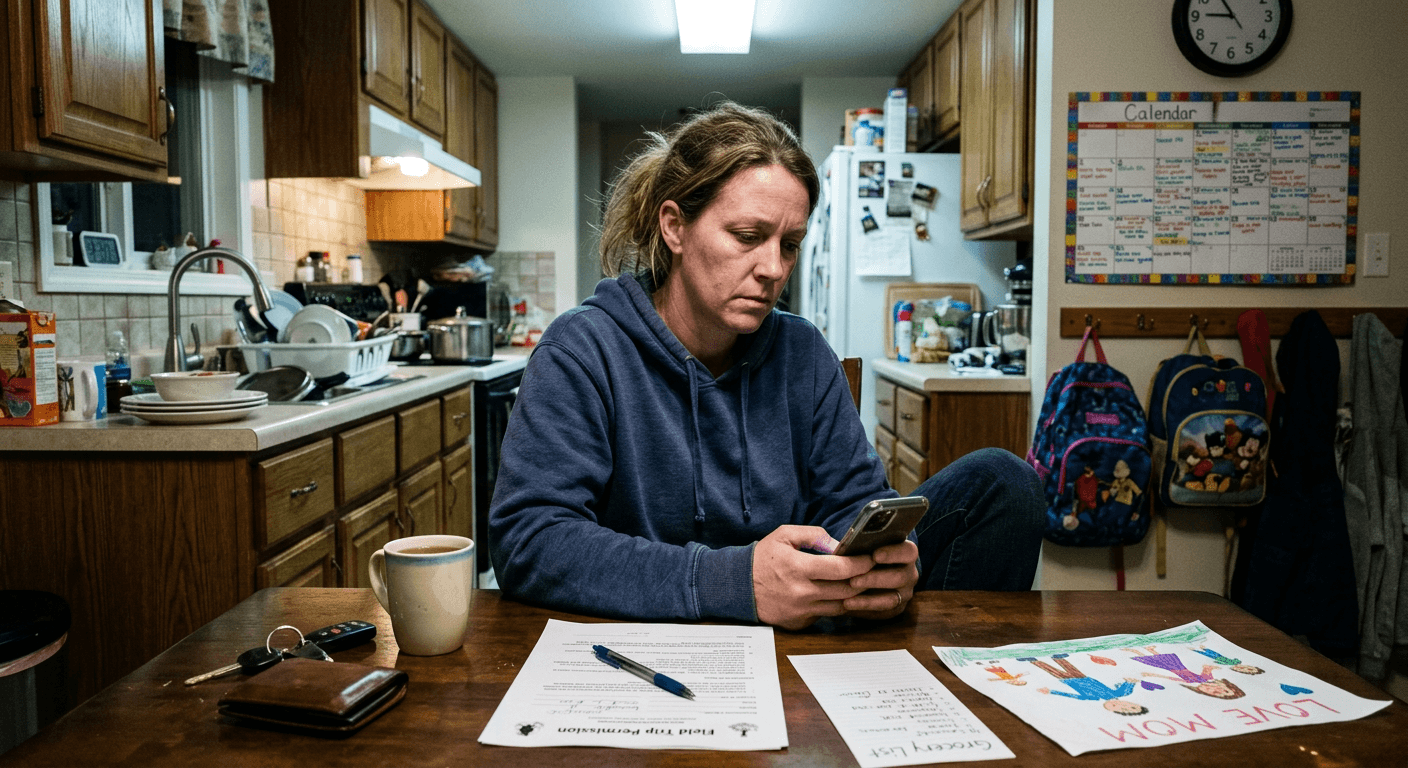
Your partner still plays basketball with friends, goes to the gym, has hobbies, maintains professional identity. This isn’t necessarily because they’re selfish, but because cultural and practical structures often protect fathers’ identities in ways they don’t protect mothers’.
This disparity can breed resentment, especially if it’s not acknowledged or addressed.
Talking to Your Partner About Needing Support to Reclaim Identity
Having this conversation requires both vulnerability and clarity. Don’t blame your partner for the structural inequalities that shape gendered parenting, but be honest about your experience and specific about what you need.
This might sound like: “I’ve realized I’ve lost touch with who I am outside being a parent, and I need dedicated time to reconnect with myself. I need you to be fully responsible for the kids on Saturday mornings not helping me, but taking over completely so I’m genuinely off duty.”
Understanding couple communication that heals and connects can make these conversations more productive and less confrontational.
Rebalancing Domestic and Emotional Labor
Often identity loss is connected to the mental load of managing household and family life. When you’re carrying most of that invisible work tracking schedules, anticipating needs, organizing logistics you have less mental space for yourself.
Rebalancing this load requires making the invisible visible explicitly naming and delegating tasks, including the planning and remembering, not just the execution. This is structural work that supports reclaiming mental space for yourself.
Reconnecting with Your Partner as Individuals, Not Just Co-Parents
Many couples find that their relationship has become primarily a parenting partnership you coordinate schedules, discuss the kids, make household decisions, but you’ve lost connection to each other as individuals. This compounds identity loss because even in your most intimate relationship, you’re primarily relating through your parental roles.
Reconnecting might involve deliberately having conversations that aren’t about logistics or children. Spend time together in contexts that aren’t family-focused. Simply ask each other what you’re thinking about, interested in, or struggling with as individuals.
When Identity Loss Signals Something More Serious
Parental Identity Loss vs. Postpartum Depression or Parental Burnout
Identity questions after becoming a parent are normal. But sometimes what feels like identity loss is actually a symptom of postpartum depression, perinatal mood disorders, or parental burnout conditions that require professional support.
Warning signs that suggest you might be experiencing something beyond normal identity adjustment include: persistent sadness or hopelessness that doesn’t lift, inability to experience joy or pleasure in anything (not just parenting), significant changes in sleep or appetite beyond what childcare demands explain, intrusive thoughts of harm, difficulty bonding with your child, or feeling completely overwhelmed and unable to function.
These symptoms overlap with identity loss but extend beyond it into clinical mental health territory. Understanding the signs of burnout recovery and when to seek professional support for anxiety can help you recognize when you need additional help.
When Resentment Affects Your Relationship with Your Children
Feeling occasional resentment toward your children is normal parenting is hard and demands are relentless. But if resentment is persistent and affecting how you interact with your kids, if you’re finding it hard to feel warmth or connection, if you’re emotionally withdrawing from them, that’s worth taking seriously.
This doesn’t make you a bad parent. It means you’re struggling in ways that would benefit from support—whether that’s therapy, practical help reducing demands, or addressing underlying depression or burnout.
Recognizing When You Need Professional Support
Identity transitions are normal, but that doesn’t mean you have to navigate them alone. Professional support through therapy can be valuable when identity loss feels overwhelming, when you’re experiencing symptoms of depression or anxiety, when you’re making significant life decisions, or when you simply want structured support working through these questions.
Therapy isn’t admission of failure. It’s a resource for navigating difficult transitions.
How Therapy Can Help with Identity Exploration and Parental Transitions
Therapists who work with parents can help you explore who you are beyond your parental role, process grief for aspects of yourself that feel lost, challenge internalized guilt and shame, navigate relationship dynamics with partners or family, distinguish between normal identity evolution and clinical depression or anxiety, and develop concrete strategies for reclaiming space for yourself.
Therapy provides structured time and support for working through questions that might feel too vulnerable or complicated to process alone or with friends.
Reframing: Identity Isn’t Lost, It’s Evolving
You’re Not “Getting Back” to Who You Were You’re Becoming Someone New
Much of the language around parental identity uses recovery metaphors getting yourself back, finding yourself again, reclaiming who you were. But often what’s actually happening is evolution. You’re not the same person you were before you became a parent, and trying to return to that version of yourself might not be possible or even desirable.
The work of reclaiming identity after kids isn’t excavation digging back to your former self. It’s integration—bringing forward aspects of who you were while also acknowledging how you’ve changed and discovering who you’re becoming now.
Integrating Parental Identity with Personal Identity
The goal isn’t to eliminate your parental identity being a parent is a real and significant part of who you are. The goal is integration: holding both your parental role and other aspects of yourself simultaneously, rather than being completely absorbed into one role at the expense of everything else.
Integration looks like being able to identify yourself as both a parent and teacher, artist, friend, athlete, avid reader whatever else matters to you. It’s “and” rather than “only.”
Permission to Change, Grow, and Want Different Things
Becoming a parent changes you. It’s supposed to. But those changes don’t have to mean disappearing. You’re allowed to want different things than you did before, you’re allowed to grieve the loss of some possibilities while embracing new ones and you’re allowed to still be figuring out who you are.
Growth isn’t linear, and identity isn’t fixed. Permission to be in process to not have figured everything out, to be still discovering is itself part of reclaiming yourself. Embracing emotional agility in America means accepting that you can hold multiple truths and evolving feelings about your identity.
Building an Identity That Includes (But Isn’t Limited To) Parenting
What you’re working toward is an identity that’s multifaceted parent, yes, but also other things that matter to you. This doesn’t mean perfectly balancing all roles equally or never struggling with how they fit together. It means not letting any single role consume you entirely.
It’s the difference between “I am a parent” (one important thing about you among others) and “I am nothing but a parent” (your entire existence collapsed into one function).
Resources and Support for Parents Navigating Identity Questions
Books on Maternal Identity, Parental Burnout, and Self-Reclamation
For parents who want to explore these questions more deeply, several books offer both validation and insight:
- All Joy and No Fun by Jennifer Senior examines how parenting has changed and what it means for parental wellbeing and identity
- Good Moms Have Scary Thoughts by Karen Kleiman addresses maternal mental health with honesty about the difficulties of early parenthood
- How to Be a Happier Parent by KJ Dell’Antonia offers practical wisdom about letting go of perfect parenting and reclaiming joy
These books won’t solve identity questions, but they can provide perspective and validation that you’re not alone in this struggle.
Therapy and Coaching for Parental Identity Work
For parents who want structured support navigating identity transitions, therapy can provide space to explore these questions with professional guidance. Some therapists specialize in parental identity work, maternal mental health, or life transitions.
Online therapy platforms have made this support more accessible, though it’s worth finding someone who understands that parental identity loss is a real issue, not just “adjustment” you need to accept. Platforms like BetterHelp and Talkspace offer options for parents seeking professional support.
Coaching particularly from coaches who work with parents on identity, career transitions, or life design can also provide support. It’s worth distinguishing between therapeutic work (processing trauma, treating depression) and coaching (goal-setting, life planning).
Online Communities and Support Groups
Sometimes the most powerful support comes from connecting with other parents navigating similar questions. Online communities, local parent groups, or meetups focused on specific interests can provide both validation and practical strategies.
The key is finding communities that make space for honesty about parental struggles without requiring you to perform either perfect contentment or constant complaint.
Journaling Prompts and Self-Reflection Tools
For self-directed exploration, journaling can help clarify what you’re experiencing and what you want. Some prompts to consider:
- Who was I before I became a parent? What did I value? What brought me joy?
- What parts of my former self do I miss most?
- What have I gained through becoming a parent (not just responsibilities, but growth, strengths, insights)?
- If I had three hours completely to myself, what would I want to do?
- What aspects of my current life feel most “me” and which feel most disconnected from who I am?
- What’s one small thing I could reclaim or explore?
- What would integration look like being both a parent and a whole person?
These questions don’t have right answers, but sitting with them can clarify what you’re longing for.
Frequently Asked Questions About Parental Identity
Is it normal to feel like I’ve lost myself after having kids?
Completely normal. Most parents experience some degree of identity shift after having children, and many particularly mothers report feeling like they’ve lost themselves, especially in the intensive early years. Family psychologists widely document this experience, even though parenting culture doesn’t always openly acknowledge it.
Feeling this way doesn’t mean you’re ungrateful, that you regret your children, or that you’re failing at parenting. It means you’re human and navigating a profound life transition.
Does this mean I regret becoming a parent?
No. You can simultaneously love your children completely and grieve what you’ve lost in becoming their parent. These aren’t contradictory feelings they’re both true aspects of a complex experience.
Regret would mean wishing you hadn’t had children or wanting to undo your decision. Identity loss is different it’s missing aspects of your former life or self while still choosing your children and your role as their parent.
How long does this feeling last?
There’s no universal timeline. Some parents navigate this transition relatively quickly, particularly if they maintain connections to other aspects of their identity throughout early parenting. Others struggle with it for years, especially if practical circumstances lack of childcare, unsupportive partners, financial constraints make reclaiming identity very difficult.
For many parents, identity questions shift rather than resolve. The intense “Where did I go?” of early parenting might evolve into “Who am I becoming?” as children age and demands change.
What if I can’t remember who I was before kids?
This is common, especially if it’s been many years or if you became a parent relatively young. If you genuinely can’t remember what you enjoyed or who you were, approach this as discovery rather than recovery.
Start with small experiments: try things and notice what resonates. Pay attention to what captures your interest, what feels good, what you’re curious about. You’re not trying to resurrect a former self you’re discovering who you are now.
Am I a bad parent for wanting time away from my children?
No. Wanting time for yourself to rest, to pursue interests, to connect with adults, to simply exist without being needed is normal and healthy. It doesn’t mean you don’t love your children or enjoy parenting.
Parents aren’t designed to provide constant, exclusive care without breaks or support. Historically and cross-culturally, parenting has almost always involved multiple caregivers and community support. The expectation that you should find complete fulfillment in 24/7 availability to your children is culturally constructed, not natural or necessary.
Will my kids resent me if I focus on myself more?
Research on parenting and child development suggests the opposite children generally benefit from having parents who model healthy boundaries, self-care, and multifaceted identity. They learn that adults can have rich lives, that relationships involve mutual respect for needs, and that your worth isn’t determined solely by your usefulness to others.
What children actually struggle with is parental resentment, burnout, and unhappiness outcomes that are more likely when parents completely sacrifice their own needs and identity.
Important Reflections and Next Steps
Understanding This Journey Is Personal and Non-Linear
If you’re looking for a clear roadmap do these steps and you’ll reclaim your identity in six weeks—you won’t find it here. Identity evolution is deeply personal, shaped by your specific circumstances, resources, constraints, and what actually matters to you.
What helps one parent might not resonate with another. What’s possible for someone with financial resources and childcare support might not be accessible to someone without those privileges. What feels necessary to someone whose children are school-aged might be impossible for someone in the intensive early years.
Trust your own process. Small steps matter. Progress isn’t linear. You don’t need to have everything figured out.
When to Seek Professional Support
While identity questions after becoming a parent are normal, there are times when professional support becomes particularly important.
Consider seeking help if you’re experiencing persistent sadness, hopelessness, or inability to experience joy that extends beyond normal identity adjustment. Seek support if you’re having intrusive thoughts of harm to yourself or your children. Professional guidance helps when resentment significantly affects your relationship with your kids or when you’re struggling with major decisions about work, relationships, or life direction.
Seeking help isn’t weakness. It’s recognizing that some struggles benefit from professional perspective and structured support.
About the Resources We’ve Mentioned
For readers wanting additional support or exploration, we’ve mentioned several resources:
Books that validate and explore parental identity:
Books like All Joy and No Fun, Good Moms Have Scary Thoughts, and others offer both research-backed perspective and honest discussion of parental identity struggles. These won’t solve identity questions, but they can provide validation and insight.
Professional support:
For those considering therapy for parental identity work, burnout, or related mental health concerns, online therapy platforms have increased accessibility to providers who specialize in parental mental health and identity transitions. While not substitutes for in-person care when that’s preferred, these platforms can help, particularly for parents with limited time or access to local specialists.
About affiliate relationships: LubDubSmile may earn a commission if you explore resources through our links, at no additional cost to you. Our guidance on parental identity comes from understanding common experiences and expert insights, not promotional relationships. Reconnecting with yourself happens primarily through internal work, relationships, honest reflection, and time not through purchases. What we’ve mentioned here are optional supports that some parents find helpful, not necessary solutions.
Moving Forward: Permission to Explore Who You Are Now
If there’s one thing to take from this: you deserve to be a whole person, not just a role. You deserve time, space, and energy for yourself not just whatever’s left over after everyone else’s needs are met. You deserve to reconnect with interests, relationships, and aspects of yourself that make you feel alive, engaged, and present.
This doesn’t make you selfish, it doesn’t diminish your love for your children and doesn’t mean you’re a bad parent.
It means you’re recognizing that you can be both a devoted parent and a complex, multifaceted human being with needs, desires, and an identity beyond caregiving. Both things are true. Both things are important. The work of integrating them of becoming someone who can hold both parental love and personal identity simultaneously is worth doing.
Start wherever you are. Start small if that’s what’s possible. Reclaim fifteen minutes of time or reconnect with one old friendship or set one small boundary. Acknowledge what you’ve lost and give yourself permission to want it back. Recognize that you deserve to take up space in your own life.
You haven’t disappeared entirely, even when it feels that way. You’re still here. Reclaiming identity after kids reconnecting with that person who exists beyond being someone’s parent is possible, even when it’s difficult. Especially when it’s difficult.
Takeaway
Feeling like you’ve lost yourself in parenting doesn’t mean you don’t love your children or that you regret becoming a parent it means you’re navigating one of the most profound identity transitions adults experience, often without adequate support or permission to grieve what’s been lost. The cultural narrative of complete parental self-sacrifice, particularly for mothers, creates conditions where identity loss becomes almost inevitable, then adds shame to the experience of struggling with it. Reclaiming identity after kids isn’t about returning to who you were before that person doesn’t exist anymore, and that’s okay but about integrating your parental role with other aspects of your identity so you can be both a devoted parent and a whole person.
This content is for educational purposes and does not substitute for professional psychological or therapeutic help.