
Intentional Dating After Divorce: How to Approach New Relationships With Clarity
Intentional dating after divorce starts with a question most people don’t expect: not just when to date again, but how to approach it differently this time. You’ve been divorced for eight months now, and your best friend just sent you a link to a dating app with the message: “Time to get back out there!” You stare at your phone, feeling a confusing swirl of curiosity, dread, and something that might be readiness or might just be loneliness.
The truth is, you’re not sure. You’re not even sure what you’re looking for, or if you should be looking at all. If this internal tug-of-war feels familiar, you’re navigating one of the most common challenges people face after divorce.
What “Intentional Dating After Divorce” Actually Means
Beyond Avoidance: Dating With Purpose, Not Just Fear
Intentional dating doesn’t mean dating with rigid checklists or approaching every first date like a job interview. It means bringing conscious awareness to why you’re dating, what you’re hoping for, and how you’re showing up. You’re dating proactively rather than reactively not out of loneliness, pressure, or the need to prove something to yourself or others.
After divorce, many people approach dating primarily through the lens of avoidance. They want to avoid people like their ex, avoid red flags they missed before, avoid vulnerability that could lead to getting hurt again. While recognizing patterns matters, intentional dating after divorce moves beyond fear-based decisions toward clarity about what you actually want to build.
The Difference Between Intentional and Desperate or Reactive Dating
Reactive dating happens when external pressures or internal discomfort drive your decisions. You date because you can’t stand being alone, because everyone says you should, because you want to prove your ex wasn’t the only person who could love you, or because you’re trying to fill a void left by the marriage ending.
Intentional dating, by contrast, comes from a grounded place. You’re dating because you genuinely want connection not because you need someone to complete you or validate your worth. You’re choosing to explore relationships from a place of curiosity rather than urgency.
Why Post-Divorce Dating Offers Opportunity for Greater Self-Awareness
Dating after divorce particularly after years of marriage offers something your younger self likely didn’t have: extensive relationship experience. You know what erodes connection over time. You’ve lived through conflict patterns. You understand what happens when needs go unspoken for years.
This knowledge, while painful to acquire, positions you to make more informed choices. Research on relationship transitions shows that post-divorce dating can foster significant personal growth when approached with self-reflection rather than rushed to avoid discomfort.
Clarifying What You Want (Not Just What You Don’t Want)
Creating a mental list of what you don’t want comes easily: “No one who shuts down during conflict like my ex did. No one financially irresponsible. No one who prioritizes work over everything.” These boundaries matter, but intentional dating also requires articulating what you do want. Consider the values, qualities, and relationship dynamics that align with who you are now and the life you’re building.
Assessing Your Readiness: Are You Ready to Date Again?
Emotional Signs You May Be Ready
Readiness isn’t about being completely “over” your divorce or having zero emotional baggage everyone brings history into new relationships. Some signs that may indicate you’re ready include: you can reflect on your marriage without intense bitterness or emotional flooding, you’ve done some work understanding your contributions to relationship patterns, and you have genuine interest in getting to know new people rather than just escaping loneliness. Feeling relatively grounded in your identity outside of being someone’s spouse or ex-spouse also signals readiness.
Signs You Might Benefit from More Healing Time
Certain patterns suggest that more healing time could serve you. If you’re still consumed by anger at your ex, or if every conversation turns into processing your divorce, pause before dating. Seeking dates primarily to make your ex jealous or prove something indicates unresolved feelings. Feeling panicked at the thought of being alone, or using dating to avoid processing grief about the marriage ending, suggests you’d benefit from more internal work first.
The Difference Between Healed and Ready (They’re Not Always the Same)
You don’t need to be completely healed from your divorce to be ready to date. Healing is ongoing, sometimes lifelong. Readiness means you’ve processed enough that you can be present with someone new without using them to work through unresolved feelings about your ex or your marriage.
You can hold both realities: still occasionally grieving what you lost and genuinely open to connection. Understanding emotional regulation skills can help you navigate both processes simultaneously.
Why There’s No Universal Timeline
Some people date within months of separation and build healthy relationships. Others wait years and still struggle with trust. Timelines depend on countless factors: length of your marriage, how it ended, whether you have children, financial stability, social support, and your individual processing style.
Only you can determine when you’re ready and that readiness might look different from what you expected or what others suggest.
Questions to Ask Yourself About Your Motivations for Dating
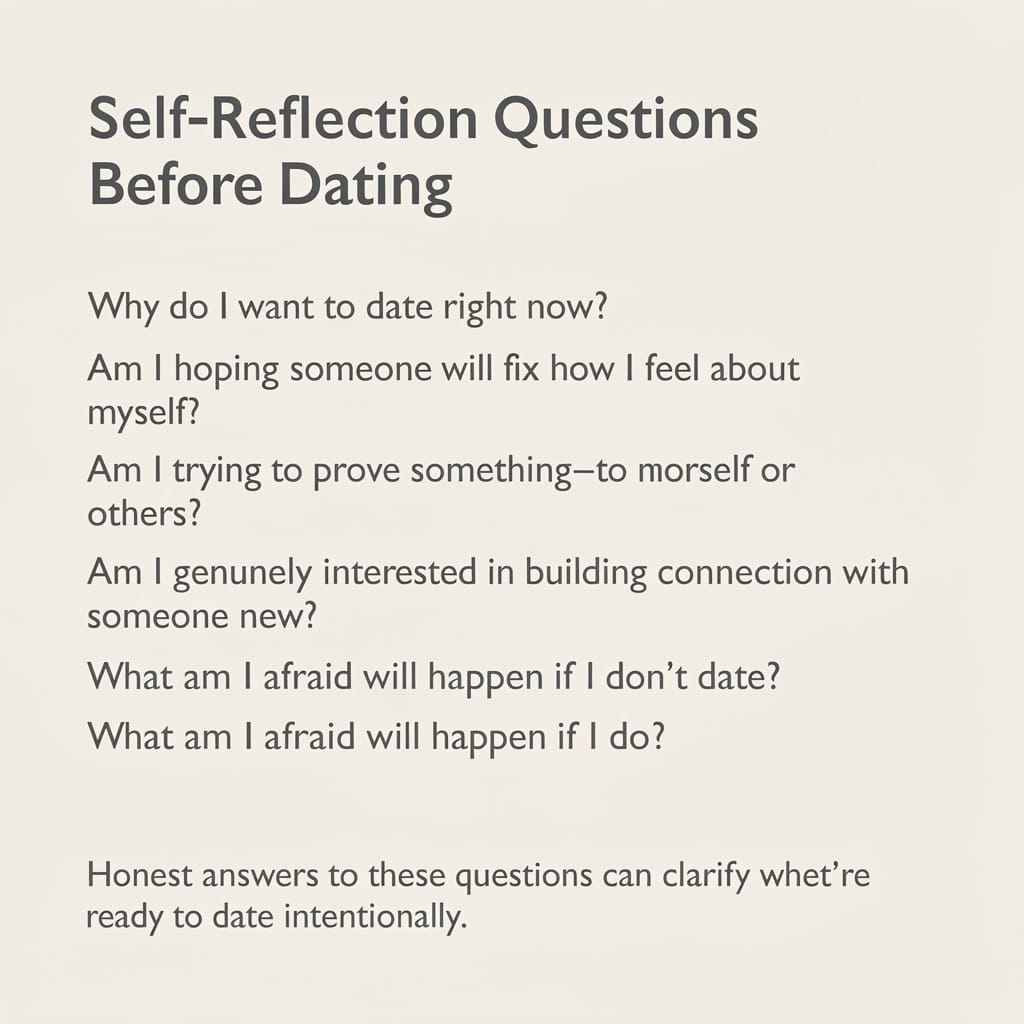
Before creating dating profiles or accepting that setup from your coworker, consider asking yourself honest questions. Why do I want to date right now? Am I hoping someone will fix how I feel about myself? Am I trying to prove I’m still desirable? Am I genuinely interested in building connection with someone new? What am I afraid will happen if I don’t date? What am I afraid will happen if I do?
These questions aren’t meant to delay dating indefinitely they’re tools for clarity about your motivations.
Understanding What You’re Bringing Into New Relationships
Recognizing Patterns from Your Marriage
Every long-term relationship teaches us patterns some healthy, some not. Perhaps you learned to avoid conflict because arguments in your marriage felt destructive. Maybe you became overly self-reliant because asking for help led to disappointment. Possibly you overlooked red flags early on because you were caught up in chemistry or the idea of being married.
Recognizing these patterns isn’t about self-blame it’s about awareness that gives you choice in new relationships.
How Your Attachment Style May Influence Dating Choices
Attachment theory research suggests that our early experiences and significant relationships shape how we approach intimacy and connection. If your marriage activated anxious attachment constantly seeking reassurance, fearing abandonment you might notice yourself doing the same in early dating. If you developed avoidant patterns maintaining emotional distance, prioritizing independence over vulnerability these may appear with new partners.
Understanding your attachment tendencies can help you recognize when you’re reacting from old patterns rather than responding to the person in front of you. Reading about attachment theory through recommended books can deepen this self-understanding.
Unresolved Hurt, Anger, or Mistrust (and How They Show Up)
If your marriage ended through betrayal, chronic conflict, or gradual disconnection, you’re likely carrying some hurt, anger, or mistrust. These feelings don’t necessarily mean you’re not ready to date they mean you’re human.
What matters is awareness of how they might show up. You might question a new partner’s honesty when they’ve given no reason for suspicion. You might test someone to see if they’ll leave. You might withdraw emotionally when connection feels too vulnerable.
The Baggage You Can Work On vs. What You Accept and Manage
Some patterns can shift with awareness and practice: learning to communicate needs more directly, recognizing and addressing conflict avoidance, choosing partners based on compatibility rather than just chemistry. Other aspects require ongoing management: co-parenting with a difficult ex, financial constraints from divorce, emotional triggers that occasionally surface.
Intentional dating includes both working on what you can change and being honest about what you’re managing.
When Therapy Can Help You Understand Your Patterns
If you notice yourself repeatedly attracted to the same type of person who ultimately hurts you, therapy provides personalized support. Struggling to trust anyone new, feeling overwhelmed by anxiety or anger about your divorce, or recognizing patterns you can’t seem to shift all indicate that professional guidance would help. A therapist specializing in relationship patterns or divorce recovery can help you understand what’s driving your choices and develop new approaches.
Getting Clear on What You Actually Want
Distinguishing Between What You Want and What Others Expect
Family might want you to remarry quickly. Friends might encourage casual dating to “have fun.” Cultural or religious communities might have strong opinions about your timeline or approach. Beneath these external voices, what do you actually want? The answer might surprise you and it might change over time.
Revisiting Relationship Values After Divorce
Values you held when you married might have shifted. Perhaps you once prioritized financial stability above all else; now emotional attunement matters more. Maybe you valued traditional relationship structures; now you’re open to different arrangements.
Divorce often clarifies what truly matters versus what you thought you were supposed to want. Exploring your authentic identity and belonging can help clarify these evolved values.
Casual, Serious, or Exploratory: Clarifying Your Current Goals
Intentional dating doesn’t require knowing exactly what you want long-term. It requires honesty about your current goals. Are you genuinely interested in casual dating getting to know different people without pressure for commitment? Are you specifically looking for a serious relationship? Are you in an exploratory phase, unsure what you want but open to finding out?
All these approaches can be intentional when you’re clear with yourself and communicate honestly with potential partners.
Dealbreakers vs. Preferences: Knowing the Difference
Dealbreakers are non-negotiables rooted in core values or essential needs: someone who shares your stance on having more children, someone who’s emotionally available, someone whose lifestyle aligns with yours regarding substance use or faith. Preferences are nice-to-haves that enhance compatibility but aren’t fundamental: shared hobbies, similar taste in music, particular physical characteristics.
Post-divorce, it’s worth examining whether your dealbreakers are truly essential or are fear-based reactions to your marriage.
How Your Wants May Differ from Your Pre-Marriage Self
You’re not the same person who dated in your twenties or whenever you met your ex-spouse. You’ve lived through marriage, possibly parenthood, and divorce. Your priorities, needs, and self-awareness have evolved.
Dating from where you are now not trying to recreate who you were then is part of an intentional approach to relationships.
Dating With Kids: Navigating the Complexity

When and How to Tell Your Children You’re Dating
Therapists who work with divorced parents generally suggest waiting to tell children you’re dating until you’re seeing someone consistently and it seems potentially serious. Young children don’t need to know about every first date.
Older children might notice changes in your schedule or mood, and age-appropriate honesty can be valuable: “I’ve started going out with friends more, including sometimes meeting new people.”
Keeping Early Dating Separate from Your Kids’ Lives
In early dating stages, keeping your romantic life separate from your children protects everyone. Kids don’t need the confusion of meeting multiple people who then disappear. You don’t need the pressure of involving your children before you’ve assessed whether someone is a good fit for you, let alone your family.
Co-Parenting Considerations and Boundaries
Co-parenting agreements sometimes include clauses about introducing children to new partners. Even without formal agreements, consider how your dating might affect your co-parenting relationship and your children’s adjustment.
This doesn’t mean you can’t date it means factoring these dynamics into your decisions about timeline and disclosure.
When It’s Appropriate to Introduce Someone to Your Children
Most experts suggest waiting at least several months of consistent dating and often longer before introductions. You want reasonable confidence that the relationship has potential for longevity before bringing someone into your children’s lives.
When you do introduce a new partner, keep initial interactions brief and casual, allowing relationships to develop gradually.
Managing Guilt About Wanting a Relationship
Many divorced parents struggle with guilt about wanting romantic connection. You might feel you should focus exclusively on your children, or worry that dating means you’re prioritizing your needs over theirs.
The reality is that you’re allowed to want relationships and modeling healthy adult partnership can benefit your children. Balance matters, but wanting connection doesn’t make you selfish. Learning to practice delegating without guilt extends to giving yourself permission for personal fulfillment.
Practical Steps for Intentional Dating After Divorce
Taking Your Time in Early Stages (Resisting the Rush)
After divorce, there can be a temptation to rush. You might want to quickly establish that this new relationship is “different,” move in together to solve financial pressure, or remarry to prove you can make it work.
Intentional dating means deliberately slowing down. Allow relationships to develop at a pace that lets you actually know someone before making major decisions.
Communicating Your Intentions and Asking About Theirs
Early in dating someone new, having open conversations about what you’re both looking for proves valuable. You might say: “I’m dating intentionally because I’m interested in finding a serious relationship eventually, though I’m not rushing. Where are you in terms of what you’re hoping for?”
This conversation helps ensure you’re not on completely different paths. Understanding couple communication that heals can strengthen these early conversations.
Paying Attention to Actions, Not Just Words
One pattern many people recognize after divorce is having overlooked the gap between what someone said and what they did. Intentional dating includes noticing consistency. Does this person follow through on plans? Do their actions align with what they say they value? Do they show up in ways that match their stated intentions?

Noticing Red Flags Early (and Actually Acting on Them)
You might notice red flags you’ve seen before: someone who bad-mouths all their exes, someone whose words don’t match their behavior, someone who moves too fast or pressures you, someone who can’t take responsibility for their part in past relationship challenges.
Intentional dating means actually responding to these red flags rather than explaining them away because you want the relationship to work.
Building Friendships and Slow-Burn Connections
Not every meaningful relationship starts with intense chemistry. Some of the healthiest long-term partnerships develop from friendships or slow-building attraction based on shared values and genuine compatibility.
Being open to connections that develop gradually rather than only pursuing immediate spark expands your possibilities. This aligns with research on intentional dating and building meaningful connections.
Checking In With Yourself Regularly Throughout Dating
Intentional dating is an ongoing practice, not a one-time decision. Regular self-check-ins help you stay grounded. Ask yourself: How do I feel after spending time with this person energized or drained? Am I being authentic, or performing a version of myself? Are my boundaries being respected? Am I respecting theirs? Does this relationship align with what I said I wanted?
Navigating the Disclosure Conversation
When and How to Talk About Your Divorce
There’s no perfect timeline for divorce disclosure, but most people share basic information relatively early often by the second or third date. You don’t need to provide your entire marital history immediately, but being upfront that you were married and are now divorced prevents awkwardness later. It also allows potential partners to make informed choices about continuing to date you.
What You Owe New Partners (and What You Don’t)
You owe potential partners honesty about your current situation: that you’re divorced, whether you have children, and generally where you are in your healing process. You don’t owe them your complete divorce story on date one, details about your ex that feel private, or justification for your marriage ending.
Share what feels comfortable and appropriate for the level of connection you’re building.
Avoiding Over-Sharing or Trauma-Dumping Early On
Wanting someone to know your history is understandable, especially if your divorce was traumatic. However, using early dates to process unresolved feelings about your ex or marriage can burden new connections unfairly.
If you find yourself unable to have conversations without extensively discussing your divorce, this might indicate you’d benefit from more processing time possibly with a therapist rather than dates.
How to Frame Your Divorce Without Badmouthing Your Ex
You can be honest about your marriage ending without villainizing your ex. Phrases like “We grew in different directions and ultimately wanted different things” or “We struggled with communication patterns we couldn’t resolve” communicate that the relationship didn’t work without suggesting your ex was terrible.
This framing also demonstrates emotional maturity and capacity for nuance.
Recognizing When Someone’s Response Is a Red Flag
Pay attention to how potential partners respond when you share about your divorce. Red flags include: immediately badmouthing your ex without knowing the situation, dismissing your feelings about the divorce, pressing for details you’re not ready to share, or suggesting your divorce means you’re “damaged goods.”
Healthy responses include curiosity without judgment, respect for your boundaries, and recognition that divorce is a common life experience.
Where and How to Meet People With Intention
Dating Apps: Choosing Platforms Aligned With Your Goals
Different dating platforms attract different user bases and intentions. Apps like Match or eHarmony tend to attract people seeking serious relationships, while others focus more on casual dating.
If you’re dating intentionally and hoping for long-term partnership, choosing platforms that align with that goal increases the likelihood of meeting compatible people. Comparing options through resources like eHarmony vs Match comparisons can help you choose wisely.
Setting Up Profiles That Reflect Your Authentic Self and Intentions
Creating dating profiles after divorce can feel vulnerable. You might be tempted to present an idealized version of yourself or hide aspects of your life (like having children) that you worry might discourage matches.
Intentional dating means being honest about who you are and what your life includes. This authenticity helps filter for people genuinely compatible with your actual life, not an edited version.
Meeting People Through Shared Interests and Activities
Dating apps aren’t the only path to connection. Many people meet potential partners through activities they genuinely enjoy: hobby groups, volunteer work, fitness classes, professional organizations, or community events.
This approach offers the advantage of meeting people in contexts where you’re already sharing interests and values.
Asking Friends for Introductions (When and How)
Friends who know you well can sometimes facilitate meaningful introductions. If you’re open to setups, let trusted friends know generally what you’re looking for and what you’re not. Be specific enough that they can make thoughtful matches without setting you up with everyone they know who’s also single.
Being Open to Unexpected Connections
Sometimes connection comes from unexpected places someone you meet through work, a friend of a friend, someone you’ve known casually for years. Staying open to possibilities while maintaining intentionality means being willing to explore connections that don’t fit the exact picture you had in mind.
Common Post-Divorce Dating Pitfalls (and How to Avoid Them)
Rebounding: Dating to Fill the Void or Prove Something
Rebound relationships dating primarily to avoid being alone or to prove you’re desirable rarely serve you well. These connections often end painfully because they’re built on need rather than genuine compatibility.
If you notice yourself rushing into intensity with someone shortly after your divorce finalized, pause and honestly assess your motivations.
Choosing Someone Who’s the Opposite of Your Ex (Just Because)
“My ex was extremely introverted, so I’m only dating extroverts now” is understandable but potentially limiting. While noticing patterns that didn’t work makes sense, choosing partners based primarily on being opposite to your ex means you’re still making decisions in reaction to your marriage rather than based on what truly fits you.
Rushing Into Commitment to Avoid Being Alone
The discomfort of being newly single can drive premature commitment. Moving in together after a few months, talking about marriage very early, or making major life decisions with someone you barely know might ease immediate loneliness.
However, rushing increases the risk of repeating patterns without having addressed what contributed to your divorce.
Ignoring Red Flags You Recognize from Your Marriage
If controlling behavior was part of your marriage, noticing similar patterns in someone new and choosing to stay anyway because “maybe it will be different this time” ignores valuable information. Past experience taught you what erodes relationships over time.
Intentional dating means using that knowledge, even when it means walking away from connections that feel good in other ways.
Dating Someone Who’s Not Over Their Ex (or Realizing You’re Not Over Yours)
Signs someone isn’t over their ex include: constantly bringing them up, comparing you to them (positively or negatively), maintaining inappropriate contact, or being unable to take responsibility for the relationship ending.
Similarly, if you notice yourself doing these things, it may indicate you need more processing time before building something new.
Letting Fear of Repeating Mistakes Paralyze You
While awareness of past patterns matters, excessive fear can become paralyzing. Eliminating everyone who shares any quality with your ex prevents genuine connection. Never moving past first dates because you’re hypervigilant for red flags creates its own problems.
Intentional dating finds balance between healthy caution and openness to possibility.
Building Healthy Relationship Patterns This Time
Communicating Needs and Boundaries Early
If you learned in your marriage that unexpressed needs breed resentment, one shift you can make in new relationships is practicing direct communication earlier. This doesn’t mean demanding someone meet all your needs immediately it means being honest about what matters to you and creating space for them to do the same.
Understanding emotional safety in relationships helps you create conditions where both partners can communicate openly.
Maintaining Your Independence and Identity
Perhaps your marriage involved losing yourself in the partnership prioritizing your spouse’s needs and preferences while your own interests and friendships faded. Intentional dating in your post-divorce life can include maintaining the independence you’ve rebuilt.
Keep friendships active, pursue interests that matter to you, and enter relationships as a whole person rather than seeking someone to complete you.
Noticing and Addressing Issues Instead of Avoiding Them
If your marriage suffered from conflict avoidance letting issues build until they became insurmountable you can practice different patterns in new relationships. Address concerns when they’re small, before resentment accumulates.
Choose partners who can engage with difficult conversations constructively. Learning about healthy conflict patterns in relationships can guide this growth.
Choosing Partners Based on Compatibility, Not Just Chemistry
Intense chemistry can obscure incompatibility. After divorce, many people recognize that long-term relationship success requires more than attraction. It needs aligned values, compatible life goals, similar communication styles, and shared vision for the relationship.
Intentional dating weighs these factors alongside physical connection.
Trusting Your Gut When Something Feels Off
You have more relationship experience now than you did before marriage. If something feels off even if you can’t articulate exactly what that instinct deserves attention.
Intentional dating means trusting yourself rather than overriding discomfort because you want the relationship to work or because someone seems good “on paper.”
When You’re Not Sure You Want to Date (Or Remarry)
It’s Okay Not to Want a Relationship Right Now (Or Ever)
Not everyone wants to date after divorce. Some people discover they’re happier single. Others want companionship but not cohabitation or remarriage.
Your post-divorce life doesn’t have to include romantic partnership to be full and meaningful.
Exploring Contentment in Singleness
After years of partnership, being single can initially feel like a void. But many divorced individuals eventually discover profound contentment in building lives centered on their own interests, friendships, children, and pursuits.
This doesn’t mean giving up on relationships it means not needing one to feel complete.
Differentiating Between Healing Time and Genuine Preference
Sometimes what feels like “I don’t want to date” is actually “I’m not ready yet” and that’s fine. Other times, it’s a genuine preference for single life. Both are valid.
The distinction matters mainly for your own clarity about whether you’re pausing or choosing a different path entirely.
Navigating Pressure from Family, Friends, or Culture
Depending on your community and culture, you might face pressure to remarry, pressure not to date “too soon,” or unsolicited opinions about your choices. Remember that you’re the one living your life.
Well-meaning people may not understand your needs or timeline and that’s okay. You don’t owe them explanations or compliance.
Staying Open Without Forcing Yourself
You can simultaneously be content single and open to connection if it happens organically. This isn’t the same as actively dating it’s simply not closing yourself off completely.
This approach works for people who aren’t interested in pursuing relationships actively but would consider one if the right person came along naturally.
Professional Support for Intentional Dating After Divorce
How Therapy Can Help You Date More Intentionally
A therapist can help you identify patterns from your marriage that might show up in new relationships. They can support you in working through unresolved hurt or mistrust, exploring what you genuinely want versus what you think you should want, and developing communication and boundary-setting skills.

Therapy isn’t required for everyone dating after divorce, but it provides valuable support when patterns feel stuck or emotions feel overwhelming.
Working Through Divorce-Related Trauma
If your marriage ended through betrayal, abuse, or prolonged conflict, you might be carrying trauma that affects how you approach new relationships. Trauma can manifest as hypervigilance for red flags, difficulty trusting, emotional flooding during conflict, or avoidance of vulnerability.
Therapists trained in trauma can help you process these experiences so they’re less likely to hijack new connections. Knowing when to seek professional support for anxiety can guide your decision.
Attachment and Relationship Pattern Work
Understanding your attachment style and how it influences your relationship choices can be transformative. A therapist can help you recognize when you’re reacting from attachment wounds versus responding to the actual person in front of you. Over time, you can develop more secure attachment patterns.
When to Consider Dating Coaching vs. Therapy
Dating coaches focus on practical dating strategies: creating profiles, navigating conversations, understanding dating culture. Therapy addresses underlying emotional patterns, trauma, and psychological dynamics.
If you’re struggling primarily with logistics how dating apps work, what to say on first dates a coach might help. If you’re grappling with trust issues, unresolved hurt, or repetitive relationship patterns, therapy is typically more appropriate.
Platforms like BetterHelp and Talkspace can connect you with licensed therapists who specialize in relationship issues and divorce recovery, offering flexible scheduling that fits around co-parenting and work responsibilities.
Frequently Asked Questions About Intentional Dating After Divorce
How long should I wait before dating after divorce?
There’s no universal timeline. Some people are ready within months; others need years. Readiness depends on how your marriage ended, how long you were together, whether you’ve processed the relationship’s end, your current emotional state, and your motivations for dating. The question isn’t “how long has it been” but rather “am I dating from a grounded place or trying to fill a void?”
Should I tell dates about my divorce on the first date?
Most people share that they’ve been married and divorced relatively early often by the second or third date but you don’t need to provide your complete divorce story immediately. Basic disclosure (that you were married, are now divorced, have children if applicable) is appropriate fairly early. Deeper details can come as the relationship develops and trust builds.
How do I know if I’m ready or just lonely?
Loneliness is a normal human feeling and doesn’t automatically mean you shouldn’t date. The distinction is whether you’re seeking connection from a place of genuine interest in another person, or whether you’re primarily trying to escape discomfort with being alone. Ask yourself: Would I still want to date this person if I felt completely content being single? If the answer is no, you might be dating to avoid loneliness rather than build connection.
What if I keep attracting the same type of person?
Repetitive patterns often indicate unconscious relationship dynamics at play. You might be drawn to familiar dynamics (even unhealthy ones) because they feel comfortable, or you might be inadvertently signaling availability for certain relationship styles. A therapist can help you identify what’s driving these patterns and develop different approaches.
Is it okay to date casually, or should I only date if I’m ready for serious commitment?
Both casual and serious dating can be intentional what matters is honesty with yourself and potential partners about your goals. If you’re genuinely interested in casual dating without pressure for commitment, communicate that clearly. If you’re only open to serious relationships, be upfront about that too. Problems arise when people aren’t honest about their intentions or when intentions aren’t aligned.
How do I balance dating with co-parenting responsibilities?
Dating with children requires logistical coordination and thoughtfulness. You might date during times your children are with your co-parent, or arrange childcare for occasional dates. Keep early dating separate from parenting time and children’s awareness. As relationships develop, you can gradually integrate these parts of your life but there’s no rush.
What if I’m afraid I’ll never find someone?
This fear is common after divorce, particularly if you’re dating later in life or if your divorce was painful. The reality is that many people build fulfilling relationships after divorce and many also build fulfilling lives without romantic partnership. Rather than focusing on whether you’ll find someone, focus on building a life you genuinely enjoy. Connection often comes when you’re not desperately seeking it.
Moving Forward With Intention and Self-Compassion
There’s No Perfect Way to Do This
Dating after divorce isn’t something you can do perfectly. You’ll probably make mistakes going on dates when you’re not quite ready, missing red flags occasionally, having your heart bruised. This is part of the process, not evidence you’re failing.
Intentional dating doesn’t mean perfect dating it means bringing awareness to your choices and learning as you go.
When to Seek Professional Support
Consider reaching out to a therapist if you’re struggling with persistent patterns you can’t seem to shift. Overwhelming anxiety or anger about your divorce, trouble trusting anyone new despite genuine desire for connection, or noticing yourself repeating relationship dynamics from your marriage all warrant professional support.
Professional support isn’t a sign of weakness it’s a resource for navigating complex emotional territory.
About the Resources We’ve Mentioned
Throughout this article, we’ve referenced dating platforms, therapy resources, and books that can support intentional dating after divorce. LubDubSmile may earn a commission if you explore resources through our links, at no additional cost to you.
Our guidance on post-divorce dating is based on relationship psychology and common experiences, not promotional relationships. Intentional dating is primarily internal work—clarity about your values, awareness of your patterns, and honesty about your motivations not platform-dependent.
When exploring dating platforms, consider whether their user base aligns with your goals. Therapy platforms offer accessibility and flexibility, but local therapists, divorce recovery groups, and community resources also provide valuable guidance. Choose support based on your specific needs, circumstances, and preferences.
Trusting Your Process and Timeline
Your post-divorce dating journey won’t look like anyone else’s and that’s exactly as it should be. Some people remarry within a year and build lasting partnerships. Others date casually for years before committing again. Still others discover they’re happiest building lives without romantic partnership. All these paths are valid.
What matters isn’t matching someone else’s timeline or approach it’s honoring where you are, being honest about what you want, and treating yourself with compassion as you figure out what comes next. You’ve already survived your marriage ending. You’re stronger and wiser than you were before. Trust that you can navigate this transition too on your own timeline, in your own way.
Summary
Intentional dating after divorce means approaching new relationships with conscious awareness of your motivations, clarity about your values, and honest recognition of patterns from your marriage. There’s no universal timeline for readiness only your individual process of healing and self-discovery. You don’t need to be perfectly healed to date, but you need enough self-awareness to show up authentically rather than using someone to fill a void. Whether you choose casual dating, serious relationships, or contented singleness, the key is making choices aligned with your genuine needs rather than external pressure or fear. Trust your timeline and process you’re not starting over; you’re beginning again with more wisdom and self-knowledge than before.
This content is for educational purposes and does not substitute for professional psychological or therapeutic help.