

Eating for Steady Energy: Balancing Carbs, Protein, and Fat for Busy Days
It’s 2:30 p.m. your energy nose-dives, focus blurs, and snack cravings kick in. You refill your coffee and wonder why lunch never seems to last.
That slump isn’t about willpower it’s about fuel mix. According to Harvard Health Publishing’s Nutrition Source, the timing and balance of carbohydrates, protein, and fat determine how steadily your body releases energy. When one macronutrient dominates, blood sugar swings lead to spikes and crashes. Therefore, the goal is teamwork between nutrients for endurance instead of yo-yo energy.
Why We Run Out of Steam
Quick Carbs and Their Crash
Refined grains and sugary snacks digest fast, flooding the bloodstream with glucose. Your body responds with a burst of insulin to pull that sugar into cells. Subsequently, a steep drop follows. That dip triggers hunger, fatigue, and a second coffee.
The Centers for Disease Control and Prevention (CDC) notes that highly processed carbohydrates can undermine metabolic health over time. Indeed, they increase risks for diabetes and weight gain. Simple swaps keep energy off the rollercoaster.
Protein and Fat the Brakes That Balance the Ride
Protein slows digestion and repairs muscle tissue. Meanwhile, healthy fat extends satiety and supports brain function. Together they steady blood sugar absorption from carbs. Think of carbs as kindling, protein and fat as logs both needed for a steady fire.
This principle mirrors the approach discussed in smart nutrition for working women pairing macronutrients prevents afternoon crashes.

Build Balanced Plates That Last
The Harvard Healthy Eating Plate advises each meal contain:
- ½ vegetables and fruit: Fiber for fullness and vitamins for energy metabolism.
- ¼ whole grains or starchy foods: Oats, brown rice, sweet potatoes for slow-release carbs.
- ¼ protein: Chicken, fish, tofu, eggs, or legumes to sustain focus.
- Healthy fat: Olive oil, nut butters, avocado to keep you satisfied.
It’s less math than mindset color and variety are the best indicators of balance.
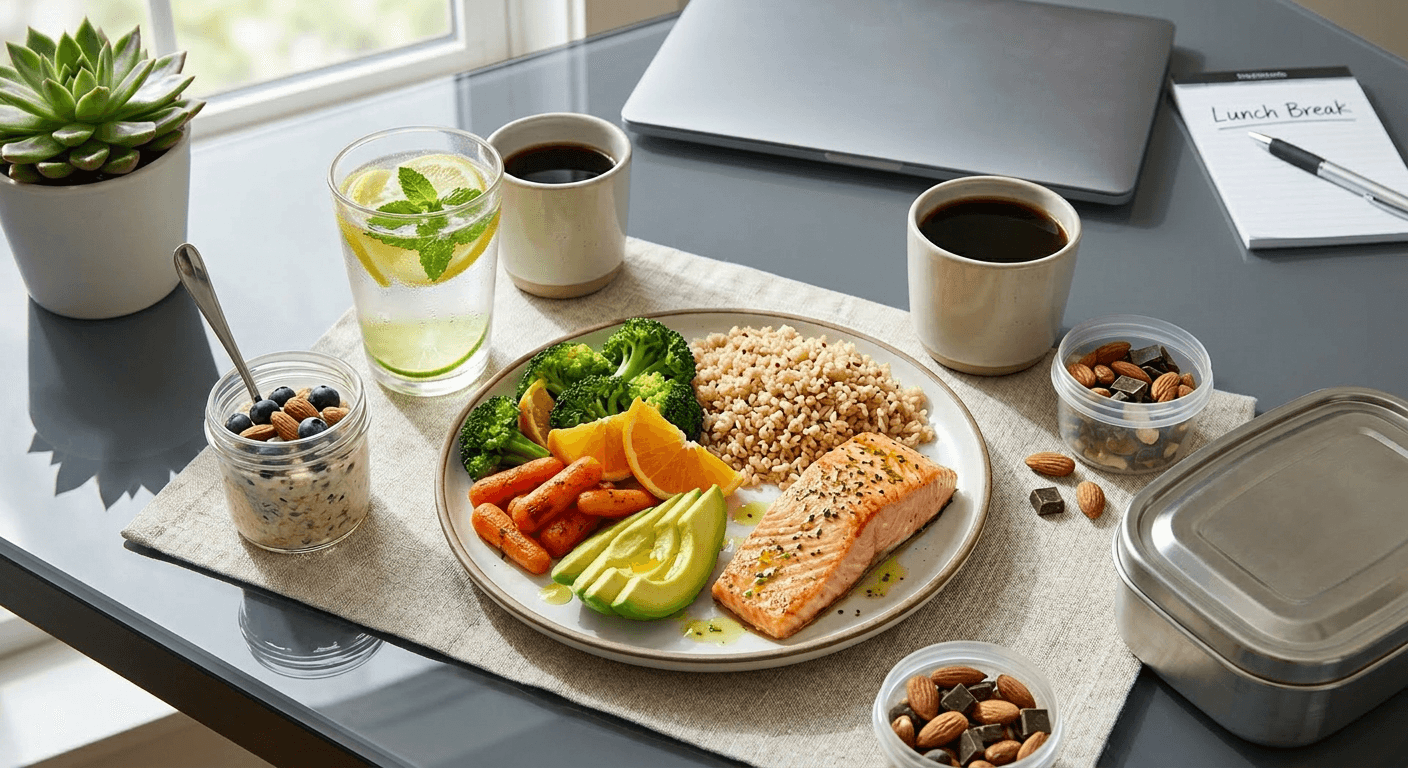
Example Meal: Grilled salmon (4 oz), quinoa with spinach and olive oil, and orange slices. You’ll get fiber, lean protein, and omega-3 fats for brain and heart support. Similarly, the strategies in healthy comfort food swaps show how familiar favorites can deliver balanced nutrition.
Time Meals to Your Day’s Demands
Skipping meals trains your body for crashes. Eat something balanced every 3–4 hours to avoid blood-sugar dips. The National Institutes of Health (NIH) explains that consistent meal times help regulate appetite hormones and metabolism.
If breakfast is light, add a mid-morning snack with protein and fiber. For example, try apple slices with peanut butter or a yogurt cup with nuts. This stabilizes your energy curve through noon.
Master the Portable Snack
Highly processed bars and drinks promise quick fixes. However, they can carry hidden sugars. Aim for under 10 grams of added sugar and at least 4 grams of fiber per serving. The U.S. Food and Drug Administration (FDA) requires brands to list added sugars on labels use that as your shortcut.
Choose pairings where each nutrient has a job:
- Trail mix of nuts (healthy fat) + dried fruit (carbs) + dark chocolate (antioxidants)
- Carrot sticks (fiber) + hummus (protein + fat)
- Whole-grain cracker carb + tuna or egg protein spread
These principles align with smart snacking strategies that balance energy and nutrition between meals.
Hydration: The Overlooked Energy Source
Mild dehydration can mimic fatigue and fog. If you hit a slump, drink 8–16 oz of water before reaching for another latte. Harvard Health Publishing notes that hydration supports oxygen delivery and nutrient transport to cells. Consequently, add citrus or mint to encourage consistent sipping.

Don’t Fear Fat Choose the Right Kind
Healthy unsaturated fats slow carb absorption and keep your stomach feeling full. The American Heart Association (AHA) advises replacing butter and shortening with avocado, nuts, seeds, and vegetable oils. Contrary to old diet myths, these fats support energy production. Moreover, they enhance absorption of vitamins A, D, E, and K.
A handful of almonds adds healthy fats and protein with no prep or refrigeration needed—a small shift that keeps brain power steady through the afternoon.
Rethink Caffeine as a Tool, Not a Crutch
Caffeine in moderation can enhance alertness. Nevertheless, too much creates jitters and a later crash. The Mayo Clinic suggests keeping daily intake below 400 mg (about four 8-oz cups of coffee). Pair coffee with food, not instead of it, to blunt spikes in heart rate and blood sugar. Switch to decaf or tea after 2 p.m. to protect sleep.
This approach supports the same principles found in morning routines for well-being starting your day with balanced nutrition rather than relying solely on caffeine.
Smart Evening Habits Set Up Tomorrow’s Energy
Late-night heavy meals or alcohol can disrupt deep sleep, leaving you exhausted the next morning. Opt for an earlier dinner and a mix of carb and protein like brown rice with chicken and vegetables to rebuild glycogen stores without overloading digestion. Quality sleep completes the energy loop, according to NIH Sleep Science and Energy Research.
Just as working mothers need micro-recovery strategies, everyone benefits from evening routines that protect tomorrow’s energy reserves.
Everyday Energy Equation
| Meal | Carbs | Protein | Fat | Real-World Example |
|---|---|---|---|---|
| Breakfast | Rolled oats + fruit | Greek yogurt (15 g protein) | Chopped nuts | Overnight oats in a jar |
| Lunch | Whole-grain wrap | Turkey or tofu | Avocado spread | Balanced desk-friendly wrap |
| Snack | Apple slices | Nut butter | – | Classic carb-protein pairing to steady sugar |
| Dinner | Quinoa | Salmon filet | Olive oil drizzle | Evening meal for repair and rest |
Closing Insight: Fuel Consistency Over Speed
Energy isn’t a perk to earn it’s a biological budget to manage. Balancing carbs, protein, and fat using Harvard’s Healthy Eating Plate as a template transforms “afternoon slumps” into steady productivity. Instead of cutting foods, cultivate balance: each meal a partnership between quick fuel and slow strength.
Balanced macronutrients and regular hydration support stable blood sugar and prevent fatigue. Guidelines from Harvard Health, the CDC, and the NIH affirm that combining whole grains, lean protein, healthy fats, and fiber sustains focus for busy days.
This content is for educational purposes and does not substitute for professional psychological or therapeutic help.