

Healthy vs. Unhealthy Conflict Patterns in Marriage: What Research Suggests
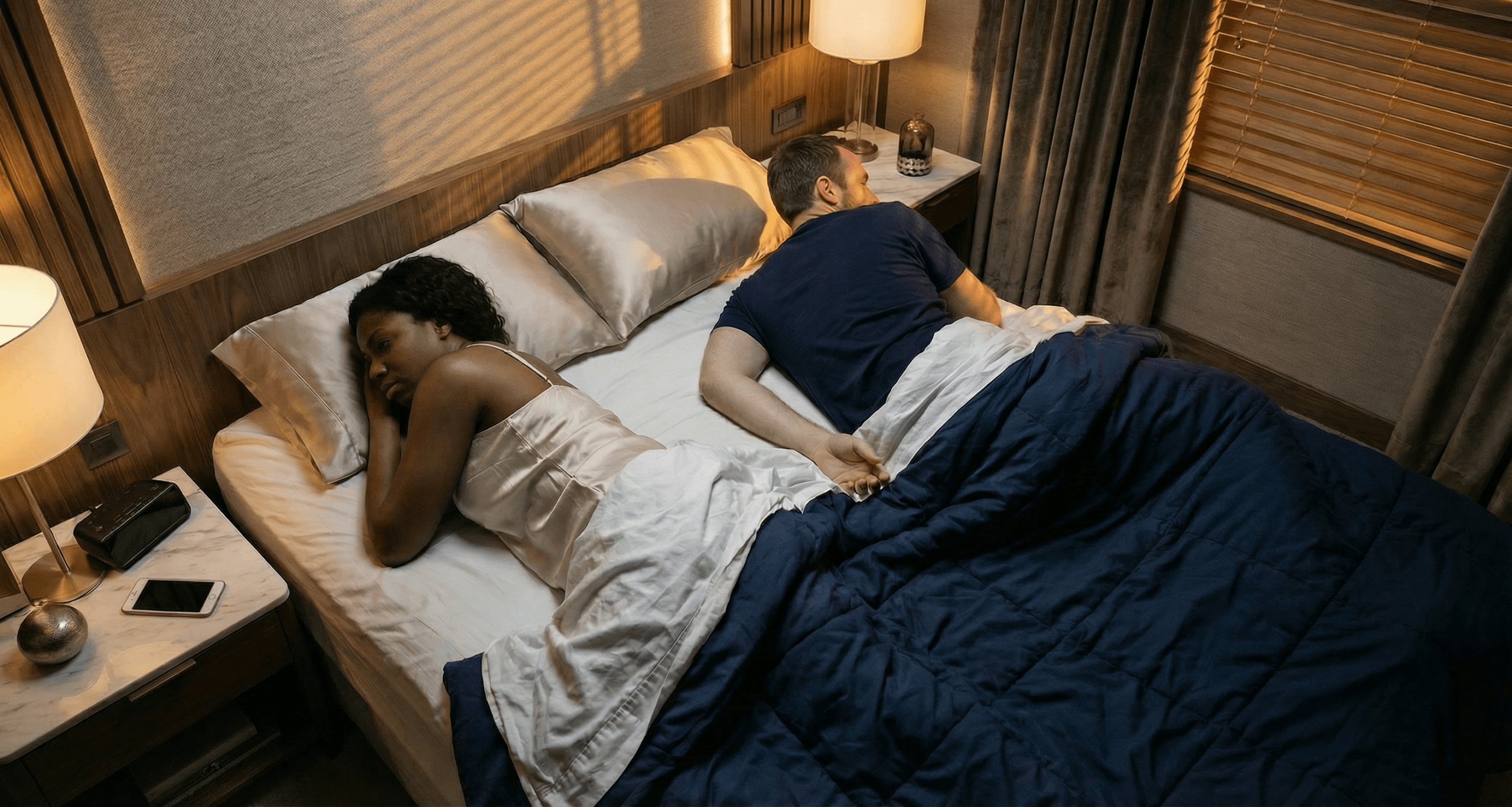
You’re lying in bed after another argument, replaying the conversation in your mind. It started with something small whose turn it was to handle bedtime but somehow escalated into accusations about who cares more, who always shuts down, who never listens. Now you’re both silent, backs turned, and you’re wondering: Is this normal? Understanding marriage conflict patterns can help you answer that question with clarity and self-compassion.
This question whether your marriage conflict patterns fall within “healthy” range or signal deeper problems brings many couples to search for answers late at night, after yet another fight that felt both familiar and exhausting. Learning to recognize healthy versus unhealthy marriage conflict patterns is the first step toward meaningful change.
Why All Couples Fight (and Why That’s Not the Problem)
What Research Says About Conflict Frequency in Healthy Marriages
One of the most persistent relationship myths is that happy couples rarely argue. Research from The Gottman Institute, which has studied thousands of couples over four decades, tells a different story: conflict frequency alone doesn’t predict relationship satisfaction or divorce. According to research from the Gottman Institute on relationship success, some couples disagree frequently and remain deeply connected. Others rarely raise their voices but harbor growing resentment that eventually erodes the relationship.
The Difference Between Conflict Topics and Marriage Conflict Patterns
Topics are what you fight about: money, parenting decisions, household division of labor, in-laws, intimacy. Patterns are how you fight: whether you attack character or address behavior, whether you repair ruptures afterward, whether arguments ultimately bring you closer or push you further apart.
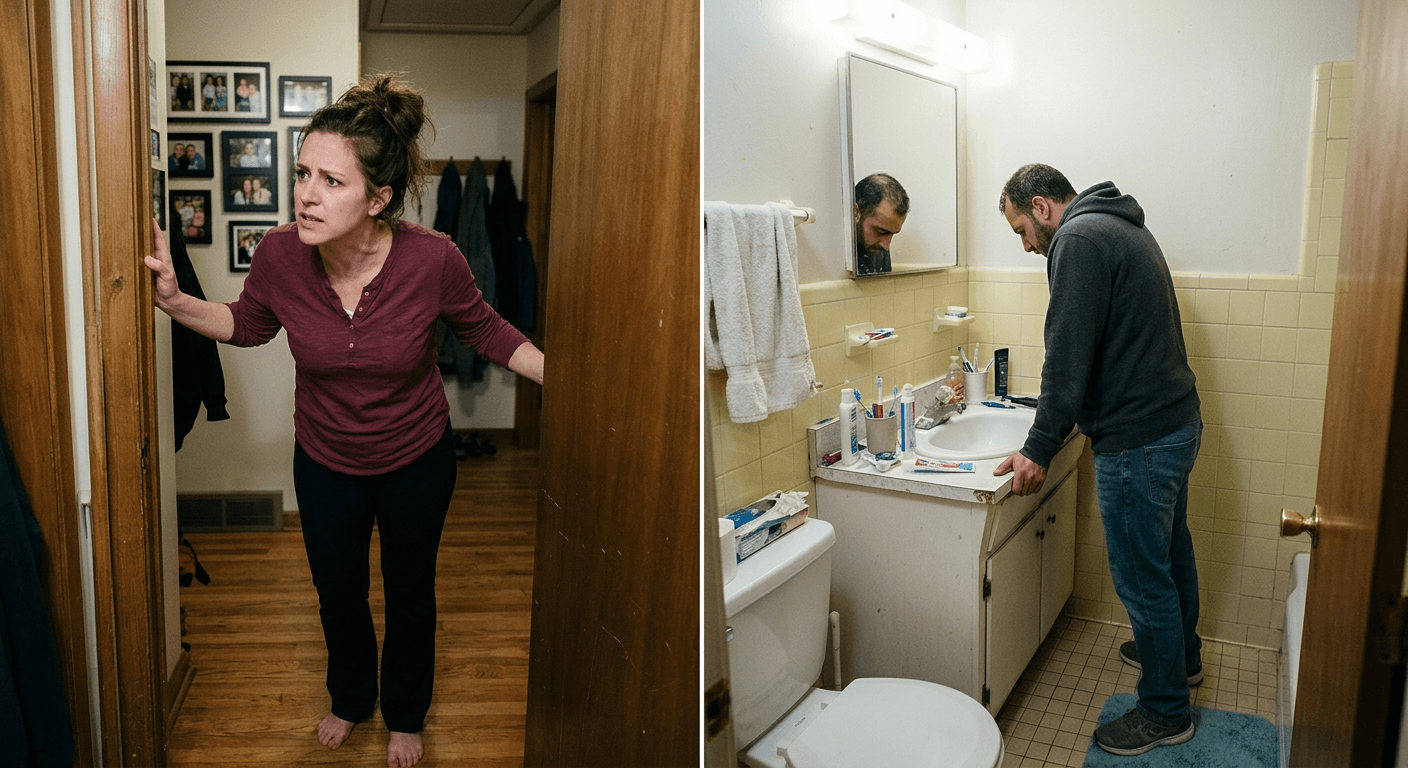
Research suggests that most relationship topics don’t actually get “solved.” According to Gottman’s research, approximately 69% of marital conflicts are perpetual problems ongoing differences in personality, needs, or values that couples manage rather than resolve. What distinguishes healthy marriages isn’t absence of these perpetual disagreements, but how couples handle them through constructive marriage conflict patterns.
Why “Never Fighting” Isn’t Necessarily Healthy
Couples who never fight aren’t necessarily healthier than those who argue regularly. Conflict avoidance can breed its own problems: unexpressed needs, accumulated resentment, emotional distance, and the loss of authentic connection. When disagreement is handled with mutual respect, it can actually deepen understanding and strengthen the relationship. This connects to broader themes discussed in couple communication that heals and connects.
How This Article Uses “Healthy” and “Unhealthy” (and Why Those Terms Have Limits)
Throughout this article, “healthy” and “unhealthy” describe marriage conflict patterns that relationship research associates with satisfaction and longevity versus patterns associated with distress and dissolution. These aren’t diagnostic categories, and individual relationships vary significantly. Cultural context, family background, and personal temperament all shape what conflict looks like. Only you and your partner can determine what feels right for your relationship and only qualified relationship professionals can assess your specific situation.
What Research Identifies as Healthy Marriage Conflict Patterns
Disagreeing While Maintaining Respect and Curiosity
In healthy marriage conflict patterns, partners can oppose each other’s positions without attacking each other as people. There’s room for genuine curiosity: “Help me understand why this feels so important to you.” The underlying assumption remains that both people have valid perspectives worth considering, even when those perspectives conflict.
Using “Softened Startup” Rather Than Criticism (Gottman Research)
Research on relationship dynamics suggests that how a conversation begins often predicts how it ends. Gottman’s research found that conversations that start harshly usually end harshly and that the first three minutes of a conflict discussion can predict the outcome.
A “softened startup” addresses the issue without attacking character: “I felt overwhelmed when I got home to a sink full of dishes” rather than “You never help around here you’re so lazy.” This distinction matters enormously. The first invites understanding; the second triggers defensiveness. These patterns are explored further in emotional intelligence in relationships.
Repair Attempts: How Healthy Marriage Conflict Patterns Include De-Escalation
Perhaps the most important predictor of relationship health is the repair attempt: any gesture that prevents negativity from spiraling out of control. This might be humor (“Okay, we’re both being ridiculous right now”), physical touch, acknowledging the other’s point (“You’re right, I did say that”), or admitting fault (“I’m sorry, that came out wrong”).
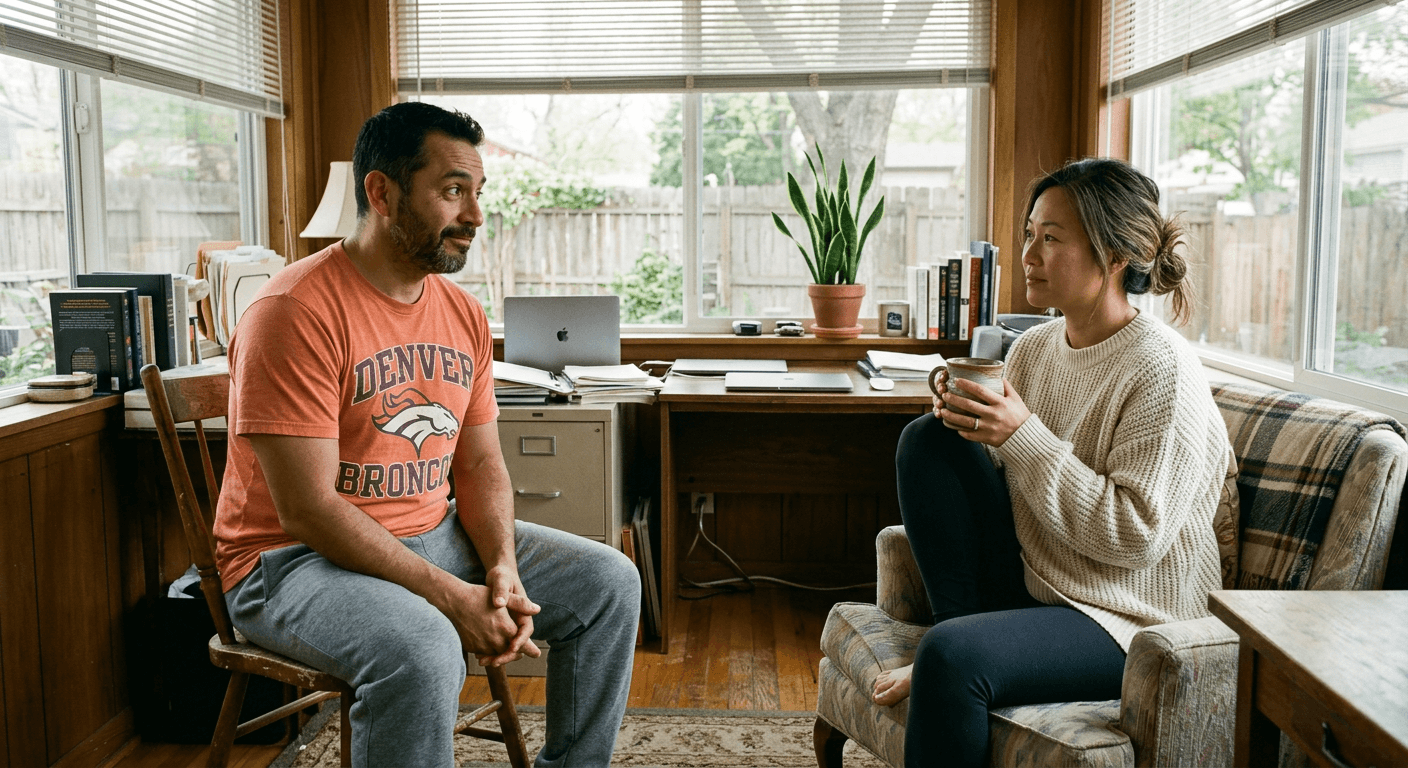
In healthy marriage conflict patterns, these repair attempts are noticed and accepted even when imperfect or awkward. In distressed relationships, repair attempts are missed or actively rejected.
Taking Responsibility and Offering Genuine Apologies
Healthy conflict includes moments when partners can say “I was wrong about that” or “I shouldn’t have said it that way” without excessive defensiveness. Apologies are specific (“I’m sorry I dismissed your concern”) rather than vague (“I’m sorry you’re upset”), and they’re followed by changed behavior, not just repeated promises.
Accepting Influence from Your Partner
Research suggests that willingness to be influenced by your partner to genuinely consider their perspective and sometimes adjust your position is particularly important. Gottman’s research found that marriages where partners accept influence from each other are significantly more stable.
Knowing When to Take a Break (and Actually Returning to the Conversation)
Healthy couples recognize when conversations are escalating unproductively and agree to pause: “I need a break. Can we come back to this in an hour?” Crucially, they actually return to finish the conversation rather than using breaks as permanent avoidance. Understanding building emotional regulation skills daily can help partners manage these pauses effectively.
Fighting About the Issue, Not Attacking Character
Healthy marriage conflict patterns stay relatively focused on the current issue rather than expanding into “you always” or “you never” territory, or making sweeping statements about who someone fundamentally is as a person.
What Research Identifies as Unhealthy Marriage Conflict Patterns
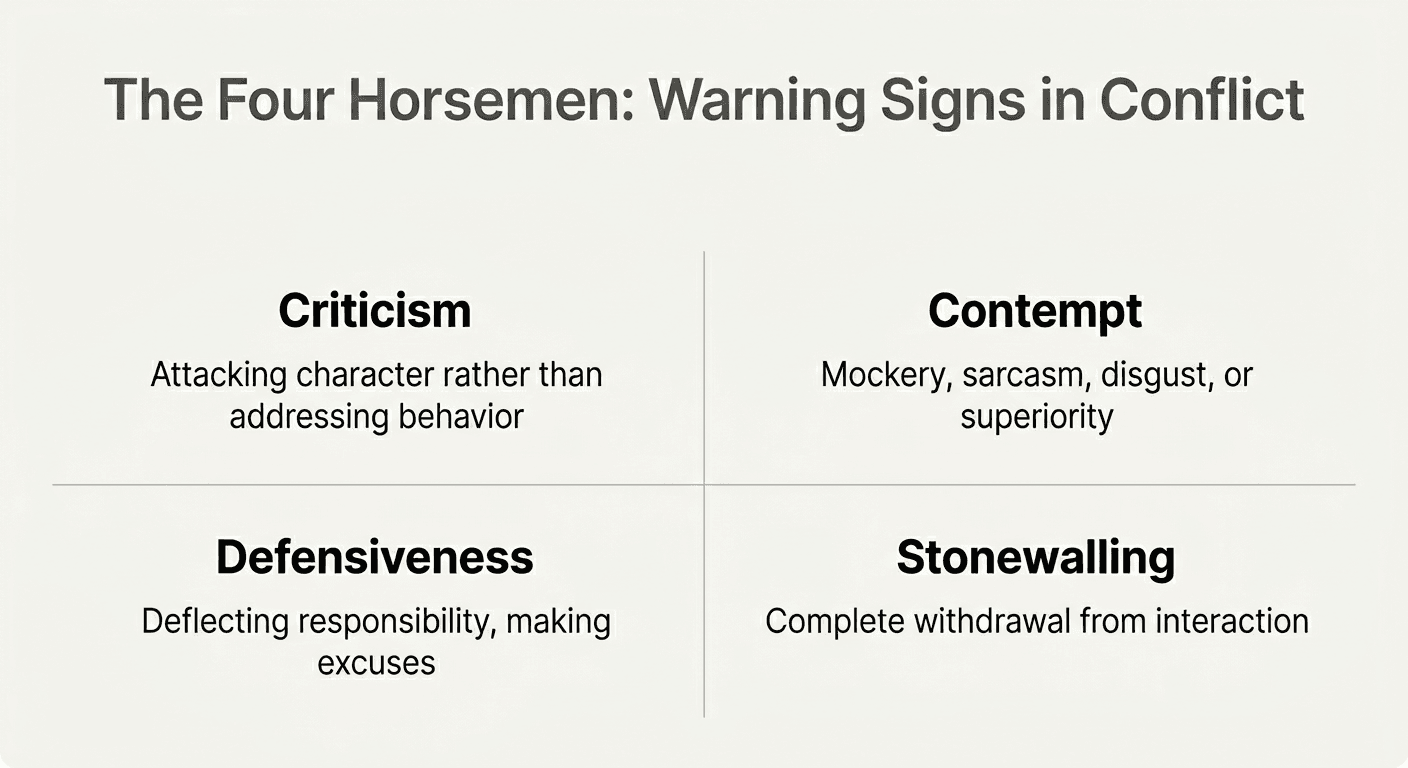
The Four Horsemen: Criticism, Defensiveness, Contempt, and Stonewalling (Gottman)
The Gottman Institute’s research identified four communication patterns so damaging to relationships that researchers called them “The Four Horsemen of the Apocalypse.”
Criticism attacks personality or character rather than addressing specific behavior: “You’re so selfish” instead of “I felt hurt when you made plans without checking with me.”
Contempt expressed through sarcasm, mockery, name-calling, eye-rolling, or hostile humor communicates disgust and superiority. Research suggests contempt is the single strongest predictor of relationship dissolution.
Defensiveness involves deflecting responsibility rather than acknowledging any validity in a partner’s concern: “Well, I wouldn’t have done that if you hadn’t…”
Stonewalling means withdrawing completely from interaction refusing to respond, leaving the room, or shutting down emotionally with no indication of when you’ll re-engage.
Kitchen-Sinking: Bringing Up Every Past Grievance
This pattern involves dumping every accumulated complaint into one argument. What started as a discussion about forgotten groceries becomes a referendum on last year’s missed anniversary, how they handled conflict with your mother six months ago, and that thing they said in 2019.
Escalation Without Repair: When Arguments Spiral
Arguments that continually intensify without any attempt to de-escalate create a destructive cycle. Voices get louder, statements get harsher, old wounds get reopened, and there’s no circuit breaker no moment when either partner steps back to calm things down.
Conflict Avoidance That Breeds Resentment
While healthy couples sometimes postpone difficult conversations, chronic conflict avoidance creates its own toxicity. Important issues never get addressed, resentment accumulates in silence, and partners drift into parallel lives rather than genuine partnership.
Win/Lose Mentality Rather Than Collaboration
In unhealthy marriage conflict patterns, disagreements become battles to be won rather than problems to be solved together. The goal becomes proving you’re right and your partner is wrong, rather than understanding each other and finding solutions that work for both.
Pursuing and Withdrawing Patterns (Demand-Withdraw Cycle)
This common pattern finds one partner pursuing resolution asking to talk, pushing for engagement while the other withdraws, becoming quieter and more distant. The more one pursues, the more the other retreats, creating escalating frustration for both. Research suggests this pattern is particularly corrosive to relationship satisfaction over time.
Bringing in Third Parties (Triangulation) During Conflict
Triangulation involves pulling others into couple conflicts: calling your mother during an argument to validate your position, discussing intimate relationship details with friends in ways that undermine your partner, or using children as messengers or allies. This pattern prevents direct resolution and often damages the relationship further.
The Role of Conflict Repair in Healthy Marriage Conflict Patterns
Why What Happens After the Fight Matters More Than the Fight Itself
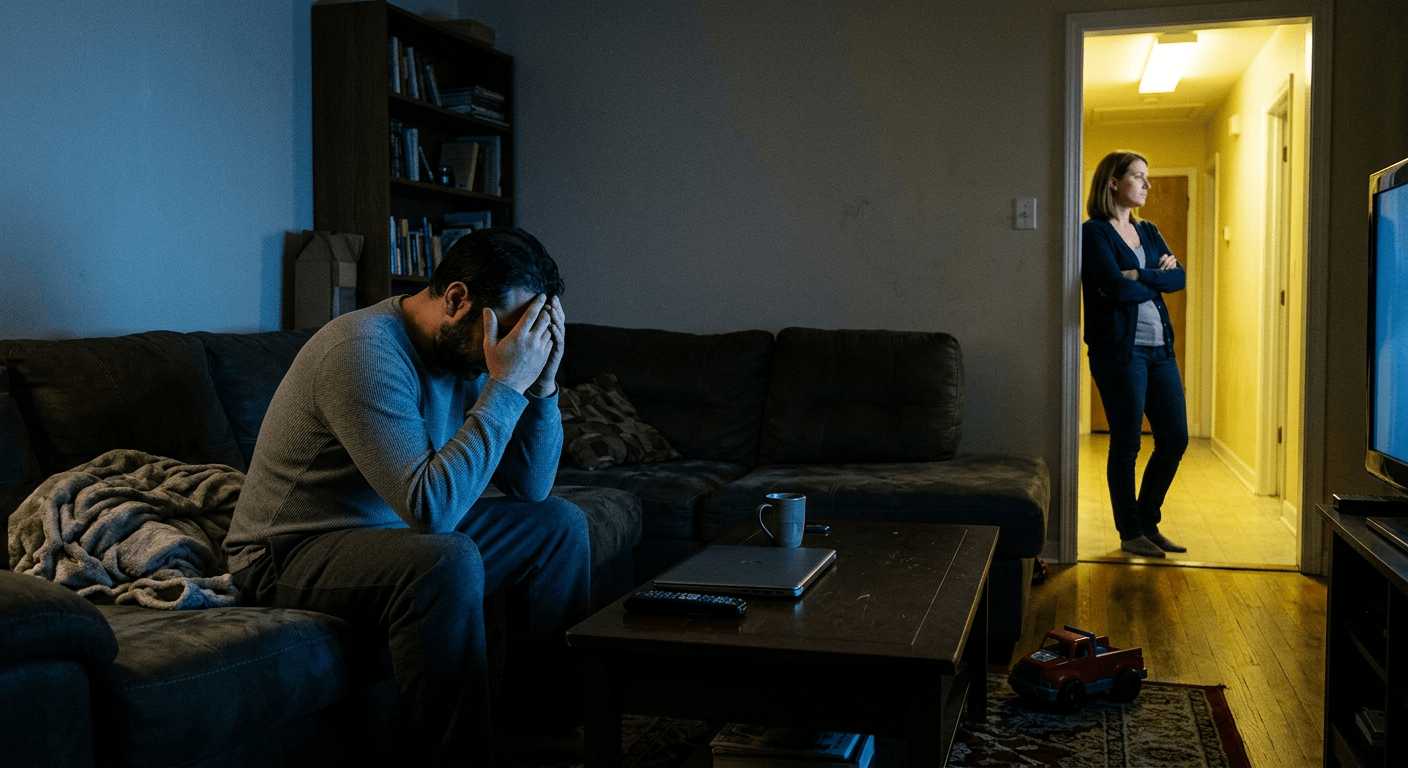
Research suggests that what happens after conflict may be more important than the conflict itself. Do you reconnect? Do you repair hurt? Or does coldness linger for days with no acknowledgment of what happened?
What Effective Repair Looks Like (Apologies, Reconnection, Learning)
Effective repair involves genuine acknowledgment of hurt caused, taking responsibility for your part without excessive self-flagellation or deflection, and making concrete efforts to reconnect. This doesn’t require perfect resolution of the underlying issue remember, most conflicts are perpetual. What matters is that both partners feel heard and that the relationship’s foundation remains intact. Understanding emotional safety as the foundation of intimacy helps reinforce these repair patterns.
When Repair Attempts Are Rejected or Ignored
When repair attempts are consistently rejected one partner extends an olive branch and the other brushes it aside or responds with continued coldness resentment and hopelessness accumulate. Over time, partners may stop making repair attempts altogether, a sign of concerning emotional disengagement.
The Importance of Emotional Bids After Conflict
After conflict, healthy couples gradually rebuild through what Gottman calls “emotional bids” small moments of reaching toward your partner. Asking how their day went, offering coffee, sharing something funny, initiating casual physical touch. These micro-connections signal that the relationship remains solid despite the disagreement.
Common Marriage Conflict Patterns and What They May Indicate
Fighting About the Same Issues Repeatedly (Perpetual Problems)
If you’re fighting about the same core issues for months or years, this doesn’t necessarily mean your relationship is doomed remember, most conflicts are perpetual. What matters is whether you’re managing these differences with respect and finding workable compromises, or whether the same fights are becoming increasingly bitter and entrenched.
When One Partner Always Initiates and the Other Avoids
When one person consistently brings up problems while the other consistently deflects or minimizes, this imbalance can create growing resentment on both sides. The initiator feels like they’re carrying all the emotional labor; the avoider feels constantly criticized.
When Conflicts Quickly Become Personal Attacks
If disagreements about logistics or decisions quickly become about character “You’re irresponsible,” “You don’t care about this family” this pattern may indicate that underlying resentments or insecurities are hijacking individual conflicts.
When You Can’t Remember What Started the Fight
If arguments regularly spiral to the point where neither of you can recall the original issue, this suggests that the conflict has become about the pattern itself about accumulated hurt, unmet needs, or feeling unheard rather than the surface topic.
When Conflicts Leave You Feeling Worse About the Relationship, Not Closer
After healthy marriage conflict patterns, partners often feel relief, greater understanding, or renewed connection even if the original problem isn’t solved. If arguments consistently leave you feeling more distant, more critical of your partner, or more hopeless about the relationship, this pattern warrants attention.
Cultural and Individual Differences in Marriage Conflict Patterns
How Family-of-Origin Shapes Conflict Expectations
Your family’s conflict style becomes your template for “normal.” If you grew up in a household where disagreements were handled quietly behind closed doors, a partner who raises their voice might feel frightening even if no harm is intended. If your family expressed conflict openly and loudly but resolved quickly with apologies and hugs, a partner who needs hours of silent processing might feel punishing.
Cultural Variations in Directness, Volume, and Expression
Cultural background significantly shapes conflict norms. Some cultures value direct confrontation and view it as healthy honesty; others emphasize harmony and indirect communication. Volume, emotional expression, and appropriate timing for difficult conversations all vary across cultural contexts. Research on relationship dynamics often reflects Western, middle-class norms that don’t universally apply.
Personality Differences: Processors vs. Immediate Resolvers
Some people process emotions externally and want to talk things through immediately. Others need internal processing time hours or even days before productive conversation is possible. Neither style is inherently healthier, but mismatched styles can create significant friction.
When Different Conflict Styles Create Meta-Conflict (Fighting About How You Fight)
Sometimes the biggest conflict becomes how you handle conflict. One partner’s need for immediate resolution feels like pressure; the other partner’s need for space feels like abandonment. You end up fighting about fighting, which can feel particularly hopeless.
Red Flags in Marriage Conflict Patterns That Indicate Professional Support May Help
When Contempt Has Become a Regular Part of Arguments
Occasional frustration is human. But if mockery, eye-rolling, name-calling, or expressions of disgust have become routine, this indicates eroded respect that’s difficult to rebuild without professional intervention.
When One or Both Partners Feel Afraid During Conflict
If you feel afraid during arguments of physical harm, of explosive rage, of severe emotional retaliation this signals a dynamic that extends beyond poor conflict skills and into concerning territory.
When Conflicts Involve Threats (Divorce, Leaving, Harm)
Threatening divorce during arguments, threatening to leave, or threatening any form of harm creates instability and fear that undermines relationship security. These threats may indicate that one or both partners have one foot out the door, or they may be attempts to control through fear.
When You’ve Stopped Trying to Resolve Issues
Some couples reach a point of hopelessness where neither person attempts resolution because it feels pointless. This emotional disengagement where you’ve given up on change can be harder to recover from than active conflict.
When Conflict Feels Constant or Affects Daily Functioning
If you’re arguing so frequently or intensely that it’s affecting sleep, work performance, parenting, or mental health, professional support can help assess what’s driving the constant tension. For guidance on seeking support, see when to seek professional support for anxiety.
When Children Are Being Exposed to Harmful Conflict
Research consistently shows that parental conflict affects children’s emotional wellbeing and development. If your arguments regularly occur within children’s earshot, involve them directly, or create a tense household atmosphere, addressing marriage conflict patterns becomes more urgent for your children’s sake as well as your relationship.
Distinguishing Unhealthy Marriage Conflict Patterns from Abuse
What Conflict Resolution Skills Cannot Address
This distinction matters enormously: unhealthy marriage conflict patterns can often be improved through skill-building and couples therapy. Abuse cannot be addressed through better communication or conflict resolution it requires safety planning, individual support, and often separation.

Patterns That Cross the Line: Control, Intimidation, and Fear
Patterns that cross from unhealthy conflict into abuse include physical violence or threats of violence, controlling behavior (monitoring movements, isolating from friends and family, controlling access to money), intimidation tactics, and creating an ongoing atmosphere of fear.
In abusive dynamics, conflict isn’t about two people struggling to communicate effectively it’s about one person maintaining power and control over another.
When to Seek Domestic Violence Resources, Not Couples Therapy
Couples therapy is not recommended when abuse is present. It can increase danger by providing an abuser with more information to use against their partner and by creating an illusion of “working on the relationship” when the fundamental problem is one person’s use of power and control.
Resources for Safety Assessment and Support
If your relationship involves physical violence, threats, controlling behavior, or fear, please contact domestic violence resources immediately. The National Domestic Violence Hotline is available 24/7 at 1-800-799-7233. Trained advocates can help you assess your situation and create a safety plan.
How to Shift Toward Healthier Marriage Conflict Patterns
Starting with Self-Awareness: Your Own Conflict Contributions
Change begins with honest self-examination. What do you do when conflict starts? Do you criticize, defend, withdraw, or escalate? This isn’t about blame marriage conflict patterns are relational, created by both people but you can only change your own behavior.
Notice your body’s signals. Where do you feel tension? Do you feel your heart racing, your jaw clenching? These physical cues can help you recognize when you’re moving into reactive mode rather than responsive mode.
Having a Meta-Conversation: Talking About How You Talk
Outside of active conflict, when both partners are calm, consider having a conversation about your marriage conflict patterns: “I’ve noticed our arguments sometimes escalate in ways that don’t feel good to either of us. Can we think together about what’s happening and what we might try differently?”
This works best when framed as collaborative problem-solving rather than criticism of how your partner fights.
Learning and Practicing Repair Skills for Better Marriage Conflict Patterns
Repair skills require intention and practice. You might agree on a signal either partner can use when conversations are escalating: “I’m feeling flooded. Can we pause?” You might commit to not saying things you can’t take back, even when angry. You might practice making repair attempts even when you still feel hurt or angry.
When and How to Suggest Couples Therapy
Suggesting therapy can feel vulnerable like admitting failure or criticizing your partner. Framing matters: “I love you and I want us to be happier together. I think talking to someone trained in relationship patterns could help us understand what’s happening” is different from “You need therapy to fix how you act.”
According to the American Psychological Association, couples therapy demonstrates moderate to strong effectiveness for relationship distress, particularly when both partners are engaged. For cost guidance, see therapy cost comparison.
Books, Courses, and Resources for Improving Marriage Conflict Patterns
Many couples benefit from structured learning resources before or alongside therapy. Books like The Seven Principles for Making Marriage Work by John and Julie Gottman offer research-based frameworks you can explore together. Sue Johnson’s Hold Me Tight provides accessible introduction to Emotionally Focused Therapy principles. For additional reading, see our attachment theory book comparison.
What Couples Therapy Can (and Can’t) Do for Marriage Conflict Patterns
How Therapists Help Couples Identify and Change Patterns
Couples therapists are trained to observe interaction patterns you can’t see from inside them. They can identify cycles how one partner’s withdrawal triggers the other’s pursuit, which increases withdrawal, which increases pursuit and help you understand what’s driving these patterns beneath the surface.
A therapist creates structured space for difficult conversations, teaches specific communication skills, and helps you practice new ways of engaging when emotions are high.
Evidence-Based Approaches: Gottman Method, EFT, Imago
Different therapeutic approaches emphasize different aspects of relationship repair. The Gottman Method focuses on building friendship, managing conflict, and creating shared meaning. Emotionally Focused Therapy (EFT) emphasizes attachment needs and emotional responsiveness. Imago Relationship Therapy explores how childhood experiences shape adult partnership.
All three have research support; what matters is finding an approach and therapist that fit your relationship.
What to Expect in the First Sessions
Initial couples therapy sessions typically involve assessment: understanding your relationship history, current challenges, conflict patterns, and what you hope to change. Therapists often meet with both partners together and individually to understand each perspective.
Early sessions may feel exposing or uncomfortable, particularly if you’re not accustomed to talking about relationship dynamics explicitly.
When Both Partners Need to Be Willing for Therapy to Work
Couples therapy requires both partners’ genuine willingness to examine their contributions and try new approaches. One partner cannot change a relationship pattern alone, and therapy cannot make an unwilling partner engage. If only one partner wants to work on the relationship, individual therapy may be more appropriate to explore that person’s options and needs.
Frequently Asked Questions About Marriage Conflict Patterns
How often do healthy couples fight?
There’s no magic number. Research suggests frequency matters far less than the quality of conflict and repair. Some healthy couples have intense disagreements weekly; others disagree rarely but handle those moments with respect and reconnection. What matters is whether conflicts ultimately strengthen or erode the relationship.
Is it normal to say hurtful things during arguments?
Most people occasionally say things they regret when emotions run high. What matters is whether this is occasional or constant, whether you take responsibility and repair afterward, and whether those hurtful statements reflect underlying contempt or momentary frustration. If cruelty has become routine, this pattern warrants attention.
Can we fix our marriage conflict patterns if we’ve been fighting this way for years?
Marriage conflict patterns that developed over years can change, but it requires sustained effort from both partners and often professional guidance. Research on relationship therapy suggests that couples can learn new patterns at any relationship stage, though deeply entrenched patterns require more intensive work.
What if only one of us thinks there’s a problem?
This discrepancy itself can be revealing. Sometimes one partner’s conflict style (perhaps avoidance) means they don’t experience the pattern as problematic in the same way. If one partner is distressed enough to seek help, that distress matters and warrants attention, even if the other doesn’t initially share the concern.
Should we avoid conflict topics that always end badly?
Temporarily avoiding particularly inflammatory topics can provide breathing room, but indefinite avoidance usually breeds resentment. The goal is learning to approach difficult topics differently rather than never addressing them. A couples therapist can help structure these conversations in new ways.
When is conflict a sign we’re incompatible vs. just need skills?
This is one of the hardest questions to answer from inside a relationship. Fundamental incompatibility might look like deeply misaligned values, life goals, or needs that cannot be compromised without one partner sacrificing their essential self. Skill deficits involve how you engage with differences rather than the differences themselves. A qualified therapist can help assess this distinction in your specific situation.
Important Information and Resources
Understanding the Purpose and Limits of This Guide
This article provides educational information based on relationship research, but it is not a substitute for professional couples therapy or marriage counseling. Only qualified relationship professionals can assess your specific situation and provide personalized guidance tailored to your relationship’s unique dynamics, history, and needs.
The patterns described here reflect research-based observations, but individual relationships exist within complex contexts. What constitutes healthy conflict can vary across cultures, and relationship norms differ. This article reflects research often conducted within Western cultural contexts, which may not universally apply.
When Relationship Conflict Involves Safety Concerns
If your relationship involves physical violence, threats, control, or fear, please contact domestic violence resources immediately. The National Domestic Violence Hotline is available 24/7 at 1-800-799-7233. Conflict resolution skills cannot address abusive dynamics, which require specialized support and often safety planning.
Couples therapy is not appropriate when abuse is present and can increase danger. Individual support from domestic violence advocates and therapists trained in abuse dynamics is the recommended pathway.
About Our Resource Recommendations
LubDubSmile may earn a commission if you choose to explore resources through our links, at no additional cost to you. We recommend multiple pathways to relationship support including local therapists, community resources, and library books and your choice should be based on your specific needs and circumstances, not affiliate relationships.
Takeaway
All couples experience conflict; what distinguishes healthy relationships is how partners navigate disagreement and repair afterward. Understanding marriage conflict patterns helps you recognize when arguments preserve respect versus when they erode connection. Your conflict frequency matters less than whether arguments allow for influence, include genuine repair, and ultimately bring reconnection. Recognizing concerning marriage conflict patterns doesn’t mean your relationship is doomed it means you have information to work with. Change requires both partners’ willingness and often benefits from professional guidance, but patterns that developed over years can shift. The goal isn’t conflict-free marriage it’s conflict that strengthens rather than erodes your foundation.
This content is for educational purposes and does not substitute for professional psychological or therapeutic help.