

Shift From Reacting to Responding: Building Emotional Regulation Skills
You’re cut off in traffic, corrected in a meeting, or hit with a surprise email. Before you can think, you snap back or shut down. Later, you wonder, “Why did I say that?”
Emotional reactions are automatic biological reflexes that protect us from danger. However, they can backfire in modern life. The good news: research from Harvard Health Publishing’s Mind & Mood division shows that learning to pause and respond thoughtfully builds healthier relationships, better decisions, and lower stress levels. Emotional regulation isn’t about suppression it’s about choice.
The Science Behind Emotional Regulation
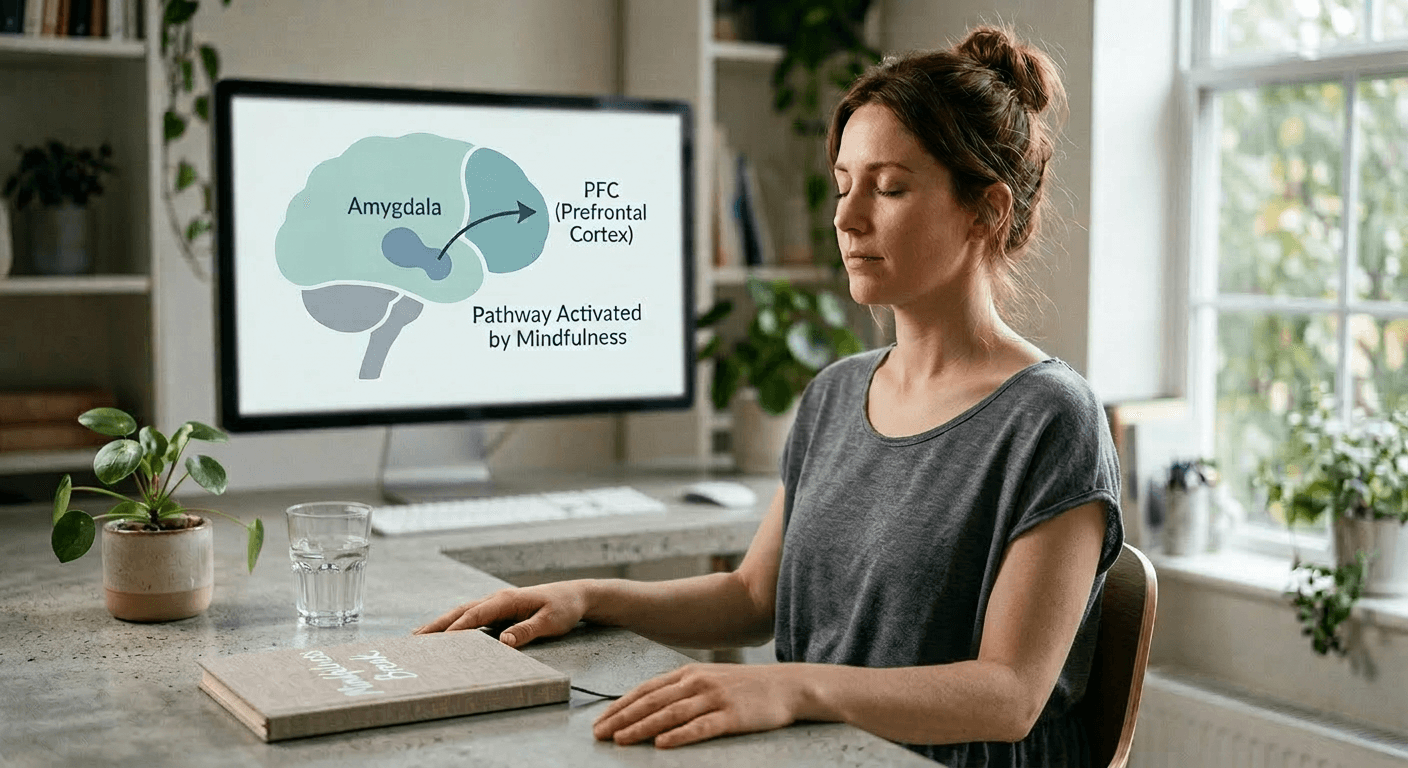
When we perceive a threat or criticism, the amygdala the brain’s alarm center activates instantly. Heart rate spikes, muscles tense, and stress hormones flood our systems. This process, nicknamed the “amygdala hijack,” happens in milliseconds. Consequently, slowing down the reaction depends on the prefrontal cortex (PFC), the region responsible for logic and long-term thinking.
According to neuroscientists cited by Harvard Medical School, regular mindfulness and breathing practices strengthen the PFC. Moreover, they weaken the amygdala’s self-timer. That means with practice, you literally rewire your brain to pause before the impulse takes over.
This mental rewiring parallels the approach discussed in emotional hygiene habits building daily practices that protect your emotional well-being.
Pause Before the Flood
When tension rises, your body’s first signal racing pulse, tight jaw, shoulders up arrives before your words. Catching these clues is step one. Harvard Health experts suggest breathing deeply through the nose for four seconds and out for six. This technique engages the parasympathetic nervous system and calms your heart rate.
That simple breathing gap acts like a circuit breaker. Indeed, it creates a few seconds for the thinking mind to regain the microphone. These micro-moments of calm can reset your nervous system before words escape.
Name What You Feel
Labeling emotions bridges instinct and analysis. Studies by the American Psychological Association (APA) show that identifying feelings (“I’m angry,” “I feel overwhelmed”) reduces limbic activity. Subsequently, it restores self-control. The phrase “Name it to tame it,” coined by UCLA psychiatrist Daniel Siegel, captures how language regulates the brain.
Try writing words instead of ruminating. Seeing “frustrated” on paper turns vague discomfort into something you can address.
Ground Thoughts in the Present
When we react, we often catapult into future fears or past regrets. Grounding exercises pull you back to now. The National Institutes of Health (NIH) recommend mindfulness practices that focus on sensory input before responding. For instance, notice your feet on the floor or the feel of air through your nose. This anchors your attention, making space for clearer choices.
Tip: When a heated email arrives, read it once, step away, and touch a solid object (a desk, a wall) while you take three slow breaths. Respond after your heartbeat slows. This approach helps prevent the text fights and misreads that damage relationships.
Update Your Self-Talk
The brain listens to your words. Replacing catastrophic thoughts (“I always mess up”) with balanced ones (“I made a mistake but I can fix it”) re-trains emotion pathways. Cognitive-behavioral research backed by Harvard Health’s Stress Science Team shows this kind of reframing reduces anxiety. Furthermore, it builds emotional resilience.
You’re not ignoring negativity you’re reducing its volume so it doesn’t drown out problem-solving. This skill supports the same principles found in defining enough and self-compassion.
Use Your Body to Regulate Your Mind
Because emotions show up physically, physical actions can calm them. Stretch, stand up, walk a flight of stairs, or run your wrists under cool water. The Centers for Disease Control and Prevention (CDC) confirms that short movement breaks reduce muscle tension and increase oxygen supply to the brain, sharpening judgment.
Think of these as micro resets: your mind brakes when your body slows. Similarly, the strategies in working mother fatigue recovery show how brief physical pauses restore mental clarity.

Move From Judgment to Curiosity
Instead of “Why did they do that to me?” try “What else could be true?” This tiny language shift reduces anger and expands perspective. The Harvard Health Mindfulness reports describe compassion and curiosity as core skills in emotional regulation training. Curiosity activates the PFC. As a result, it turns threats into information you can work with.
Pause before replying to a difficult text and imagine three non-hostile explanations for the other person’s tone. Your response will likely be kinder and more effective. This practice strengthens emotional intelligence in relationships.
Practice Low-Stress Reps Before High-Stress Tests
Like muscles, emotional skills grow with practice. The American Psychological Association suggests rehearsing calm responses in everyday irritations traffic lights, long lines so your brain learns to stay steady. That way, in bigger conflicts, your pause-and-plan instinct is already trained.
Seek Support When Overwhelmed
Learning regulation doesn’t mean handling everything alone. If anger or sadness regularly feels uncontrollable, a mental-health professional can help identify patterns and core triggers. Therapies like CBT and dialectical behavior therapy (DBT) have strong evidence for boosting emotion management skills according to peer-reviewed studies from the National Institute of Mental Health (NIMH).
Asking for guidance is not weakness it’s neural training with a coach. Recognizing when to ask for help redefines resilience.
Closing Insight: The Power Is In the Pause
Reacting is automatic; responding is intentional. Every pause you build between emotion and action teaches your brain that you’re safe enough to choose. Over time, that choice rewires stress responses, frees relationships from replays, and turns daily pressure into a practice of self-trust.
Emotional regulation skills help convert stress into strategy by strengthening brain pathways between the amygdala and prefrontal cortex. Experts from Harvard Health, the APA, NIH, and CDC agree that mindful pausing, labeling feelings, and reframing thoughts can improve focus, relationships, and resilience.
This content is for educational purposes and does not substitute for professional psychological or therapeutic help.