

When Connection Feels One-Sided: Understanding Emotional Distance in Relationships
Many people find themselves in a familiar pattern. They’re invested, attentive, and emotionally present yet their partner seems distant or emotionally unavailable. This emotional distance in relationships creates a painful gap. The relationship exists, but the depth feels absent. Conversations stay surface-level. Affection becomes routine rather than heartfelt. There’s no crisis, but there’s also no closeness.
This emotional distance isn’t always a sign of incompatibility or lost love. Often, it reflects a mismatch in how partners experience emotional intimacy. Research in relationship psychology suggests some people connect through feeling needed, capable, and essential to their partner’s happiness. Others feel most connected through conversation, emotional sharing, and quality time.
When that sense of purpose is missing, a partner may withdraw emotionally even while still caring deeply. Understanding this dynamic can shift a relationship from functional to fulfilling. But it requires a different approach than most conventional relationship advice offers.
The Psychology Behind Emotional Distance in Relationships
Relationship research has long explored differences in attachment and connection styles. While individual variation is significant, patterns emerge. Many people report feeling most emotionally engaged when they believe they’re making a tangible difference in their partner’s life. This isn’t about traditional gender roles or outdated expectations. It’s about emotional wiring shaped by both biology and socialization.
Psychologist John Gray explored this in his work on relationship dynamics. Researcher Shaunti Feldhahn’s surveys found that many individuals ranked “feeling respected and needed” as more important than “feeling loved” in relationship satisfaction. When people feel their contributions are unnecessary or unnoticed, emotional distance in relationships often follows. Not out of spite, but from a sense of irrelevance.
Partners seeking deeper connection often increase emotional expression or request more quality time. These strategies work well for some emotional needs. However, they may inadvertently signal that a partner isn’t essential to solving anything or providing value. The harder one tries using their instinctive approach, the more the other retreats.
Breaking this cycle requires understanding what specifically triggers emotional investment. It also demands learning how to communicate in ways that activate it. This overlaps with broader principles discussed in couple communication that heals and connects.

His Secret Obsession: A Communication Framework for Reducing Emotional Distance
His Secret Obsession is a digital relationship psychology program created by James Bauer, a licensed relationship coach with over 12 years of experience working with couples. The program centers on what Bauer calls the “Hero Instinct”. This concept suggests that many people feel most emotionally connected when they feel needed, valued, and capable of making their partner genuinely happy.
Rather than focusing on attraction tactics or manipulation, the program teaches specific communication techniques. Bauer calls these “signal phrases.” They’re designed to activate emotional investment in everyday interactions. The premise is simple. Small shifts in how you express needs, appreciation, or vulnerability can dramatically reduce emotional distance in relationships.
The core product is a 170-page e-book divided into 12 chapters. Training videos supplement the text, with Bauer explaining concepts through real-world examples. Bonus modules include “Silent Action Signals” (non-verbal communication techniques), “The X-Ray Question” (a conversation starter for deeper emotional understanding), and “The Private Island” signal (creating feelings of exclusivity and intimacy).
This is not a therapeutic intervention. It does not replace counseling for serious relationship issues, trauma, or patterns of abuse. It’s an educational framework for individuals who are in generally healthy relationships but feel something is missing emotionally. For those navigating deeper relational struggles, exploring emotional safety in relationships may provide a helpful foundation.
How the “Hero Instinct” Framework Addresses Emotional Distance
Bauer’s approach is grounded in a specific idea. Many individuals are wired to pursue meaning and purpose in relationships, not just companionship. When a person feels they’re actively contributing to their partner’s happiness, they invest emotionally. When their contributions are noticed and valued, that investment deepens.
The program teaches individuals to:
- Reframe requests so they invite partnership rather than highlight inadequacy
- Use specific phrases that signal trust in a partner’s capability
- Express appreciation in ways that reinforce their sense of contribution
- Create emotional “wins” where a partner feels like a problem-solver, protector, or provider (emotionally, not just materially)
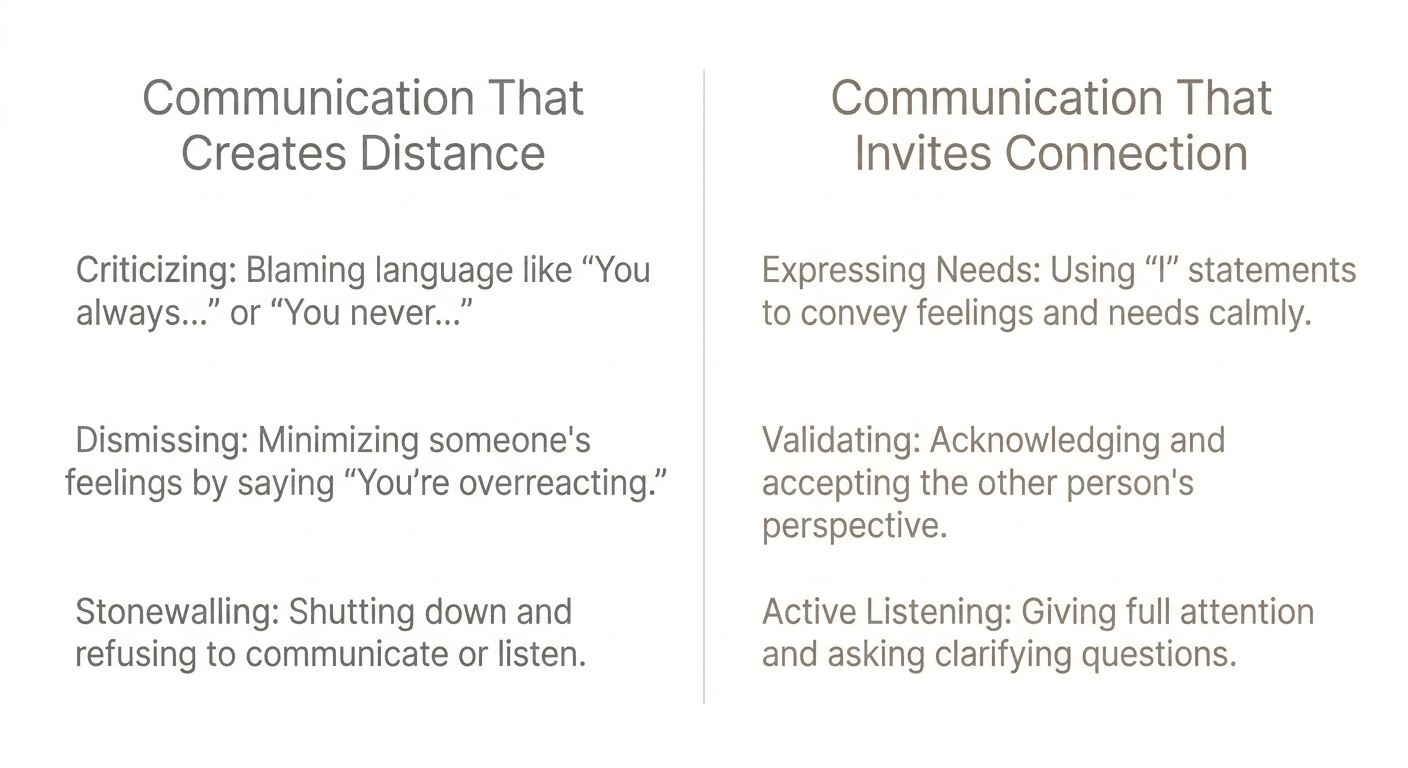
Communication Patterns and Emotional Distance
For example, instead of saying “You never plan anything for us,” the program might suggest reframing it. “I’d love your input on something special we could do together you always come up with the best ideas.” The need is the same, but the emotional tone shifts from criticism to invitation.
These aren’t scripts to memorize. They’re templates for adjusting communication style in ways that reduce emotional distance in relationships. The program emphasizes authenticity. Use these techniques only when they genuinely reflect your feelings, not as manipulation. This aligns with the principles explored in emotional intelligence in relationships.
Who This Program May Be For
His Secret Obsession is designed for adults, typically ages 25–55, who are:
- In relationships where affection exists but emotional depth feels lacking
- Dating someone who seems interested but won’t commit or emotionally open up
- Experiencing a partner pulling away after an initial honeymoon phase
- Struggling with communication breakdowns despite good intentions on both sides
- Wanting to understand relationship psychology beyond surface-level advice
It’s particularly suited for those who prefer self-directed learning over therapy or coaching. It appeals to individuals who value psychology-backed approaches and are willing to experiment with communication techniques over several weeks.
It may also help those rebuilding connection after conflict. Navigating the challenges of long-term relationships where passion has faded into routine is another common use case. Similar dynamics are often explored in intimacy in marriage and honest conversations.
Who This Program May Not Be For
This program is not appropriate for:
- Individuals in abusive, controlling, or toxic relationships (professional help is essential)
- Situations involving infidelity, addiction, or serious mental health issues
- Relationships where the core problem is incompatibility, not communication
- People seeking quick fixes or “guaranteed” results
It’s also not designed to replace couples therapy. If you’re facing repeated patterns of conflict, deep-seated resentment, or trauma, a licensed therapist is the appropriate resource.
Additionally, if your partner has explicitly stated disinterest in the relationship or commitment, no communication technique will override that reality. The program works best when both people fundamentally want connection but struggle to create it.
Finally, this requires effort and consistency. If you’re not willing to adjust your own communication patterns or reflect on how your current approach may be ineffective, the program won’t deliver meaningful change.
Pros & Practical Limitations
Pros:
- Psychology-based framework grounded in relationship research, not generic dating advice
- Specific, actionable techniques rather than vague concepts
- Created by a licensed relationship coach with over a decade of experience
- Affordable compared to coaching or therapy (one-time payment vs. ongoing sessions)
- 60-day money-back guarantee allows risk-free trial
- Digital delivery means instant access with no shipping delays
Limitations:
- Not personalized: The program offers general principles, not tailored advice for your specific relationship
- Requires consistency: Results depend on applying techniques over time, not one-time use
- Individual variation: Not all partners respond identically; some may need different approaches
- No live support: You won’t have real-time guidance or feedback on implementation
- Digital format only: No physical book option for those who prefer print
- Focuses primarily on heterosexual dynamics: May require adaptation for other relationship structures
The program works best when viewed as a supplement to your own emotional intelligence. It’s not a substitute for self-awareness or mutual effort.
Pricing & Transparency
His Secret Obsession is priced at $47 as a one-time payment. This includes:
- The full 170-page core e-book
- Training video modules
- All bonus materials (Silent Action Signals, The X-Ray Question, Private Island technique)
- Lifetime access to the members area
The program comes with a 60-day money-back guarantee processed through ClickBank, the payment platform. If you’re unsatisfied for any reason within 60 days, you can request a full refund.
Optional upsells are offered after purchase. These include additional masterclasses or modules. However, the core program is complete at the $47 price point.
Compared to a single couples therapy session (often $150–250), the cost is low. However, therapy provides personalized guidance, while this is a self-study framework. The value depends on whether you’re looking for education and tools you can apply independently, or professional intervention.
A Balanced Perspective on Healing Emotional Distance
His Secret Obsession is not a miracle solution. It won’t repair fundamentally broken relationships, override incompatibility, or replace professional counseling when needed. What it does offer is a structured framework for understanding emotional distance in relationships. It addresses why partners withdraw emotionally and what communication shifts may help.
For individuals who feel they’re doing “everything right” but still hitting a wall emotionally, the program provides alternative communication strategies. These may resonate more effectively with how some partners process intimacy and connection.
The 60-day guarantee lowers risk. The digital format allows immediate access. The psychological foundation offers more substance than surface-level dating advice.
Whether it’s the right fit depends on your relationship’s specific challenges. It also depends on your willingness to adjust communication habits. Finally, consider whether the core concept activating the Hero Instinct aligns with your partner’s emotional wiring.
Readers who feel aligned with this approach may choose to review the full program details directly to determine if it matches their needs.
Disclosure: LubDubSmile may earn a commission if you purchase through links on this page, at no extra cost to you. We only recommend products we believe align with our editorial standards.
His Secret Obsession is a relationship psychology program and is not a substitute for professional therapy or counseling. Results vary based on individual circumstances. If you’re experiencing abuse or serious relationship issues, please consult a licensed therapist. This content is for educational purposes and does not substitute for professional psychological or therapeutic help.







My husband and I have been feeling a bit disconnected lately, and I’m so thankful for this article because it perfectly described the “drift” we couldn’t quite put into words.
We are so glad this helped put a name to what you’ve been feeling.
Thank you for sharing!
Warmly,
The LubDubSmile Team