

Emotional Infidelity vs. Physical Infidelity: Understanding the Differences and Impact
Emotional infidelity and physical infidelity both represent serious breaches of trust in committed relationships yet they differ in ways that shape how each partner experiences the betrayal and what recovery requires. When most people hear the word “infidelity,” they picture a physical act a secret encounter, a lie discovered, a line clearly crossed. But what happens when the betrayal never becomes physical? What happens when your partner hasn’t touched anyone else, yet you’ve lost them emotionally all the same?
Emotional infidelity developing a deep romantic connection with someone outside your relationship draws increasing recognition from relationship experts as one of the most damaging forms of betrayal in committed partnerships. Yet it also ranks among the hardest to define, acknowledge, or even recognize until it has already taken root.
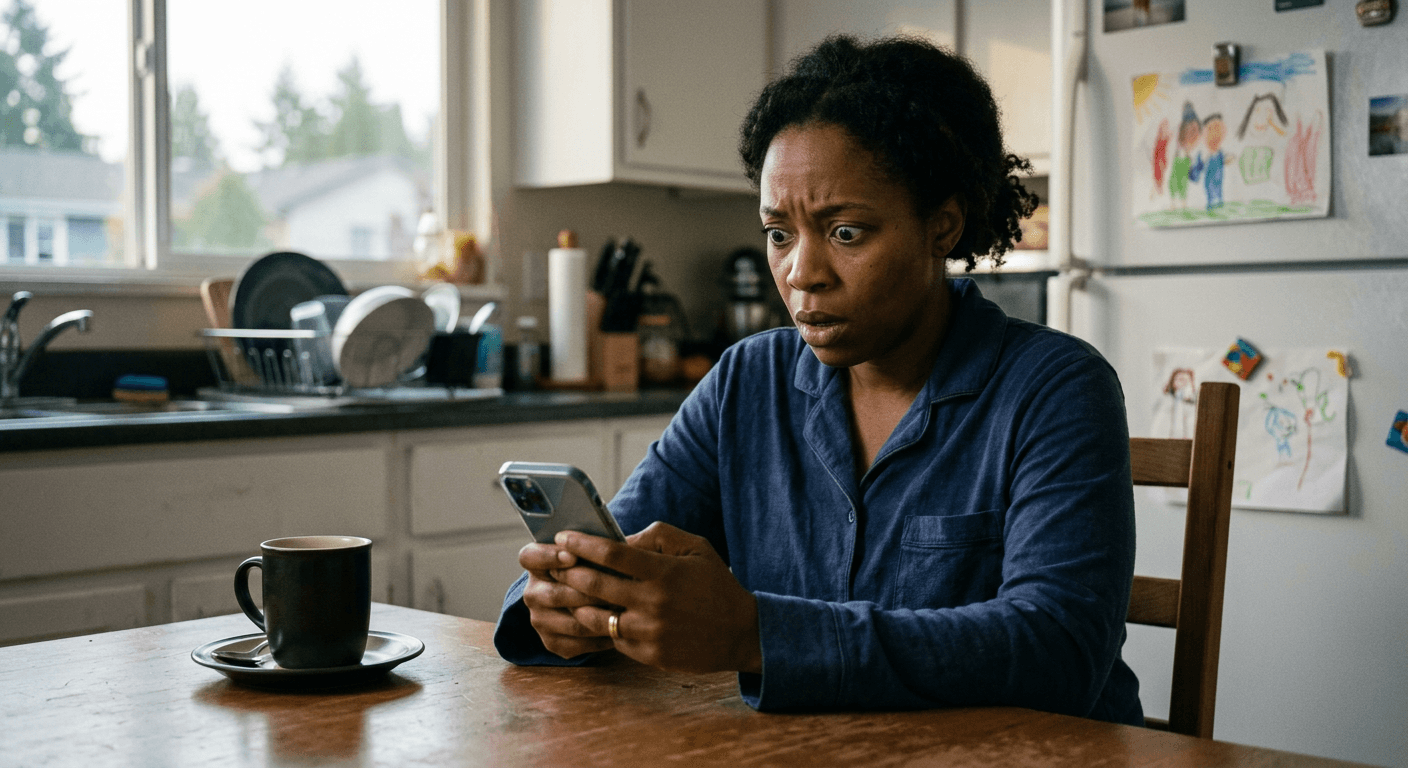
This article explores the key differences between emotional infidelity and physical infidelity, examines why both types hurt often in very different ways and looks at what research suggests about recovery, rebuilding trust, and the complex psychology of intimate betrayal. Whether you’re trying to understand something that happened in your own relationship, make sense of your feelings, or simply want to be better informed, this article offers a clear, compassionate, and honest look at one of the most challenging topics in adult relationships.
We approach this topic with care because the people reading it are rarely doing so from a neutral position. Most arrive here because something has happened, or because something feels like it might be happening, or because they are trying to understand a wound they have been carrying without adequate language for it. Our editorial commitment here is not to adjudicate whose pain is more legitimate or to produce a verdict on relationships we know nothing about. It is to give readers accurate, research-grounded information about what infidelity in its different forms actually involves, what the evidence says about its impact, and what recovery realistically requires. Where the evidence is clear, we say so. Where it is genuinely contested or dependent on individual circumstance, we say that too.
What Is Physical Infidelity?
Physical infidelity involves sexual or romantic physical contact outside a committed relationship without the knowledge or consent of the partner. It’s the form of betrayal most widely recognized across cultures and the one most commonly cited in divorce proceedings.
The Traditional Definition and Its Spectrum
Physical infidelity isn’t binary. It exists on a spectrum: a single impulsive kiss, a one-night encounter with no emotional attachment, or an ongoing sexual affair running alongside the primary relationship. What these share is physical boundary-crossing and deliberate concealment from a partner who hasn’t agreed to it.
Research from the General Social Survey suggests approximately 20% of married men and 13% of married women report having physical contact outside their marriage at some point. Physical infidelity remains the most commonly cited reason for divorce in the United States.
Why It Carries Clear Recognition as Betrayal
The clarity of physical infidelity its definability means that both the person who experienced it and the person who committed it often have little difficulty naming what happened. That clarity doesn’t make it less painful. But it does mean the betrayal carries defined edges, which matters when processing and recovery begin.
Cultural and Relational Context
Definitions of physical infidelity depend on relationship agreements. In consensually non-monogamous relationships including open relationships and ethical polyamory physical contact outside the primary partnership may fall within agreed terms. In these contexts, infidelity still centers on broken agreements, not physical contact alone. For the purposes of this article, physical infidelity refers to contact that violates the explicit or implicit terms of a committed monogamous relationship.
What Is Emotional Infidelity?
Emotional infidelity occurs when one partner develops a deep emotional bond, romantic feelings, or intimate connection with someone outside the relationship even without physical contact. It’s harder to define than physical infidelity, easier to rationalize, and for many people, just as devastating.
Why Emotional Infidelity Is Harder to Recognize
Emotional affairs rarely announce themselves. They typically begin as ordinary friendships a coworker, a reconnected friend, an online connection and gradually deepen into something that starts filling emotional space belonging in the primary relationship. Because no physical line has crossed, the person involved can maintain sometimes genuinely believing it that nothing wrong is happening.
Relationship researcher Shirley Glass, author of Not Just Friends, documented extensively how emotional affairs develop through what she called “windows and walls”: the involved partner opens an emotional window to someone outside the relationship while building walls that keep their primary partner out. The friendship becomes a secret world.
The Role of Secrecy
Most relationship experts point to secrecy as the clearest marker that a close friendship has shifted into something else. If you wouldn’t want your partner to read your messages, hear your conversations, or know how much time you spend thinking about this person that discomfort carries important information worth taking seriously.
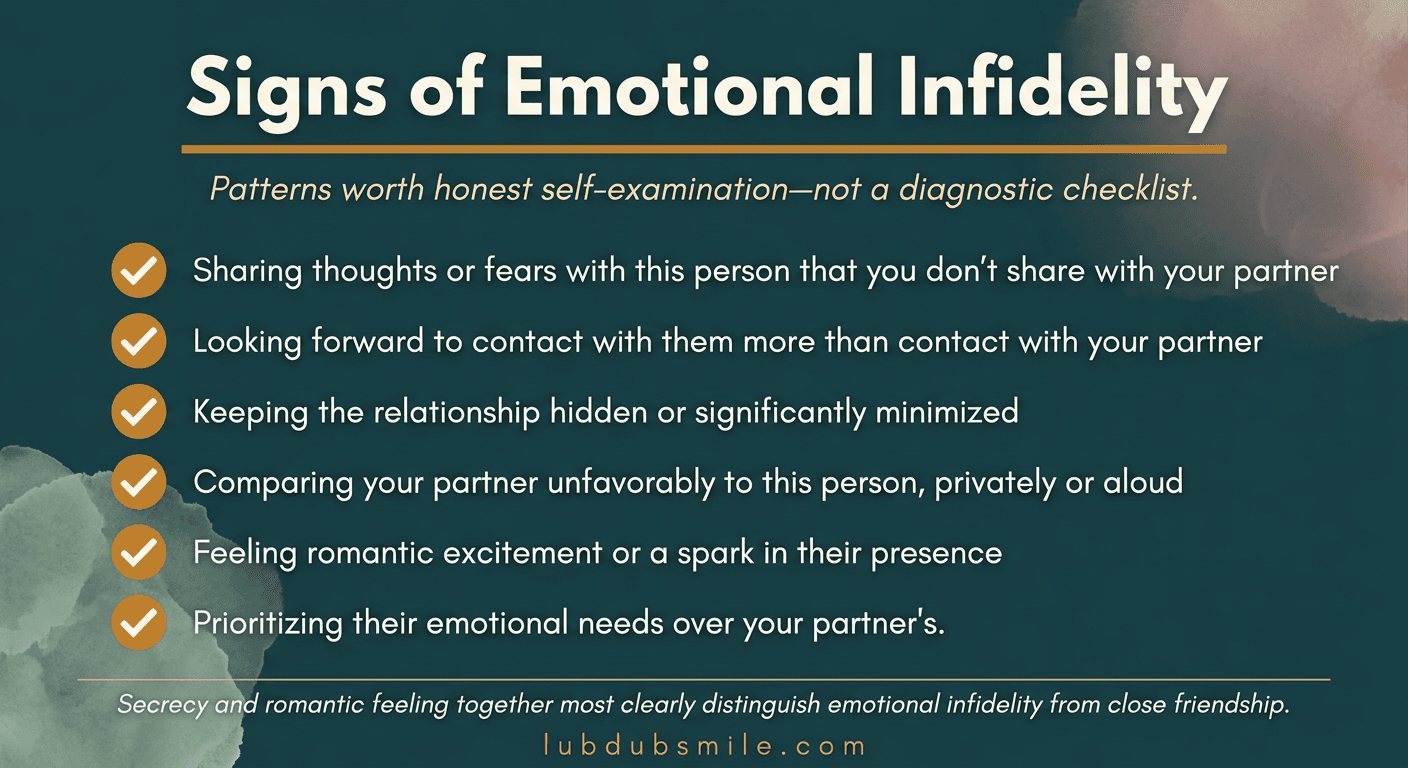
Emotional infidelity is distinguished from close friendship most clearly by the combination of secrecy and romantic feeling together.
These aren’t a diagnostic checklist they’re patterns worth honest self-examination.
The Digital Dimension
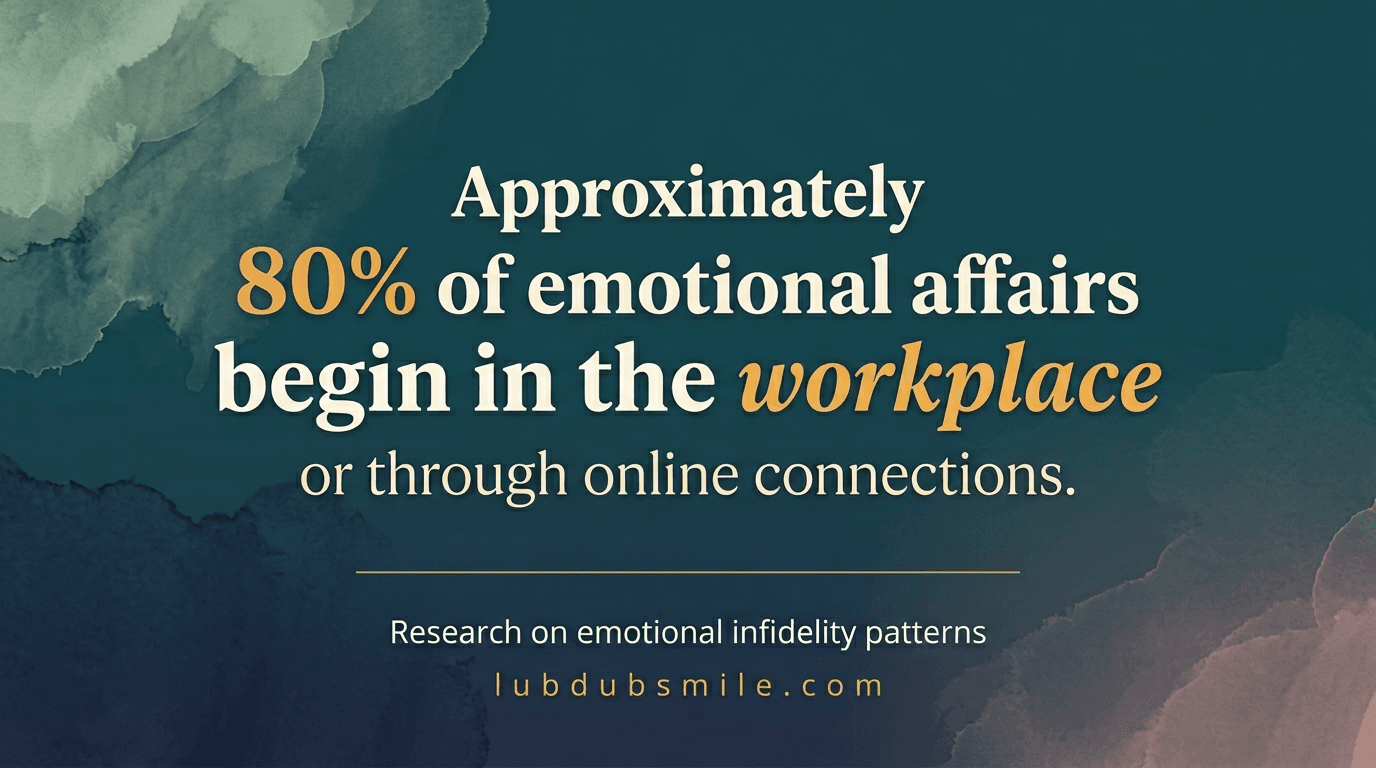
Emotional affairs increasingly begin and develop online through texting, social media, or reconnections with past partners. The accessibility of private communication makes digital emotional affairs both common and easy to sustain invisibly. Research suggests approximately 80% of emotional affairs begin in workplace or online settings.
Understanding how digital communication creates relationship misreads can help couples recognize when online connections shift from innocent to concerning.
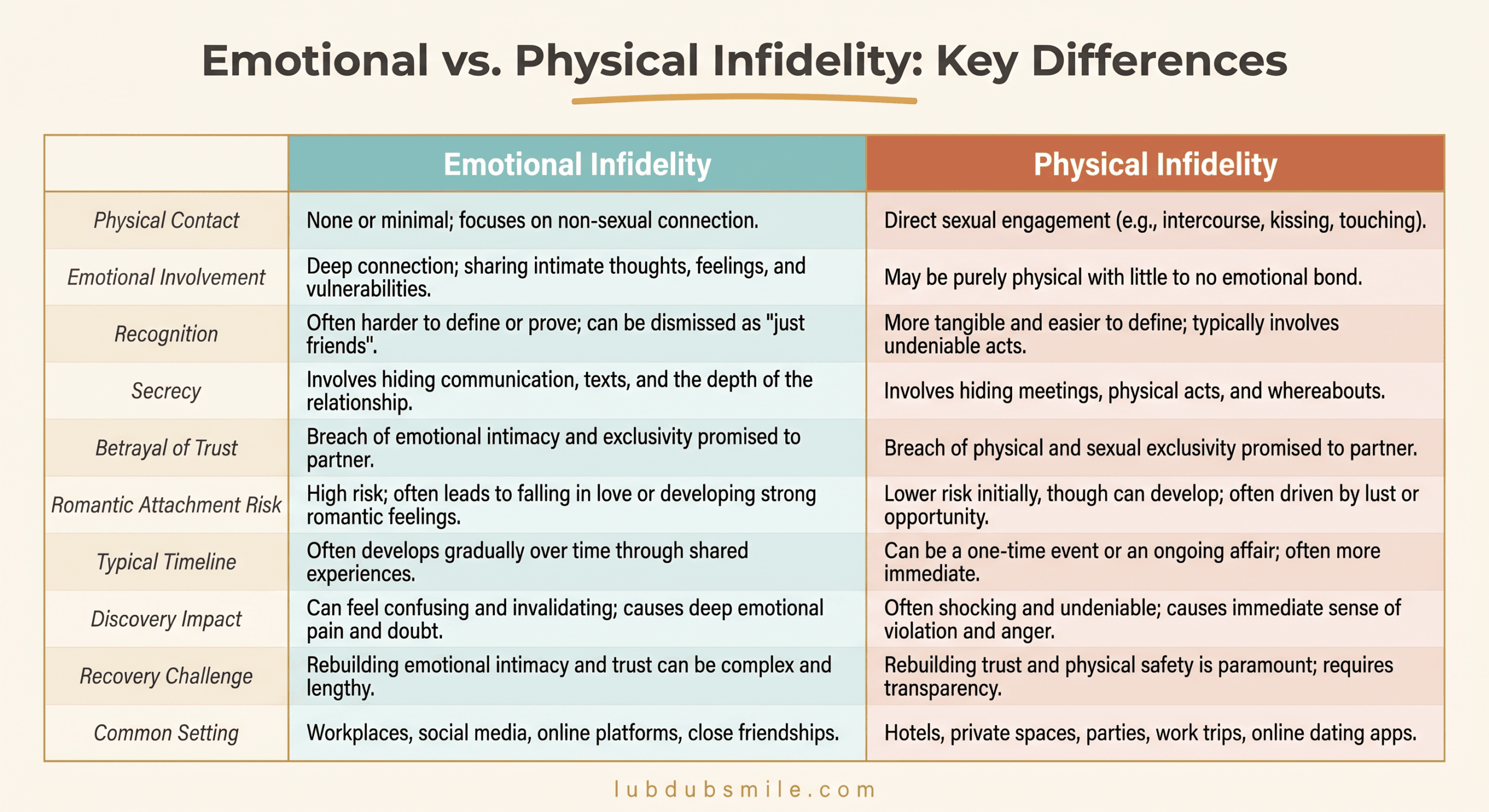
Key Differences: Emotional Infidelity and Physical Infidelity
| Factor | Emotional Infidelity | Physical Infidelity |
|---|---|---|
| Definition | Deep emotional bond or romantic feelings outside relationship | Physical or sexual contact outside relationship |
| Physical contact | No (or minimal) | Yes |
| Emotional involvement | High core component | Varies; may be low |
| Secrecy | Almost always present | Almost always present |
| Ease of recognition | Harder to define; easier to rationalize | Clearer; more immediately recognizable |
| Betrayal of trust | Yes | Yes |
| Risk of falling in love | Higher | Lower, though possible |
| Impact on relationship | Often deeper emotional wound | Immediate shock and betrayal |
| Recovery difficulty | Often harder feelings are harder to stop | Difficult, but event is more defined |
| Common settings | Work, online, social media | Work, travel, social environments |
Recognition and Definition
Physical infidelity tends toward binary it either happened or it didn’t. Emotional infidelity exists in grayer space that makes it easier to minimize: We’re just friends. Nothing happened. You’re overreacting. This rationalization available to both the person involved and sometimes to the betrayed partner trying to process what they feel is part of what makes emotional infidelity particularly corrosive.
Emotional Investment
By definition, emotional infidelity involves deep feeling. Physical infidelity may involve none a genuinely impulsive moment with no emotional attachment to the other person. This distinction matters in recovery: physical infidelity may represent a behavioral failure without deep emotional investment elsewhere, while emotional infidelity means part of the involved partner’s heart was genuinely elsewhere, often for an extended period.
Threat to the Relationship
Many relationship therapists observe that emotional infidelity can feel more threatening to the primary relationship than physical contact alone precisely because it involves the emotional intimacy that forms the foundation of committed partnership. The betrayed partner isn’t just processing a physical betrayal. They’re processing the reality that their partner was emotionally elsewhere, possibly for months or years, while appearing present.
Recovery Process
Recovery from physical infidelity, while painful and nonlinear, involves processing a defined event or series of events, also recovery from emotional infidelity carries the complication that feelings unlike behavior can’t simply stop. When the involved partner still carries romantic feelings for the other person, rebuilding the primary relationship requires navigating those ongoing emotions, which many couples find significantly harder.
Which Type of Infidelity Hurts More?
There is no universal answer. Research suggests the experience varies significantly depending on the individual, the relationship, and what each partner values most.
What Research Suggests
Studies in evolutionary psychology including research by David Buss and colleagues suggest that persons of both gender have historically shown different patterns in which form of infidelity they find most distressing. Women tend to report greater pain in response to emotional infidelity, experiencing it as a threat to love and long-term commitment. Men tend to report greater distress in response to physical infidelity.
These findings represent patterns across populations, not universals. Individual variation is significant, cultural context shapes responses, and research in this area continues to evolve. The findings offer context for understanding why partners sometimes experience the same event very differently not as predictors of how any specific person will respond.
The evolutionary psychology research cited here is real and worth knowing about. It is also worth holding with some care. The finding that women tend to report more distress in response to emotional infidelity and men in response to physical infidelity represents a pattern across large populations, not a prediction about any specific person. More importantly, these studies often measure hypothetical distress responses rather than lived experience, and the gap between how people predict they will respond and how they actually respond to betrayal is itself well-documented in psychology research. What the findings most usefully offer is an explanation for why two partners in the same relationship can experience the same infidelity very differently, not a map of how any particular person should feel. Individual history, attachment style, relationship length, and the specific nature of the betrayal all shape the response in ways that population-level patterns cannot capture. If your experience doesn’t match the research averages, that is not evidence that your response is wrong. It is evidence that you are a person rather than a data point.
Why Emotional Affairs Often Feel Devastating
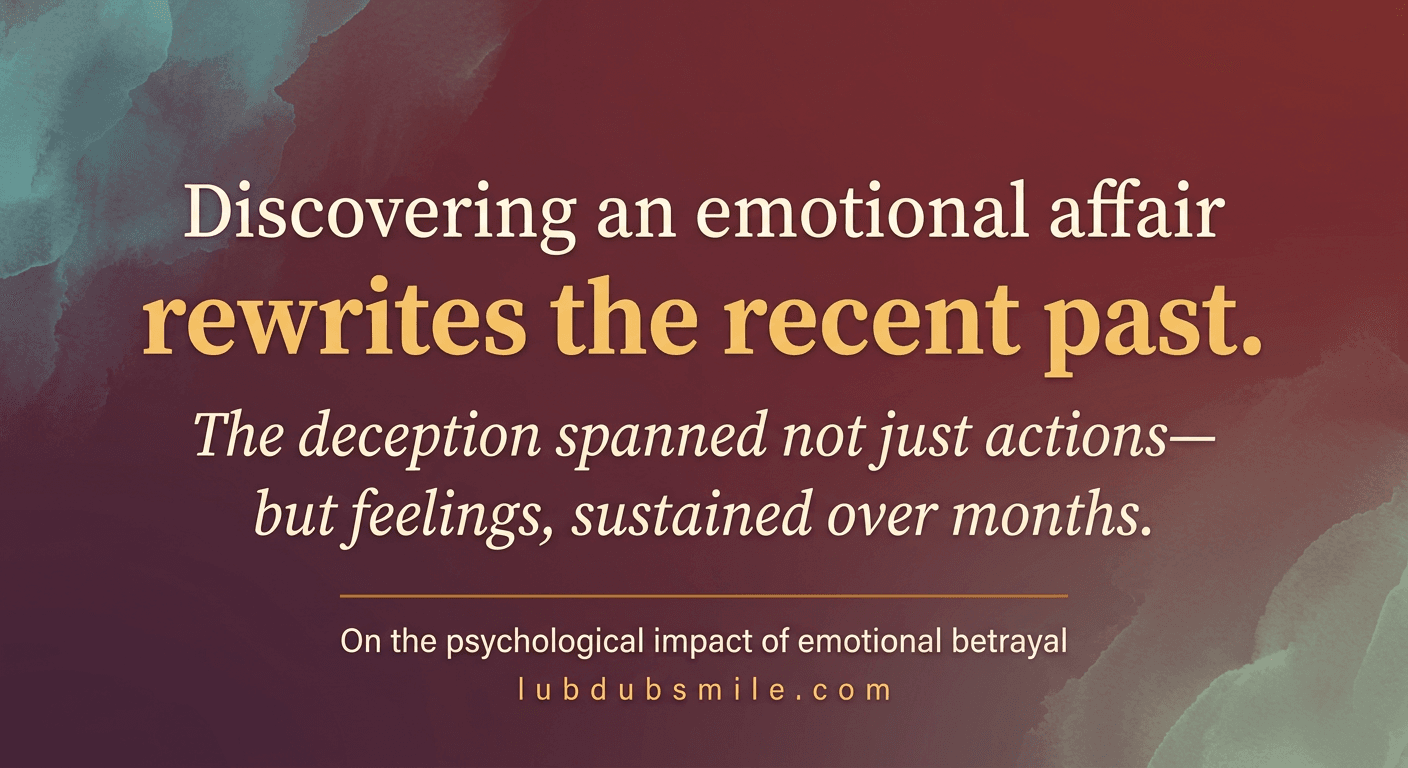
For many people, discovering an emotional affair produces a particular kind of pain: the realization that their partner was mentally and emotionally present with someone else while physically present with them. The deception spanned not just actions but feelings and feelings, unlike a single encounter, represent sustained investment in someone outside the relationship.
Emotional affairs also tend to involve longer timelines. By the time someone discovers them, months or years of messages, conversations, and developing attachment may have accumulated. The scope of concealment can feel as wounding as the connection itself.
Why Physical Affairs Can Feel Worse for Some
For others, physical betrayal carries an immediacy and clarity that lands particularly hard. The physical act represents a concrete, undeniable line crossed. It can involve fears about sexual health. It can trigger visceral responses shock, a sense of replacement that feel different from the grief of emotional betrayal.
Both experiences are valid. Both represent serious breaches of trust. Neither ranks as objectively worse only as different in nature and in how they land for the individuals involved.
The Gray Areas: When Does Closeness Become Infidelity?
Emotional Intimacy vs. Emotional Infidelity
Close, emotionally intimate friendships are healthy and important in adult life. They are not infidelity. The line between a meaningful friendship and an emotional affair involves two factors that typically appear together: secrecy and romantic feeling. A close friendship your partner knows about, feels comfortable with, and that doesn’t involve romantic attraction is not an emotional affair. When secrecy enters when you’re minimizing or hiding the relationship and when romantic feelings are present, the nature of the connection has shifted.
Micro-Cheating
Relationship researchers and therapists increasingly discuss “micro-cheating” individual behaviors that seem minor in isolation but collectively signal emotional disloyalty: consistently seeking out a specific person’s attention, privately messaging someone your partner doesn’t know about, comparing your partner to someone you’re attracted to. These patterns don’t constitute infidelity on their own, but they can serve as early signals of where emotional energy is directing itself.
Online and Digital Relationships
Digital connections complicate infidelity definitions significantly. Sexting without physical contact sits in ambiguous territory physically it involves no contact, but emotionally and sexually it may involve significant investment outside the relationship. Online-only relationships can develop real emotional depth. Social media reconnections with former partners can reopen emotional doors quickly.
The defining question remains consistent: Is this hidden? Would your partner feel hurt by it? Does it involve feelings you’re not bringing into the primary relationship?
Healthy relationship boundaries require ongoing conversation, as explored in communication approaches that heal couple connection.
Open Relationships and Agreed Arrangements
In consensually non-monogamous relationships, the definition of infidelity depends on the relationship’s specific agreements not conventional monogamous standards. Infidelity, in any relationship structure, is fundamentally about broken agreements and violated trust. What counts as betrayal depends entirely on what the partners agreed.
The Impact of Infidelity on Relationships
Emotional Impact on the Betrayed Partner
The discovery of infidelity emotional or physical typically produces a recognizable sequence of responses: shock, disbelief, grief, and a loss of trust extending beyond the partner to the betrayed person’s own judgment. How did I not see this? What else don’t I know? Was any of it real?
Research suggests that infidelity can produce symptoms consistent with trauma: intrusive thoughts, hypervigilance, difficulty sleeping, anxiety, and depression. The American Psychological Association recognizes that relationship betrayal can produce grief responses requiring genuine psychological support not simply time and willpower to resolve.
Emotional Impact on the Partner Who Strayed
The partner who engaged in infidelity often navigates their own complex emotional landscape: guilt, shame, confusion about their own feelings, and an identity disruption that many describe as profound. I didn’t think I was someone who would do this. When emotional infidelity is involved, conflicting feelings for the affair partner and for the primary partner can make clarity about next steps genuinely difficult.
Relationship Impact
Infidelity’s immediate impact on a relationship is rarely simple. Communication often breaks down. Emotional distance sometimes preceding the infidelity deepens. The betrayed partner may oscillate between wanting to understand and wanting space. The involved partner may navigate guilt, grief for the affair relationship if it has ended, and uncertainty about whether the primary relationship can heal.
Long-term impact depends heavily on how both partners respond to what’s happened which brings us to the question many couples face.
Can Relationships Survive Infidelity?
Research suggests approximately 50–60% of couples attempt to stay together after infidelity comes to light. Of those who try, studies indicate that meaningful recovery is possible though far from guaranteed, and rarely straightforward.
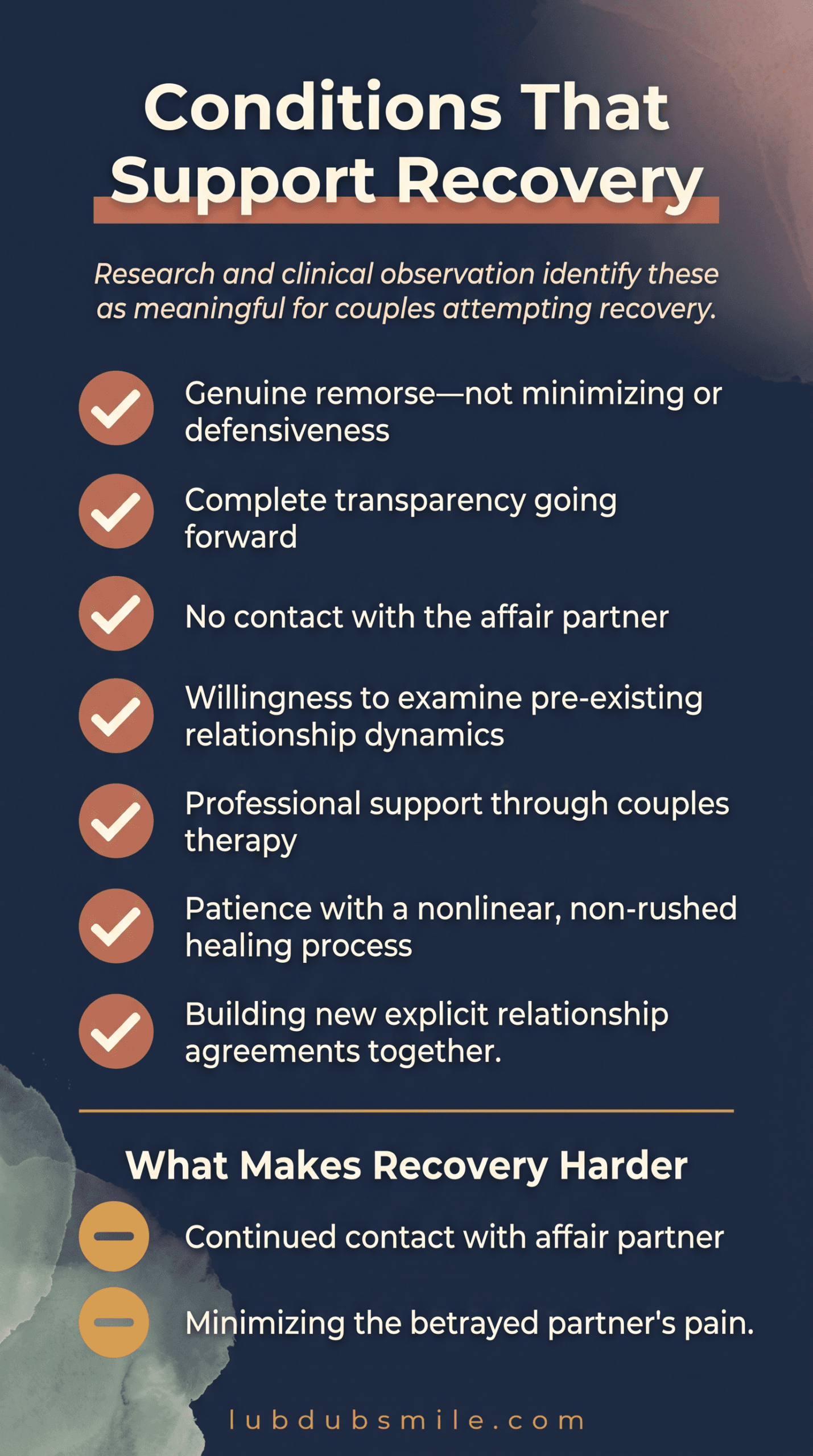
Conditions That Support Recovery
Relationship researchers and therapists who work with couples post-infidelity consistently identify factors making recovery more possible:
What Makes Recovery Harder
Certain patterns significantly complicate recovery: repeated infidelity without genuine change, minimizing the betrayed partner’s pain, continued contact with the affair partner, refusing accountability, or approaching therapy as performance rather than genuine engagement.
Recovery as Building Something New
Many therapists who specialize in infidelity recovery frame the goal not as returning to what the relationship was before which isn’t possible but as building something new, with greater honesty, clearer communication, and deeper understanding of each other’s needs. Some couples report that working through infidelity, while enormously painful, ultimately produced a level of honest intimacy they hadn’t achieved before the crisis.
This is not a promise. It is a possibility for couples where both partners commit to genuine work.
Our guide to conflict patterns in marriage and communication rebuilding draws on Gottman Institute research and offers frameworks directly applicable to the kind of structured communication that infidelity recovery requires from both partners.
Rebuilding Trust and Emotional Intimacy After Infidelity
For the Betrayed Partner
Healing from infidelity betrayal takes time that cannot compress. Allow yourself to grieve without pressure to “get over it” on a timeline. Seek individual therapy to process emotions in a space belonging entirely to you. Give yourself permission to ask questions though working with a therapist to understand which questions will genuinely support healing versus which may deepen pain without resolution is worth considering. Recognize that trust, if it returns, returns in increments not in a single decision.
For the Partner Who Strayed
Rebuilding requires offering transparency without waiting for your partner to request it. End all contact with the affair partner completely not gradually. Accept that trust rebuilds over time rather than through demand or expectation. Seek individual therapy to understand what needs or vulnerabilities contributed to the choices made. Practice patience with a healing process that may run longer and less linearly than you expect.
For the Couple
Couples therapy is not optional if both partners are serious about recovery it provides structure, guidance, and a contained space for conversations genuinely difficult to navigate without professional facilitation.
Rebuilding emotional intimacy before focusing on physical intimacy tends to support more sustainable recovery. Establishing new relationship agreements explicit conversations about limits, communication, and what each partner needs going forward replaces assumptions with clarity.
Building emotional safety as the foundation of true intimacy describes the kind of relational environment recovery requires.
When to Seek Professional Help
If you or your partner are navigating infidelity emotional or physical professional support from a licensed therapist or couples counselor is strongly recommended. This article provides educational context. It cannot provide the personalized assessment, guided conversations, and clinical support a qualified professional offers.
Signs That Professional Support Is Particularly Important
- Persistent anxiety, depression, or inability to function in daily life
- Thoughts of self-harm seek immediate help
- Complete communication breakdown between partners
- Children affected by conflict in the household
- Repeated infidelity without genuine behavioral change
- Inability to make decisions about the relationship’s future despite wanting clarity
Resources
American Association for Marriage and Family Therapy (AAMFT)
aamft.org therapist finder for licensed marriage and family therapists
Psychology Today Therapist Finder
psychologytoday.com/us/therapists searchable directory of licensed therapists by location and specialty
BetterHelp vs Talkspace: Therapy Cost Comparison
Online therapy options offering access to licensed therapists; accessible and flexible, though not a substitute for in-person couples therapy in all situations
National Domestic Violence Hotline
1-800-799-7233 available 24/7 if your situation involves fear, control, or safety concerns
Frequently Asked Questions
Is emotional cheating really cheating?
Most relationship experts and therapists say yes if it involves secrecy, romantic feelings, and emotional intimacy directed outside the primary relationship, it crosses from close friendship into emotional infidelity regardless of whether physical contact occurred. The absence of physical betrayal doesn’t eliminate the breach of trust.
Why do people have emotional affairs?
Emotional affairs typically develop gradually, often from ordinary friendships. Contributing factors therapists frequently identify include feeling emotionally disconnected from a primary partner, seeking validation or excitement, loneliness, or unmet emotional needs. Understanding these dynamics doesn’t excuse the behavior, but examining them honestly is often important for recovery and for preventing recurrence, and our guide to attachment theory and relationship patterns offers accessible resources for anyone who wants to understand the deeper relational architecture beneath infidelity.
Can you love two people at once?
Psychologists acknowledge that experiencing romantic feelings for more than one person simultaneously is possible. In the context of a committed monogamous relationship, acting on or nurturing those feelings constitutes a breach of commitment. The experience of conflicting feelings isn’t the problem what matters is what a person does with them.
Can a relationship recover from emotional infidelity if feelings still remain?
Recovery from emotional infidelity is significantly complicated when feelings for the affair partner persist. Many therapists consider complete no-contact with the affair partner a necessary first step because ongoing emotional connection makes rebuilding the primary relationship genuinely difficult. Whether feelings fully resolve varies; behavior and limits can hold even when emotions remain complicated, but it requires sustained, honest effort.
How is emotional infidelity different from a close friendship?
The clearest distinguishing factors are secrecy and romantic feeling. A close friendship your partner knows about, feels comfortable with, and that doesn’t involve romantic attraction is healthy not infidelity. When a friendship becomes secret, involves romantic feelings, or begins replacing emotional intimacy within the primary relationship, it has likely crossed that line.
Should I tell my partner about an emotional affair?
This is a deeply personal decision with significant consequences in either direction. Many therapists recommend honesty as the foundation for genuine recovery, but timing, framing, and context matter considerably. This decision belongs in conversation with an individual therapist before the disclosure happens not in a moment of guilt or crisis.
How long does recovery from infidelity take?
There is no reliable timeline. Research and clinical experience suggest that meaningful recovery when it occurs typically takes one to two years of sustained effort. Some couples move faster; others take longer. Rushing the process, or declaring recovery complete before genuine trust has rebuilt, often means unresolved pain resurfaces later.
Emotional infidelity and physical infidelity share the core elements of betrayal: secrecy, broken trust, and investment removed from the committed partnership, and recovery from either requires honesty, complete transparency, professional guidance, and the willingness of both partners to build something new rather than simply return to what existed before.
This content is for educational purposes and does not substitute for professional psychological or therapeutic help. If you are experiencing relationship distress, emotional trauma, or safety concerns, please seek support from a licensed therapist or contact the National Domestic Violence Hotline at 1-800-799-7233.