


Cellular Health After 40: What the Research Actually Shows
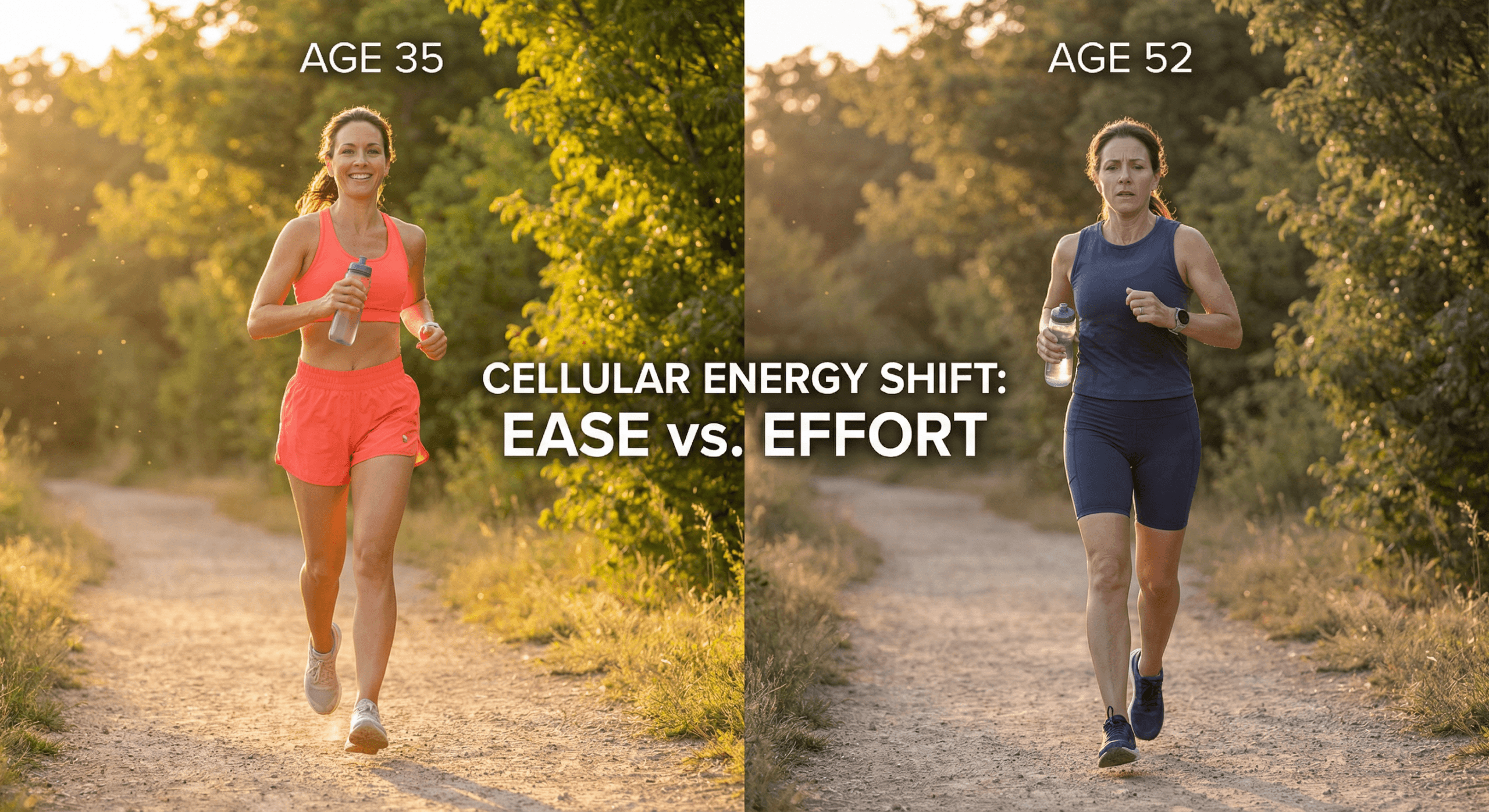
Understanding cellular health after 40 matters more than most people realize. Around age 40, something shifts at the microscopic level. Energy production becomes less efficient. Cellular repair mechanisms slow. Inflammatory signals that were once tightly controlled begin to accumulate.
These changes don’t announce themselves with sudden symptoms. Instead, they manifest gradually: as reduced stamina, slower recovery from exercise, or metabolic changes that weren’t present a decade earlier. The cardiovascular efficiency we’ve discussed in previous articles the metabolic balance that supports stable energy, the immune resilience that helps you recover from illness none of these systems operate in isolation. All depend on cellular processes that function differently at 50 than they did at 30.
Exploring cellular health after 40 isn’t about chasing anti-aging promises. It’s about understanding the biological foundation beneath the health outcomes you already care about cardiovascular function, cognitive performance, metabolic efficiency, and long-term resilience.
Three Key Cellular Processes We’ll Explore
First, we’ll examine NAD+ decline and energy metabolism how a critical coenzyme decreases by roughly 50% between ages 40 and 60, and what that means for cellular energy production.
Second, we’ll look at mitochondrial function and oxidative stress why the “powerhouses” of your cells become less efficient with age, and how energy production itself can damage cellular components.
Third, we’ll explore chronic inflammation and cellular senescence the accumulation of cells that stop dividing but don’t die, and how they create a persistent inflammatory environment that affects neighboring healthy cells.
Understanding these processes can support your approach to preventive health screenings and overall wellness strategies.
NAD+ Decline: The Energy Currency of Cellular Function
What NAD+ Is and Why It Matters
NAD+ is a coenzyme present in every living cell in your body. It plays a central role in converting the food you eat into cellular energy, supporting hundreds of metabolic reactions, and activating proteins that help maintain cellular health after 40 and beyond.
Think of NAD+ as a shuttle that carries electrons during metabolism specifically during the process that extracts energy from glucose and other nutrients. Without adequate NAD+, this energy extraction becomes less efficient. The molecule exists in two forms: NAD+ (oxidized) and NADH (reduced), and cells maintain a careful balance between them.
NAD+ also activates a family of enzymes called sirtuins, which help regulate cellular maintenance processes including DNA repair, inflammation control, and mitochondrial function. Research published in Cell Metabolism demonstrates that sirtuins require NAD+ to function, linking NAD+ availability directly to cellular repair capacity.
NAD+’s Role in Cellular Energy Production

During cellular respiration the process that turns nutrients into ATP, the molecule cells use for energy NAD+ accepts electrons from glucose breakdown and carries them to the mitochondria. This electron transfer is essential for producing the majority of cellular energy.
NAD+ is particularly concentrated in tissues with high energy demands: heart muscle, skeletal muscle, brain tissue, and liver. Studies in Science show that tissues with greater metabolic activity maintain higher NAD+ concentrations, underscoring its role in meeting energy demands. This concentration pattern becomes particularly relevant when examining cellular health after 40.
How NAD+ Levels Change After Age 40
Multiple studies have documented a consistent pattern: NAD+ levels decline significantly with age across mammalian species, including humans. Research in Cell Reports found that NAD+ levels in human skin decrease by approximately 50% between ages 40 and 60.
This decline isn’t limited to one tissue type. A 2016 study in Nature Communications measured NAD+ across multiple tissues muscle, liver, brain, adipose tissue and found consistent age-related decreases. The magnitude varies somewhat by tissue, but the trend appears universal across populations studied.
The timeline matters for understanding cellular health after 40: the decline accelerates most notably after age 40, though it begins earlier. Individual variation exists some people maintain higher NAD+ levels than others at the same age but population-level trends are remarkably consistent across studied groups.
Why This Decline Matters for Cellular Function
Lower NAD+ levels correlate with reduced mitochondrial efficiency. Research in Cell Metabolism demonstrates that NAD+ depletion impairs mitochondrial function in muscle tissue, which may help explain age-related decreases in exercise capacity and recovery.
The decline also affects cellular repair processes. With less NAD+ available, sirtuins function less efficiently. This appears to impact DNA repair capacity, inflammation regulation, and circadian rhythm maintenance all processes that show age-related changes affecting cellular health after 40.
It’s critical to note: these are correlations, not proven causal relationships in humans. We observe that NAD+ declines and cellular function changes, but establishing that restoring NAD+ prevents or reverses functional decline requires long-term human intervention studies that are still underway.
What the Research Shows and What It Doesn’t
The evidence is clear on several points:
NAD+ decline is measurable and consistent. Multiple independent research groups have replicated these findings across different populations and measurement methods.
Animal studies show NAD+ precursors can improve some functional markers. Research in mice demonstrates that supplementing with NAD+ precursors like nicotinamide riboside (NR) or nicotinamide mononucleotide (NMN) can increase tissue NAD+ levels and improve markers of mitochondrial function, exercise capacity, and metabolic health.
NAD+ precursors are being actively researched in humans. Small clinical trials examining NMN and NR supplementation in humans are underway, with some published results showing increased NAD+ levels in blood and some tissues.
What Remains Uncertain
The limitations are equally important to understand when considering cellular health after 40:
Long-term human outcome data is still limited. Most human studies have followed participants for weeks or months, not years. We don’t yet know whether maintaining higher NAD+ levels throughout middle age affects long-term health outcomes.
Optimal NAD+ levels for different populations aren’t established. We can measure NAD+ levels, but we don’t have consensus on target ranges for different ages, health statuses, or activity levels.
Individual response variation isn’t well characterized. Some people may respond more to NAD+ precursor supplementation than others, but we can’t yet predict who will benefit most or identify potential non-responders.
The research is genuinely promising, but “promising” means we have good reasons to continue investigating not that we have definitive answers about long-term human applications for cellular health after 40.
Mitochondrial Function: Your Cellular Power Plants
Understanding Mitochondrial Function
Mitochondria are often called the “powerhouses of the cell” a description that’s become clichéd but remains accurate. These specialized structures, present in nearly every cell in your body, convert glucose and oxygen into ATP through a process called oxidative phosphorylation.
A single cell can contain anywhere from a few mitochondria to several thousand, depending on its energy demands. Heart muscle cells, for instance, pack their volume with mitochondria to support constant contraction. Brain neurons maintain high mitochondrial density to power neurotransmitter production and signal transmission.
The efficiency of this energy conversion affects everything cells do: maintaining membrane integrity, synthesizing proteins, repairing DNA, responding to signals. When mitochondrial function declines, cellular performance across all these processes becomes constrained. Understanding this decline is essential for anyone concerned about cellular health after 40.
Why Mitochondrial Health Affects Multiple Systems
The connection to cardiovascular function is direct: heart muscle cells require enormous amounts of ATP to sustain 100,000 contractions daily. Research in Circulation Research demonstrates that mitochondrial dysfunction in cardiac tissue is associated with reduced contractile performance and exercise capacity.
Cognitive performance depends similarly on mitochondrial efficiency. Brain tissue, despite representing only 2% of body weight, consumes roughly 20% of the body’s oxygen nearly all of it used in mitochondrial energy production. Age-related mitochondrial decline in neural tissue appears connected to changes in cognitive processing speed and memory formation.
Metabolic health reflects mitochondrial function in liver, muscle, and adipose tissue. These tissues regulate glucose disposal, fat oxidation, and metabolic flexibility all processes constrained when mitochondrial capacity decreases.
Practices related to emotional regulation skills and stress management can influence cellular health after 40 through their effects on inflammation and metabolic function.
Age-Related Changes in Mitochondrial Function
A comprehensive review in Biochimica et Biophysica Acta documents that both mitochondrial number and efficiency decline with age across multiple tissues. In skeletal muscle, mitochondrial content decreases by roughly 50% between ages 40 and 80 in sedentary individuals.

Mitochondrial DNA which codes for essential components of the energy production machinery accumulates mutations and deletions over time. Research in Nature Reviews Molecular Cell Biology shows that mitochondrial DNA damage increases exponentially with age, correlating with reduced respiratory capacity.
The efficiency of oxidative phosphorylation itself decreases. Older mitochondria produce less ATP per unit of oxygen consumed, meaning cells must work harder to generate the same energy output they achieved at younger ages. This reduced efficiency directly impacts cellular health after 40.
What Triggers Mitochondrial Decline
Multiple mechanisms contribute to compromised cellular health after 40. Accumulated oxidative damage affects mitochondrial proteins and membranes. Quality control processes that normally remove damaged mitochondria (mitophagy) become less efficient. The generation of new mitochondria (mitochondrial biogenesis) slows.
These processes interact: damaged mitochondria produce more reactive oxygen species, which cause additional damage, which further impairs quality control mechanisms. The system becomes self-reinforcing unless actively counteracted.
Oxidative Stress: The Balance Between Energy and Damage
Energy production through oxidative phosphorylation inevitably generates reactive oxygen species (ROS) as byproducts. These molecules including superoxide, hydrogen peroxide, and hydroxyl radicals are chemically reactive and can damage cellular components.
Young, healthy cells maintain antioxidant systems that neutralize ROS: enzymes like superoxide dismutase, catalase, and glutathione peroxidase. When production and neutralization balance, ROS levels remain controlled.
With age, ROS production often exceeds antioxidant capacity. This imbalance oxidative stress results in cumulative damage to proteins, lipids, and DNA throughout the cell. Managing this imbalance becomes increasingly important for cellular health after 40.
Why Oxidative Stress Matters (and Why It’s More Nuanced Than You Think)
Oxidative damage affects cellular function across multiple dimensions. Proteins lose their proper structure and stop functioning correctly. Lipid membranes become damaged, affecting cellular signaling and compartmentalization. DNA accumulates mutations that can impair gene expression.
But here’s critical nuance often missing from simplified explanations: not all ROS are harmful. Research in Cell Metabolism demonstrates that ROS at low levels serve as important signaling molecules, triggering adaptive responses including increased antioxidant production and mitochondrial biogenesis.
This phenomenon hormesis means the goal isn’t eliminating all oxidative stress, but maintaining appropriate balance. Too little oxidative stress may actually impair beneficial adaptive responses. Too much causes cumulative damage. The optimal zone varies by tissue, activity level, and individual factors we’re still working to characterize for cellular health after 40.
What Research Shows About Mitochondrial Support
The evidence is substantial that mitochondrial decline occurs with age and affects multiple physiological systems. Research in Aging Cell confirms that oxidative stress markers increase across populations as they age, correlating with functional declines in exercise capacity, cognitive performance, and metabolic flexibility.
Some compounds show promise in supporting mitochondrial function and cellular health after 40. Coenzyme Q10 (CoQ10), for instance, plays essential roles in electron transport and shows declining levels with age. Studies examining CoQ10 supplementation in older adults have found improvements in some markers of mitochondrial function, though results vary considerably across studies.
Pyrroloquinoline quinone (PQQ), another compound involved in mitochondrial function, has shown potential for supporting mitochondrial biogenesis in animal studies, though human data remains limited.
Important Limitations and Uncertainties
No single intervention has been proven to restore mitochondrial function to youthful levels in humans through long-term trials. We have promising short-term data, mechanistic understanding from animal models, and plausible biological rationales but translating these into validated human protocols requires studies that are expensive, lengthy, and methodologically complex.
Individual response variation appears substantial but isn’t well predicted by current biomarkers. Why some people maintain better mitochondrial function with age, and whether interventions work equally across populations, remains incompletely understood for cellular health after 40.
Chronic Inflammation and Cellular Senescence
Understanding Chronic Low-Grade Inflammation
When you cut your finger or fight an infection, acute inflammation is the beneficial response that brings immune cells to the site, clears damaged tissue, and promotes healing. This inflammation resolves once the threat passes.
Chronic low-grade inflammation is qualitatively different. Often termed “inflammaging,” it describes a persistent, system-wide inflammatory state that develops with age even in the absence of infection or injury. Research in Nature Reviews Immunology defines inflammaging as elevated blood levels of inflammatory markers C-reactive protein (CRP), interleukin-6 (IL-6), tumor necrosis factor-alpha (TNF-α) that correlate with age-related functional decline.
This isn’t a beneficial healing response. It’s a maladaptive state where inflammatory signals circulate continuously at low levels, affecting cellular health after 40 throughout the body.
Why Chronic Inflammation Develops with Age
Multiple mechanisms contribute to this aspect of compromised cellular health after 40. The accumulation of senescent cells is one major source. Changes in gut microbiome composition can increase systemic inflammatory signaling. Immune system aging (immunosenescence) shifts the balance toward pro-inflammatory states.
Lifestyle factors contribute substantially: diet quality, physical activity levels, sleep patterns, and chronic stress all influence inflammatory markers. Research in JAMA demonstrates that individuals with healthier lifestyle patterns maintain lower inflammatory markers at any given age, though age-related increases still occur.
Understanding emotional hygiene practices can support overall wellness approaches that may help manage stress-related inflammation affecting cellular health after 40.
Cellular Senescence: When Cells Stop Dividing
Cellular senescence describes cells that have stopped dividing but remain metabolically active. This process initially evolved as a protective mechanism: when cells accumulate DNA damage that could potentially lead to cancer, entering senescence prevents them from replicating that damage.
In young organisms, the immune system efficiently identifies and clears senescent cells. This balance occasional cells entering senescence, immune clearance removing them prevents accumulation.
With age, two things change: more cells enter senescence due to accumulated damage, and immune clearance becomes less efficient. The result: senescent cells accumulate in tissues throughout the body, compromising cellular health after 40.
The Senescence-Associated Secretory Phenotype
Here’s where senescent cells become particularly problematic for cellular health after 40. Rather than remaining quietly inactive, they secrete a complex mixture of inflammatory cytokines, growth factors, and enzymes collectively called the senescence-associated secretory phenotype, or SASP.

Research in Trends in Cell Biology characterizes the SASP as including dozens of secreted factors IL-6, IL-8, matrix metalloproteinases, growth factors that affect neighboring cells. These “zombie cells,” as they’re sometimes called, create an inflammatory microenvironment that can induce senescence in previously healthy adjacent cells.
The SASP becomes self-reinforcing: senescent cells promote senescence in neighbors, which produce more SASP factors, creating an expanding zone of inflammation and dysfunction that progressively undermines cellular health after 40.
How Inflammation Affects Multiple Body Systems
Chronic inflammation is associated with not proven to cause, an important distinction multiple age-related conditions. Cardiovascular disease shows strong correlations with inflammatory markers; research in Circulation demonstrates that elevated CRP levels predict cardiovascular events independently of traditional risk factors.
Metabolic syndrome, characterized by insulin resistance, elevated blood glucose, and dyslipidemia, shows similar associations with inflammatory markers. Cognitive decline correlates with peripheral inflammation, though mechanisms linking the two remain under investigation.
These associations don’t necessarily mean inflammation causes these conditions the relationships are complex, bidirectional, and involve multiple confounding factors. But the consistency of the associations across populations and conditions suggests inflammation plays some role in age-related functional decline affecting cellular health after 40.
The Complexity of Inflammation’s Role
Not all inflammation is harmful, even in older adults concerned about cellular health after 40. The immune system still needs inflammatory responses to fight infections and clear damaged cells. The problem is chronic, unresolved, low-grade inflammation not the acute inflammatory responses that serve protective functions.
Individual variation in inflammatory profiles is substantial. Some people maintain low inflammatory markers into their 80s; others show elevated markers in their 50s. Genetic factors, lifetime exposures, lifestyle factors, and likely mechanisms we don’t yet understand all contribute to this variation.
What Research Tells Us About Senescence and Inflammation
The evidence that senescent cells accumulate with age and contribute to tissue dysfunction is substantial and growing. A landmark 2016 study in Nature demonstrated that clearing senescent cells in mice extended healthspan and reduced age-related pathology across multiple organ systems.
This finding catalyzed intensive research into compounds that can selectively eliminate senescent cells termed “senolytics.” Compounds like dasatinib (a cancer drug) combined with quercetin (a plant flavonoid), or fisetin (another flavonoid), have shown senolytic properties in laboratory and animal studies relevant to cellular health after 40.
Small pilot trials in humans have begun. A 2019 study in EBioMedicine examined dasatinib plus quercetin in patients with diabetic kidney disease and found reduced senescent cell burden and some functional improvements. Another small trial examined fisetin in older adults and found some evidence of reduced inflammatory markers.
Significant Gaps in Our Understanding
The limitations are substantial and must be emphasized clearly for anyone interested in cellular health after 40:
Human clinical data is extremely limited. The trials conducted so far involve small numbers of participants followed for short periods. We don’t know whether senolytic approaches improve long-term health outcomes in humans.
Long-term safety is unknown. Senescent cells may serve some beneficial functions wound healing, for instance, involves transient cellular senescence. Whether periodically clearing senescent cells causes unintended consequences over years or decades hasn’t been established.
Optimal intervention strategies remain unclear. If senolytics prove beneficial, we don’t know the ideal timing, frequency, or combination of approaches. Most research uses intermittent dosing rather than continuous treatment, but optimal protocols are speculative.
The field is characterized by extraordinary excitement and equally extraordinary caution among researchers who understand how often promising preclinical results fail to translate to human benefit. The gap between hype and evidence remains wide for cellular health after 40 interventions.
The Current State of Longevity Research
How Far We’ve Come
Our understanding of cellular health after 40 and cellular aging mechanisms has advanced more in the past 20 years than in the entire preceding century. Tools that didn’t exist a generation ago metabolomics, epigenetic clocks, single-cell RNA sequencing now allow researchers to measure biological age, characterize cellular states, and track how interventions affect specific molecular pathways.
Animal models have provided crucial insights. Research in worms (C. elegans), flies (Drosophila), and mice has identified specific genes and pathways that regulate aging. The discovery that single-gene mutations could extend lifespan in laboratory organisms fundamentally changed how scientists think about aging from inevitable deterioration to regulated biological process.
The identification of hallmarks of aging cellular senescence, mitochondrial dysfunction, loss of proteostasis, genomic instability has created a framework for organizing research and developing interventions targeting specific mechanisms relevant to cellular health after 40.
What We Still Don’t Know

Most longevity interventions showing promise for cellular health after 40 have been studied primarily in worms, flies, or mice. These models are valuable for mechanistic understanding but have obvious limitations. A mouse lives two to three years; humans live 70 to 80. Interventions that extend mouse lifespan by 20% might have minimal effects in humans, or work through mechanisms that don’t translate across species.
Human trials in longevity research face inherent challenges. They’re expensive, requiring decades of follow-up to measure outcomes like disease incidence or mortality. Measuring “healthspan” the period of life spent in good health is methodologically complex, with no consensus on optimal endpoints.
Individual variation is enormous and poorly predicted by current biomarkers. Two people the same chronological age can differ dramatically in biological age and cellular health after 40. We can measure some aspects of this variation but can’t yet use it to personalize interventions reliably.
Key Uncertainties Researchers Are Working to Resolve
When should interventions for cellular health after 40 begin? Do approaches that work in middle age also work if started in one’s 70s? Are there critical windows where interventions are most effective?
How do multiple interventions interact? If NAD+ supplementation improves mitochondrial function, and exercise improves mitochondrial function, does combining them produce additive effects, synergistic effects, or diminishing returns?
What are the long-term safety profiles of compounds showing short-term promise? Many longevity interventions involve manipulating fundamental cellular processes what are the unintended consequences over decades?
Can we develop better biomarkers of biological age that allow shorter, more efficient trials? Current biological age metrics show promise but need validation.
Navigating Hype vs. Science
Longevity science and discussions of cellular health after 40 attract exaggerated claims. The combination of compelling mechanisms, dramatic results in animal models, and intense public interest creates conditions where marketing often races ahead of evidence.
Learning to distinguish rigorous research from promotional content serves you well. Look for whether claims are based on human studies or animal models. Check whether studies are published in peer-reviewed journals or exist only in company press releases. Notice whether language is qualified (“may support,” “appears associated with”) or absolute (“proven to reverse aging”).
Uncertainty isn’t a weakness it’s an honest acknowledgment of where the science currently stands. Research showing promising mechanisms and animal data deserves attention and continued investigation. It doesn’t yet justify confident claims about human longevity outcomes or cellular health after 40.
The scientists doing the most rigorous work in this field tend to be the most cautious about overstating what we know. That caution reflects intellectual honesty, not lack of progress.
Important Limitations
Scope and Purpose of This Overview
This article summarizes research trends in cellular health after 40 to help you understand mechanisms that underlie age-related functional changes. It draws from peer-reviewed literature and represents current scientific understanding as of early 2025.
It’s an educational resource, not medical advice. The research discussed here is intended to inform your understanding, not to guide individual health decisions without professional input.
What This Article Is Not
This is not a supplement protocol guide or a comprehensive review of all longevity research. We’ve focused on three major cellular mechanisms NAD+ decline, mitochondrial dysfunction, and cellular senescence but many other processes contribute to aging: epigenetic changes, stem cell exhaustion, altered intercellular communication, loss of proteostasis, and more.
This article doesn’t provide personalized health recommendations for cellular health after 40. Individual factors genetics, health status, medications, lifestyle create variation that generic information can’t address.
Important Individual Considerations
Aging trajectories vary dramatically between individuals. Genetic factors influence how quickly cellular changes occur and how cells respond to interventions. Environmental exposures throughout life diet, toxins, stress, infections affect cellular aging rates. Lifestyle factors exercise, sleep, nutrition modify these processes continuously.
What works in controlled laboratory conditions may not work in real-world settings with the complexity of human behavior, environment, and biology. Population-level trends observed in research don’t necessarily predict individual outcomes for cellular health after 40.
Approaches to thriving beyond stress can complement understanding of cellular health after 40 by addressing lifestyle factors that influence aging processes.
The Evolving Nature of This Science
As research progresses, our understanding of cellular health after 40 will evolve. Findings that appear robust today may be refined, qualified, or occasionally overturned as new evidence emerges. This is a feature of good science, not a weakness.
Current consensus on mechanisms may shift with better measurement tools, longer follow-up periods, and larger study populations. Readers should expect updates as new data emerges and be skeptical of sources that present evolving science as settled certainty.
When to Consult a Healthcare Professional
Why Professional Guidance Matters
Anyone considering interventions based on cellular health after 40 research should consult a healthcare professional first particularly those with existing health conditions, those taking medications (many supplements interact with pharmaceuticals), or those with family histories of specific conditions that might affect supplement safety.
This is especially important for longevity-related interventions, which often involve compounds affecting fundamental metabolic pathways. What appears safe in healthy populations might pose risks in specific clinical contexts.
Resources on when to seek professional support can help you determine whether consultation is appropriate for your situation regarding cellular health after 40.
What a Productive Consultation Looks Like
A productive discussion includes review of your individual health status and goals, consideration of current medications and potential interactions, evaluation of whether specific interventions are appropriate for your situation, and establishing monitoring plans if you decide to proceed.
Why Knowledge Empowers Better Care
Understanding cellular health after 40 mechanisms helps you ask better questions and have more substantive conversations with healthcare providers. You can discuss specific pathways, evaluate whether interventions align with your health priorities, and make decisions based on individual context rather than general population data.
An informed, collaborative approach to wellness where you understand the biology and your provider applies clinical expertise to your specific situation typically produces better outcomes than either working alone.
Takeaway Summary
Research consistently shows that cellular health after 40 changes substantially: NAD+ levels decline by roughly 50% between ages 40 and 60, mitochondrial efficiency decreases across tissues, and senescent cells accumulate while creating chronic inflammatory environments through the SASP. These cellular changes provide biological context for functional changes many people experience in middle age, though individual variation is substantial and influenced by genetics, lifetime exposures, and lifestyle factors. Understanding these mechanisms doesn’t mean we have interventions proven to prevent or reverse them in humans through long-term trials the gap between promising animal research and validated human protocols remains wide, requiring expensive, lengthy studies that are still underway.
This content is for educational purposes and does not substitute for professional medical or therapeutic help.