
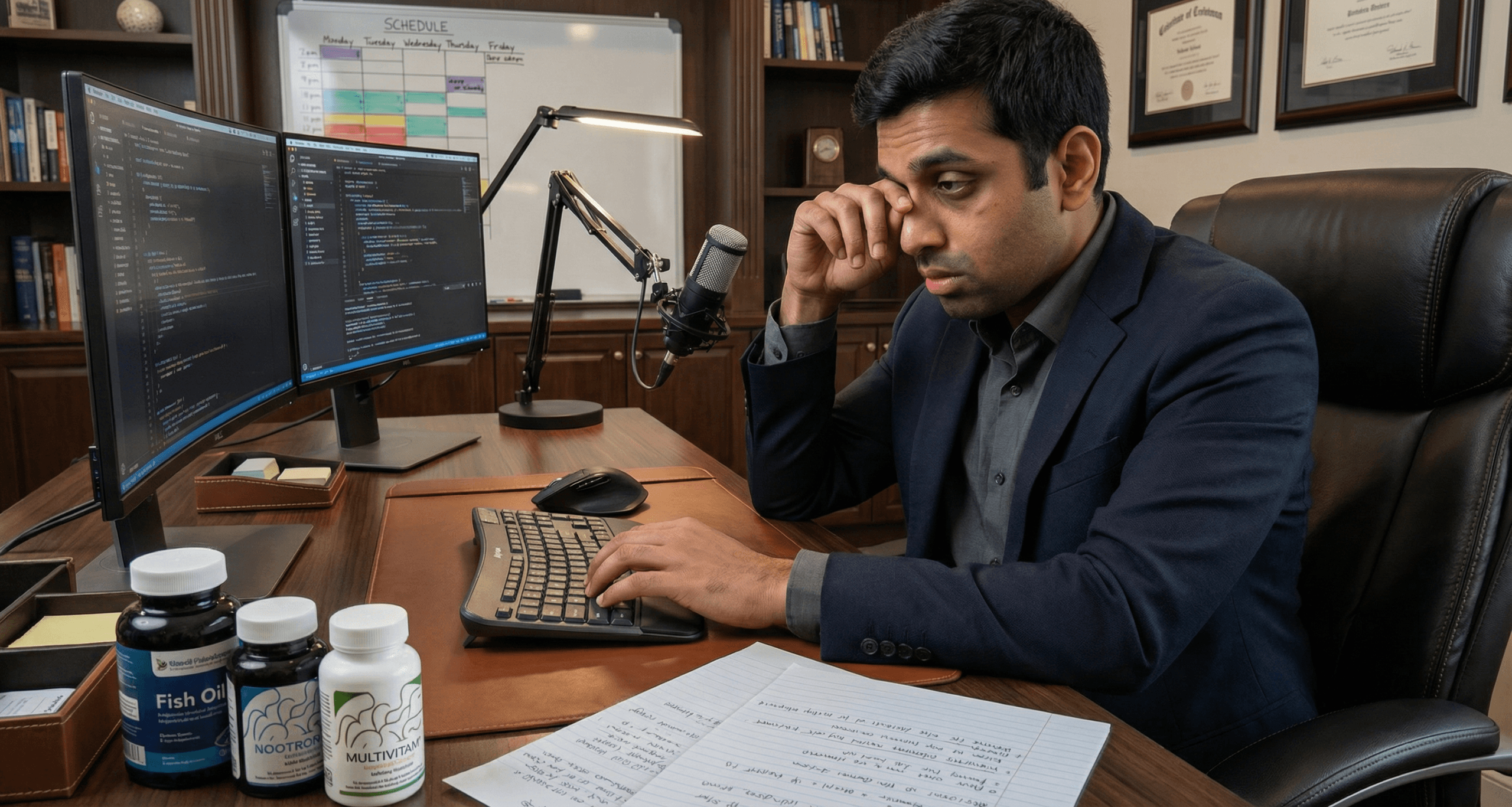
Cognitive Performance Optimization for Tech Professionals: What Actually Works
Cognitive performance optimization for tech professionals has become a booming industry, yet most of what gets marketed as “brain optimization” either lacks rigorous evidence or misrepresents preliminary findings. You’re three hours into debugging a complex architectural problem when your focus dissolves. You’ve had two coffees, you’re sitting at your desk, but your brain feels like it’s running through mud.
The internet offers plenty of answers most of them trying to sell you something. Supplement stacks promising “limitless” focus. Biohacking protocols involving ice baths and fasting. Apps claiming to train your brain like a muscle. However, when you look for actual evidence, the picture becomes murky.
Here’s the reality: neuroscience does have valuable insights about cognitive performance, but the practices that genuinely support cognitive function aren’t peculiar or expensive. They’re foundational health behaviors that tech culture often encourages you to sacrifice in pursuit of productivity.
This article separates evidence from marketing, examines what neuroscience actually tells us, and provides practical, science-based strategies for sustaining mental clarity and focus in cognitively demanding technical work.
Understanding Cognitive Performance Optimization: What the Science Actually Says
How the Brain Handles Complex Technical Work
Technical problem-solving whether you’re debugging code, designing system architecture, or analyzing data requires sustained activation of your prefrontal cortex, the brain region responsible for executive functions like working memory, attention control, and complex reasoning.
This kind of cognitive work is metabolically expensive. Your brain represents about 2% of your body weight but consumes roughly 20% of your energy. Extended periods of focused cognitive effort deplete glucose and neurochemical resources, which is why mental fatigue feels physically real it is.
Understanding this helps explain why “pushing through” mental exhaustion often backfires. Once you’ve depleted those resources, performance degrades regardless of willpower.
The Difference Between Cognitive Performance and “Brain Hacking”
Cognitive performance refers to how effectively your brain processes information, maintains attention, solves problems, and learns. Sleep, physical health, stress, nutrition, and countless other factors influence it.
“Brain hacking” or “biohacking,” on the other hand, typically refers to interventions often supplements, devices, or protocols marketed as shortcuts to enhanced cognition. While the term sounds scientific, most of what gets labeled as biohacking lacks the rigorous evidence required to support its claims.
The distinction matters because optimization culture can distract from fundamentals. If you’re sleep-deprived and chronically stressed, no supplement stack will restore optimal cognitive function. Nevertheless, the supplement industry profits from the promise that it might.
Why Most “Limitless” Claims Are Marketing, Not Science
The fantasy of a pill that makes you smarter is powerful and profitable. The reality is that healthy adults’ cognitive function is remarkably well-regulated, and most interventions that genuinely enhance cognition in controlled studies show small effect sizes.
Moreover, many cognitive enhancement studies target populations with existing deficits older adults with cognitive decline, people with diagnosed conditions, or those with nutritional deficiencies. Results from these populations don’t necessarily translate to healthy young and middle-aged adults.
When companies market supplements based on “studies show…” claims, they’re often extrapolating from research that doesn’t actually support the broad enhancement claims being made.
What Neuroscience Research Can (and Can’t) Tell Us About Cognitive Performance Optimization
Neuroscience research can tell us a great deal about how the brain works, what impairs cognitive function, and what supports it. Well-controlled studies have established that sleep, aerobic exercise, stress management, and adequate nutrition are fundamental to cognitive health.
What neuroscience can’t tell us yet is how to dramatically enhance normal, healthy cognition beyond its natural capacity. Despite decades of research, reliable pharmacological or behavioral interventions that make healthy adults substantially smarter or more focused without significant trade-offs remain elusive.
This doesn’t mean optimization is futile it means the most effective cognitive performance optimization for tech professionals involves removing barriers to your brain’s natural functioning, not adding peculiar interventions.
The Role of Individual Variation: Why One-Size-Fits-All Approaches Fail
Cognitive function varies based on genetics, age, health status, chronotype, stress levels, and countless other individual factors. An intervention that helps one person may do nothing or cause problems for another.
This is particularly true for supplements and pharmacological interventions, where genetic variations in metabolism and receptor sensitivity create enormous individual differences in response.
Consequently, any protocol that promises universal cognitive enhancement without accounting for individual variation deserves skepticism.
The Foundations: What Actually Impacts Cognitive Performance Optimization for Tech Professionals
Before considering any optimization strategies, understanding what genuinely affects how your brain functions is essential.
Sleep Architecture and Cognitive Performance (The Non-Negotiable Foundation)
Sleep is the single most powerful determinant of cognitive performance. During sleep, your brain consolidates memories, clears metabolic waste, restores neurochemical balances, and strengthens synaptic connections.

Sleep deprivation research shows that even partial sleep restriction over several nights impairs attention, working memory, executive function, creativity, and decision-making. Sleeping six hours per night for two weeks produces cognitive impairment equivalent to 24 hours of total sleep deprivation.
No supplement, protocol, or hack can compensate for chronic sleep debt. This is the most well-established finding in cognitive performance research, yet tech culture routinely normalizes sleep sacrifice.
Aerobic Exercise and Neuroplasticity
Aerobic exercise is one of the most robustly supported cognitive enhancers. It increases production of brain-derived neurotrophic factor (BDNF), a protein that supports the growth and survival of neurons and enhances synaptic plasticity your brain’s ability to form new connections and adapt.
Studies consistently show that regular aerobic exercise improves memory, attention, processing speed, and executive function. These benefits occur across age groups and are most pronounced with consistent, moderate-intensity activity.
Importantly, you don’t need extreme exercise protocols. Regular walking, running, cycling, or swimming at moderate intensity provides substantial cognitive benefits. Research on morning vs. evening workouts shows that timing matters less than consistency.
Nutrition and Brain Function: Beyond the Hype
Your brain needs adequate glucose, oxygen, and various micronutrients to function optimally. Nutritional deficiencies particularly in B vitamins, vitamin D, iron, and omega-3 fatty acids can impair cognition.
In healthy adults without deficiencies, however, additional supplementation typically doesn’t enhance cognitive performance. The relationship between nutrition and cognition is primarily about ensuring adequacy, not about optimization through excess.
Diets associated with better cognitive health and slower cognitive aging like the Mediterranean diet and MIND diet emphasize whole foods, vegetables, healthy fats, and fish. Understanding how to balance carbs, protein, and fat for energy supports both physical and cognitive performance.
Stress, Cortisol, and Cognitive Decline
Chronic stress impairs cognitive function through multiple mechanisms. Elevated cortisol affects the hippocampus (critical for memory) and prefrontal cortex (critical for executive function). Over time, chronic stress can actually reduce volume in these brain regions.
Acute stress can temporarily sharpen focus. Sustained activation of your stress response, however, degrades cognitive performance particularly for tasks requiring flexible thinking, creativity, and complex problem-solving. These are precisely the demands of technical work.
Effective stress management isn’t optional for cognitive performance it’s foundational. Practicing emotional hygiene daily supports both emotional wellbeing and cognitive function.
Social Connection and Cognitive Reserve
Research consistently shows that social connection and engagement support cognitive health across the lifespan. Isolation and loneliness are risk factors for cognitive decline.
For remote tech workers, intentional social connection whether through collaborative work, friendships, or community involvement isn’t just nice to have. Social fitness strengthens health outcomes, including cognitive resilience.
Why Foundational Health Trumps Optimization Hacks
The interventions with the strongest evidence for supporting cognitive performance are the least peculiar: adequate sleep, regular movement, stress management, social connection, and adequate nutrition.
These don’t get marketed aggressively because they can’t be packaged and sold as easily as supplements or protocols. Their effect sizes in research, though, are larger and more consistent than virtually any “cognitive enhancement” product on the market.
Sleep: The Most Powerful Cognitive Enhancer (That Tech Professionals Often Sacrifice)
How Sleep Deprivation Impairs Problem-Solving and Creativity
When you’re sleep-deprived, your prefrontal cortex the brain region responsible for complex reasoning, planning, and decision-making shows reduced activity. This manifests as difficulty concentrating, increased errors, poor judgment, and reduced creative insight.
Studies on programmers and other technical professionals show that sleep deprivation significantly increases bugs, reduces code quality, and impairs creative problem-solving required for architectural decisions.
If you’re struggling with a complex technical problem, sleeping on it isn’t procrastination it’s allowing your brain to consolidate information and make novel connections that emerge during REM sleep.
Sleep Stages and Memory Consolidation
Sleep isn’t uniform it cycles through stages that serve different functions. Deep sleep (slow-wave sleep) is critical for clearing metabolic waste and consolidating declarative memories. REM sleep supports emotional processing and creative insight.
When you cut sleep short, you disproportionately lose REM sleep, which occurs more in the later sleep cycles. This is why sleeping five or six hours doesn’t give you 75% of the benefit of eight hours you’re missing entire stages.
Circadian Rhythms and Optimal Cognitive Windows
Your circadian rhythm influences when you’re most alert and when certain types of cognitive performance peak. For most people, there’s a natural dip in alertness in the early afternoon and peak alertness in mid-to-late morning and early evening.
Understanding your own circadian patterns allows you to schedule demanding cognitive work during your natural peaks and less demanding tasks during your valleys. This approach works with your biology rather than fighting it.
Evidence on Sleep Duration, Quality, and Cognitive Performance
Research consistently shows that adults need seven to nine hours of sleep for optimal cognitive function. Individual variation exists, but people who believe they function well on less are usually experiencing impaired performance they’ve adapted to.
Sleep quality matters as much as duration. Fragmented sleep from disorders like sleep apnea, even if total sleep time seems adequate, impairs cognitive function significantly.
Practical Sleep Hygiene for Tech Professionals
Core sleep hygiene principles include:
- Consistent sleep schedule (going to bed and waking at similar times, even on weekends)
- Cool, dark sleeping environment (blackout curtains, temperature around 65-68°F / 18-20°C)
- Limited screen time before bed (blue light suppresses melatonin; use night mode or stop screens 1-2 hours before sleep)
- Strategic caffeine use (avoiding caffeine within 8-10 hours of bedtime)
- Stress management before bed (not solving technical problems in bed)
For on-call rotations or irregular schedules, prioritize sleep when you can get it. Use strategic naps (20 minutes or 90 minutes to complete a full sleep cycle). Recognize that irregular sleep is cognitively costly it’s not a personal failing if your performance suffers under these conditions.
Exercise and Brain Health: What the Evidence Actually Shows

Aerobic Exercise and BDNF (Brain-Derived Neurotrophic Factor)
Brain-derived neurotrophic factor (BDNF) is sometimes called “miracle-gro for the brain.” It supports neuron survival, growth, and differentiation, and it’s critical for learning and memory.
Aerobic exercise reliably increases BDNF production. This isn’t speculative it’s one of the most well-replicated findings in neuroscience. Regular exercise literally changes your brain structure, increasing volume in the hippocampus and improving connectivity in networks associated with executive function.
Exercise Timing and Cognitive Performance
Some research suggests that exercise earlier in the day may support cognitive performance better than evening exercise, possibly through effects on alertness and sleep quality. The most important factor, however, is consistency exercising at whatever time you’ll actually maintain proves more valuable than optimizing timing.
Brief movement breaks during work (even just walking) can restore focus when mental fatigue sets in. This likely works by shifting brain activity and allowing recovery of depleted cognitive resources.
The Dose-Response Relationship: How Much Movement Matters
Research suggests that moderate-intensity aerobic exercise for 150 minutes per week (about 30 minutes five times per week) provides substantial cognitive benefits. More exercise may provide additional benefits, but the relationship isn’t linear.
Even smaller amounts of movement regular walking breaks, standing, brief activity appear to support cognitive function better than prolonged sitting.
Resistance Training and Cognitive Function
While aerobic exercise has the strongest evidence for cognitive benefits, emerging research suggests that resistance training may also support executive function and memory through different mechanisms involving growth factors and metabolic effects.
A balanced approach including both aerobic and resistance training likely provides the broadest benefits for cognitive performance optimization.
Realistic Movement Integration for Desk-Bound Tech Work
For people spending most of the day at computers:
- Brief walks between focused work blocks
- Standing desk or sitting-standing alternation
- Movement during meetings (walking meetings when possible)
- Exercise before or after work as anchor habit
- Active commuting if feasible
The goal isn’t to become an athlete it’s to counteract the cognitive and metabolic effects of prolonged sitting and provide your brain the movement-related benefits that humans evolved to require.
Nutrition and Cognitive Function: Separating Science from Supplement Marketing
What Nutritional Deficiencies Actually Impair Cognition
Deficiencies in certain nutrients genuinely impair cognitive function:
- B vitamins (especially B12, folate, B6): Important for neurotransmitter synthesis and brain metabolism
- Vitamin D: Receptors throughout the brain; deficiency associated with cognitive impairment
- Iron: Essential for oxygen transport; deficiency causes fatigue and impaired concentration
- Omega-3 fatty acids (EPA and DHA): Structural components of brain cell membranes
If you have these deficiencies, correcting them can improve cognition. If you’re already adequate, additional supplementation typically doesn’t enhance performance.
The Mediterranean and MIND Diets: Evidence for Brain Health
The Mediterranean diet emphasizing vegetables, fruits, whole grains, legumes, nuts, olive oil, and fish is associated with better cognitive function and slower cognitive decline in longitudinal studies.
The MIND diet combines elements of the Mediterranean and DASH diets specifically for brain health. Research suggests it may reduce risk of cognitive decline and dementia.
These dietary patterns aren’t about specific “brain-boosting superfoods.” They’re about overall nutrient density, anti-inflammatory effects, and cardiovascular health, which strongly influences brain health. Smart snacking strategies can help maintain stable energy for sustained cognitive work.
Hydration and Cognitive Performance
Even mild dehydration (1-2% body water loss) can impair attention, memory, and mood. For most people, drinking when thirsty and ensuring adequate fluid intake throughout the day is sufficient.
The “8 glasses a day” rule isn’t evidence-based, but consistent hydration matters for cognitive function. Coffee and tea count toward fluid intake, despite mild diuretic effects.
Caffeine: Benefits, Limitations, and Strategic Use
Caffeine is one of the few cognitive enhancers with robust evidence in healthy adults. It improves alertness, attention, and reaction time by blocking adenosine receptors.
Caffeine has important limitations, though:
- Tolerance develops, reducing benefits over time
- It doesn’t replace sleep it temporarily masks sleepiness without restoring impaired cognitive function
- Timing matters consuming caffeine too late impairs sleep; waiting 90-120 minutes after waking allows your natural cortisol awakening response to occur
- Individual variation in metabolism (based on genetics) means some people metabolize caffeine quickly while others process it slowly
Strategic caffeine use means using it when you need alertness, avoiding tolerance by not consuming it constantly, and timing it to avoid sleep interference.
The Truth About “Brain-Boosting” Supplements and Nootropics
This area deserves deeper examination because supplement marketing for cognitive enhancement is pervasive and often misleading.
Deep Dive: Nootropics and Supplements What Science Actually Supports
The term “nootropic” was coined in the 1970s to describe substances that enhance learning and memory without significant side effects. In practice, it’s now used to market a vast array of supplements with widely varying evidence.
Omega-3 Fatty Acids: The Evidence
Omega-3s (EPA and DHA) are structural components of brain cell membranes and have anti-inflammatory effects. Evidence suggests benefits for:
- Older adults with cognitive decline: Some studies show modest benefits
- People with deficiencies: Correcting deficiency improves cognition
- Depression: EPA supplementation may help as adjunct treatment
For healthy young and middle-aged adults with adequate dietary intake, evidence for cognitive enhancement is weak. Omega-3s matter for overall health, but they’re not a cognitive performance hack for people who eat fish regularly or have adequate intake.
B Vitamins: Deficiency Correction vs. Enhancement
B vitamins (particularly B12, folate, B6) are essential for brain function. In people with deficiencies common in older adults, vegetarians/vegans (for B12), and people with certain health conditions supplementation can improve cognition.
In people with adequate levels, additional B vitamins don’t enhance cognitive performance. Meta-analyses show no consistent benefit for healthy adults without deficiency.
Creatine: Potential Cognitive Benefits in Specific Populations
Creatine, primarily known as a fitness supplement, may have cognitive benefits in specific contexts:
- Vegetarians and vegans (who get little dietary creatine) may see modest cognitive benefits
- Sleep deprivation: Some studies suggest creatine may partially mitigate cognitive impairment from sleep loss
- Older adults: Possible modest benefits
Evidence in healthy omnivores under normal conditions remains limited. Creatine is relatively safe, but it’s not a universal cognitive enhancer.
Modafinil, Adderall, and Prescription Stimulants: Risks and Reality
Modafinil (Provigil) and amphetamines (Adderall, Ritalin) are sometimes used off-label for cognitive enhancement, particularly in demanding fields like tech and finance.
Important realities:
- These are prescription medications for diagnosed conditions (narcolepsy, ADHD)
- Using them without medical supervision carries risks: cardiovascular effects, addiction potential, psychiatric side effects, legal consequences
- Studies on cognitive enhancement in healthy adults show mixed results some improvement in certain tasks, but often with costs to other cognitive domains
- They don’t replace sleep or address underlying issues
If you’re considering these medications, first:
- Get evaluated for ADHD or sleep disorders many adults have undiagnosed conditions that respond to proper treatment
- Address sleep, stress, and health fundamentals
- Consult a psychiatrist, not a “performance optimization” clinic
Self-medicating with prescription stimulants is neither safe nor a substitute for addressing root causes of cognitive difficulties.
Popular Nootropics with Weak or No Evidence
Many supplements marketed as nootropics have minimal evidence in humans:
- Racetams (piracetam, aniracetam): Mostly studied in people with cognitive impairment; little rigorous evidence in healthy adults
- Alpha-GPC: Some evidence for age-related decline; weak evidence in healthy young adults
- L-theanine: May promote relaxation without sedation; cognitive enhancement evidence remains limited
- Rhodiola, Bacopa, Ginkgo: Traditional herbs with preliminary but inconsistent results in rigorous trials
These aren’t necessarily harmful (though quality and purity vary widely), but claims of cognitive enhancement are largely unsupported for healthy adults.
Why Most Cognitive Enhancement Supplements Are Poorly Regulated
The supplement industry in the United States is regulated as food, not medicine. The FDA doesn’t pre-approve supplements for safety or efficacy.
This means:
- Purity and potency aren’t guaranteed what’s on the label may not match what’s in the bottle
- Evidence standards are low companies can cherry-pick studies or cite preliminary research as proof
- Long-term safety is often unknown
- Drug interactions aren’t always studied
If you choose to experiment with supplements, use reputable brands with third-party testing (like USP or NSF certification). Recognize, however, that even then, evidence for cognitive enhancement remains weak for most products.
Managing Attention and Focus: Evidence-Based Strategies for Cognitive Performance Optimization
Understanding Attention Fatigue and Cognitive Load
Your attention is a limited resource. Sustained focus depletes it, and restoration requires rest or change of activity. This isn’t a personal failing it’s neurobiology.
Cognitive load theory explains that your working memory has limited capacity. When you’re trying to hold too much information or solve too many problems simultaneously, performance degrades.
Recognizing these limits allows you to design work in ways that work with your brain rather than against it.
The Science Behind Deep Work and Flow States
“Deep work” sustained, focused attention on cognitively demanding tasks produces valuable output and supports skill development. Research on flow states shows they’re associated with peak performance and satisfaction.

Achieving deep work or flow requires:
- Minimizing interruptions (eliminating notifications, closing communication tools)
- Challenging but achievable tasks (difficulty matched to skill level)
- Clear goals and feedback loops
- Extended time blocks (you can’t drop into deep focus in 15 minutes)
Time-Blocking and Attention Management
Time-blocking dedicating specific time periods to specific types of work helps by:
- Reducing decision fatigue (“what should I work on now?”)
- Creating boundaries that protect focus time
- Matching task types to energy levels
- Preventing reactive, fragmented work patterns
Evidence suggests that most people can sustain truly focused cognitive work for roughly 90-120 minutes before needing a break. Trying to push beyond this usually means diminishing returns.
Task Switching Costs: The Neuroscience of Multitasking
Every time you switch between tasks, there’s a “switching cost” time and cognitive resources required to disengage from one task and re-engage with another. Studies show these costs accumulate, reducing efficiency and increasing errors.
What feels like multitasking is usually rapid task-switching, and it’s cognitively expensive. For complex technical work, protecting uninterrupted focus time produces better outcomes than fragmented attention across multiple tasks.
Environmental Design for Focus
Your environment affects cognitive performance significantly:
- Noise: Most focused technical work benefits from quiet or consistent background sound (white noise, familiar music without lyrics)
- Lighting: Bright light during the day supports alertness; dim light in evening supports melatonin production and sleep
- Workspace: Dedicated work environment creates contextual cues supporting focus; separating work and rest spaces helps with psychological boundaries
Implementing realistic screen-time boundaries supports both attention management and evening recovery.
When Attention Difficulties May Signal ADHD or Other Conditions
Persistent difficulty with attention, focus, task initiation, or organization particularly if these patterns have been present since childhood may indicate ADHD. This condition is significantly underdiagnosed in adults.
Other conditions that impair attention include depression, anxiety disorders, sleep disorders, and thyroid dysfunction. If attention difficulties significantly affect your work or life despite addressing sleep, stress, and environmental factors, seeking professional evaluation is appropriate.
Stress Management and Cognitive Resilience

How Chronic Stress Impairs Executive Function
Chronic activation of your stress response elevates cortisol, which affects the prefrontal cortex and hippocampus. Over time, this impairs working memory, decision-making, flexible thinking, creativity, emotional regulation, and memory formation.
You can’t simply “push through” these effects. Addressing stress is essential for cognitive performance optimization, not a luxury.
The HPA Axis: Understanding Your Stress Response
Your stress response evolved for acute physical threats, not chronic psychological stressors like project deadlines or on-call rotations. When this system is constantly activated, it becomes dysregulated, contributing to burnout, anxiety, depression, and cognitive impairment.
Understanding that your stress response is biological helps you recognize that stress management isn’t about positive thinking. It requires actual interventions to down-regulate your nervous system. Micro-mindfulness practices offer accessible starting points.
Evidence-Based Stress Reduction Techniques
Multiple meta-analyses show that mindfulness meditation reduces stress and improves attention regulation. Effects are modest but consistent, and benefits increase with regular practice.
Controlled breathing particularly slower breathing rates that activate the parasympathetic nervous system has measurable physiological effects on stress response. Simple practices like box breathing (inhale 4 counts, hold 4, exhale 4, hold 4) can shift your nervous system state.
Additional evidence-based approaches include:
- Progressive muscle relaxation: Systematically tensing and releasing muscle groups
- Cold exposure (brief, like cold water face immersion): Activates vagus nerve and parasympathetic response
- Nature exposure: Attention restoration theory suggests natural environments restore depleted attention
When Stress Management Isn’t Enough: Recognizing Burnout and Depression
If you’re experiencing persistent exhaustion despite rest, cynicism or detachment from work, reduced sense of accomplishment, inability to experience pleasure, or cognitive fog that doesn’t improve with sleep these may indicate burnout or depression.
Both conditions require more than stress management techniques. Professional mental health support and potentially workplace changes are appropriate. Understanding burnout recovery strategies can help you identify next steps.
Cognitive Recovery and Restoration

The Neuroscience of Rest and Mental Recovery
Your brain requires actual rest not just different work to recover cognitive resources. Research shows that downtime allows the brain’s default mode network to activate, supporting memory consolidation, creativity and insight, self-reflection and planning, and recovery of depleted executive function.
“Recovery” doesn’t mean lying in bed staring at the ceiling. It means activities that don’t demand sustained executive function.
Psychological Detachment from Work
Research on work recovery shows that psychological detachment truly mentally disengaging from work during off-hours is critical for sustained performance and wellbeing.
This is particularly challenging for remote workers and on-call engineers. Boundaries require clear work end times when possible, separate work and personal spaces, transitional activities that create mental separation, and limiting work communication outside work hours.
Nature Exposure and Attention Restoration
Attention restoration theory suggests that natural environments restore depleted attentional resources. Unlike urban environments that demand directed attention, nature allows “soft fascination” that permits attention recovery.
Even brief nature exposure walking in a park, looking at trees appears to restore focus and reduce mental fatigue.
The Role of Boredom and Mind-Wandering in Creativity
Constant stimulation and information consumption prevent mind-wandering, which research suggests is important for creativity, problem-solving, and processing experiences.
Allowing boredom resisting the urge to immediately fill idle moments with phone scrolling creates space for creative insight and cognitive rest.
Active vs. Passive Recovery
Active recovery (engaging in absorbing activities like hobbies, exercise, socializing) generally restores energy better than passive recovery (TV, social media scrolling), though individual preferences matter.
The key is activities that engage you without demanding the same cognitive resources as work physical activity, creative pursuits, social connection.
Work Structure and Cognitive Performance
Ultradian Rhythms: Working With Your Natural Energy Cycles
Beyond circadian rhythms (24-hour cycles), your body follows ultradian rhythms roughly 90-120 minute cycles of higher and lower energy and alertness throughout the day.
Working with these rhythms means scheduling demanding cognitive work during natural peaks, taking breaks during valleys rather than pushing through, and recognizing that continuous focus beyond 90-120 minutes usually produces diminishing returns.
Strategic Breaks and the Science of Productive Rest
Research shows that brief breaks (5-10 minutes per hour) maintain performance better than working straight through. Breaks that involve movement, nature exposure, or social interaction appear particularly restorative.
Longer breaks (15-30 minutes after 90-120 minutes of focused work) allow more complete recovery of cognitive resources.
Meeting Overload and Cognitive Depletion
Meetings especially video meetings are cognitively demanding in ways that participants often underestimate. They require sustained attention, active listening and processing, social and emotional regulation, and for video meetings, intense eye contact and self-monitoring.
Meeting-heavy schedules leave little capacity for deep technical work. Protecting meeting-free blocks is essential for cognitive recovery and productive work.
Async vs. Sync Communication: Cognitive Load Considerations
Asynchronous communication (email, documentation, recorded updates) allows processing information at your own pace and returning to it when cognitively fresh.
Synchronous communication (meetings, instant messaging) demands immediate response and interrupts focused work. Both have value, but chronic synchronous communication creates constant cognitive load and prevents deep work.
Deep Work Blocks: How Much Continuous Focus Is Sustainable?
Most people can sustain truly deep focus for 3-5 hours per day, not 8-10 hours. Expecting continuous peak cognitive performance across a full workday sets up failure.
Designing work around 2-4 hour blocks of deep work, with the rest of the day for meetings, administrative tasks, and recovery, aligns better with cognitive capacity.
What Doesn’t Work (Despite the Hype)
Brain Training Games: The Evidence Doesn’t Support Broad Transfer
Companies marketing brain training games claim they improve general cognitive ability. Meta-analyses and systematic reviews consistently find that while people get better at the trained tasks, this improvement doesn’t transfer to real-world cognitive performance.
You get better at the specific game, not at general attention, memory, or problem-solving. This “narrow transfer” isn’t what the marketing promises.
Most Nootropic Stacks: Insufficient Evidence and Regulation Concerns
“Stacks” combinations of multiple supplements taken together are popular in biohacking communities. The rationale is that synergistic effects might exceed individual supplements.
The reality is that most individual supplements lack strong evidence, and combinations are even less studied. You’re essentially experimenting on yourself with compounds that may have unknown interactions.
Binaural Beats: Weak Evidence for Cognitive Enhancement
Binaural beats audio that creates the perception of a beat by playing slightly different frequencies in each ear are marketed for focus, relaxation, and cognitive enhancement.
While some small studies suggest possible effects on relaxation or mood, evidence for cognitive enhancement is weak and inconsistent. If you find them pleasant, that’s fine but they’re not a cognitive performance tool supported by rigorous research.
Extreme Fasting or Ketosis for Cognitive Performance
Some advocates claim that fasting or ketogenic diets enhance cognitive performance. Research shows mixed results:
- Short-term fasting can impair cognitive performance for most people, particularly tasks requiring sustained attention
- Ketogenic diets may help specific populations but evidence for cognitive enhancement in healthy adults varies enormously
- Adaptation period: People transitioning to very low-carb diets often experience “keto flu” with brain fog
For some people, once adapted, ketosis feels cognitively neutral or positive. For others, it impairs performance. This is highly individual and not a universal optimization strategy.
Cold Exposure: Limited Direct Cognitive Evidence
Cold exposure has become trendy in optimization circles. While it does activate certain physiological responses (norepinephrine release, vagal tone), evidence for direct cognitive enhancement is limited.
Some people report subjective alertness benefits, but controlled studies don’t show consistent cognitive improvements.
Microdosing Psychedelics: Preliminary Research, Significant Limitations
Microdosing has enthusiastic advocates claiming creativity and focus benefits. Current evidence, however, is extremely limited. Most research is anecdotal or survey-based, the few controlled studies show mixed results often no better than placebo, and long-term safety remains unknown.
This is an area where more research is needed, but current evidence doesn’t support claims of cognitive enhancement.
When Cognitive Struggles Signal Health Issues
ADHD in Adults: Often Undiagnosed in Tech Professionals
ADHD is significantly underdiagnosed in adults, especially in individuals who succeeded academically through compensation strategies. Symptoms include difficulty sustaining attention, trouble initiating tasks despite importance, impulsivity, chronic disorganization, time blindness, and hyperfocus on interesting tasks paired with inability to focus on routine ones.
If these patterns have been present since childhood and significantly affect your functioning, evaluation by a psychiatrist familiar with adult ADHD is appropriate. Treatment can be life-changing.
Depression and Cognitive Impairment
Depression commonly includes cognitive symptoms: difficulty concentrating, slowed thinking, memory problems, and reduced decision-making capacity.
These cognitive symptoms can be as impairing as mood symptoms and may persist even when mood improves, requiring specific attention in treatment.
Thyroid Dysfunction and Brain Fog
Both hypothyroidism and hyperthyroidism can cause cognitive symptoms including mental fog, memory difficulties, and impaired concentration.
Thyroid dysfunction is common and easily tested with blood work. If you’re experiencing persistent brain fog along with fatigue, weight changes, or temperature sensitivity, thyroid testing is appropriate.
Sleep Disorders and Cognitive Impact
Sleep apnea breathing interruptions during sleep causes fragmented sleep and reduced oxygen, leading to daytime sleepiness, difficulty concentrating, memory problems, and slowed reaction times.
Insomnia similarly impairs cognition and increases risk for depression and anxiety. If you’re chronically fatigued despite apparently adequate sleep time, evaluation for sleep disorders is important.
Nutrient Deficiencies and Mental Fatigue
Deficiencies in B12, vitamin D, and iron can all cause cognitive symptoms that feel like brain fog or mental fatigue. These are easily tested through blood work.
If you have risk factors (vegetarian/vegan diet, limited sun exposure, heavy menstrual periods), asking your doctor to check these levels is reasonable. Understanding blood pressure numbers and other health markers supports comprehensive cognitive wellness.
When to Seek Medical Evaluation
Consider medical evaluation if you’re experiencing persistent cognitive difficulties despite adequate sleep and stress management, significant change in cognitive function from your baseline, or attention difficulties that have been present since childhood and significantly affect your life.
Many cognitive difficulties have treatable underlying causes. Don’t assume they’re just part of aging or tech work stress.
Building a Sustainable Cognitive Performance Optimization Strategy
Prioritize Foundations Over Hacks
The evidence is clear: sleep, exercise, stress management, nutrition, and social connection have far larger and more consistent effects on cognitive performance than any supplement, app, or biohacking protocol.
Before experimenting with optimization tactics, ensure you’re covering fundamentals:
- 7-9 hours of quality sleep consistently
- Regular aerobic exercise (at least 150 minutes per week moderate intensity)
- Effective stress management practices
- Adequate nutrition without major deficiencies
- Meaningful social connection
If these aren’t in place, adding nootropics or peculiar protocols is rearranging deck chairs.
Experiment Systematically (One Variable at a Time)
If you want to experiment with interventions beyond fundamentals, change one thing at a time so you can assess its actual effect. Give adequate time (at least 2-4 weeks for most interventions) and track both objectively and subjectively.
Consider placebo effects expectancy can be powerful. Just because you feel different doesn’t mean the intervention caused it.
Track Subjectively and Objectively
For cognitive work, objective metrics might include code commits, error rates, or time to complete standard tasks. Subjective tracking includes energy levels at different times, ease of focus, recovery quality, and mood.
Both types of information are valuable for understanding what actually affects your performance.
Adjust for Life Stage, Health Status, and Work Demands
What works changes over time. Strategies that served you in your 20s may need adjustment in your 40s. When work demands surge, you may need more recovery.
Flexibility and periodic reassessment matter more than finding one perfect protocol.
Avoid Optimization Obsession and Burnout
There’s a point where optimization itself becomes a source of stress and diminishing returns. If you’re constantly measuring and tracking, anxious about whether you’re doing enough to optimize, or spending more time researching optimization than actually working or resting the optimization has become counterproductive.
The goal is sustainable high performance and wellbeing, not perfection.
Frequently Asked Questions About Cognitive Performance Optimization
Do nootropics actually work for healthy adults?
For most nootropics marketed for cognitive enhancement, evidence in healthy adults is weak, inconsistent, or nonexistent. Caffeine is the notable exception it genuinely improves alertness and attention with strong evidence.
Some supplements (omega-3s, B vitamins) may help if you have deficiencies, but they don’t enhance cognition in people with adequate levels. Prioritize sleep, exercise, and stress management first these have far stronger evidence.
Is cognitive decline inevitable with age?
Some age-related cognitive changes are normal processing speed slows slightly, and certain types of memory become less efficient. Significant cognitive decline, however, is not inevitable.
Factors that support cognitive health across the lifespan include regular aerobic exercise, cognitive engagement and learning, social connection, cardiovascular health, and managing chronic conditions.
Can I make up for poor sleep with supplements?
No. Sleep deprivation impairs cognitive function through mechanisms that can’t be fully compensated for by any supplement, strategy, or hack.
Caffeine can temporarily mask sleepiness, but it doesn’t restore the cognitive functions impaired by sleep loss particularly creative problem-solving, emotional regulation, and complex decision-making. The only way to recover from sleep deprivation is sleep.
How much caffeine is optimal for cognitive performance?
Caffeine response varies based on genetics, tolerance, and individual sensitivity. Moderate doses (50-200mg, roughly half a cup to two cups of coffee) improve alertness and attention. Tolerance develops with regular use. Delaying first caffeine until 90-120 minutes after waking may work better with natural cortisol rhythms. Avoid consumption within 8-10 hours of bedtime.
More isn’t better high doses can cause anxiety, jitters, and impaired performance.
When should I see a doctor about cognitive difficulties?
Consult a healthcare provider if you’re experiencing persistent cognitive difficulties despite adequate sleep and stress management, significant change from your cognitive baseline, or symptoms consistent with ADHD, depression, or other conditions.
Many cognitive difficulties have treatable underlying causes that respond to appropriate treatment.
Evidence-Based Conclusions and Important Medical Context
What the Science Supports (and What It Doesn’t) in Cognitive Performance Optimization
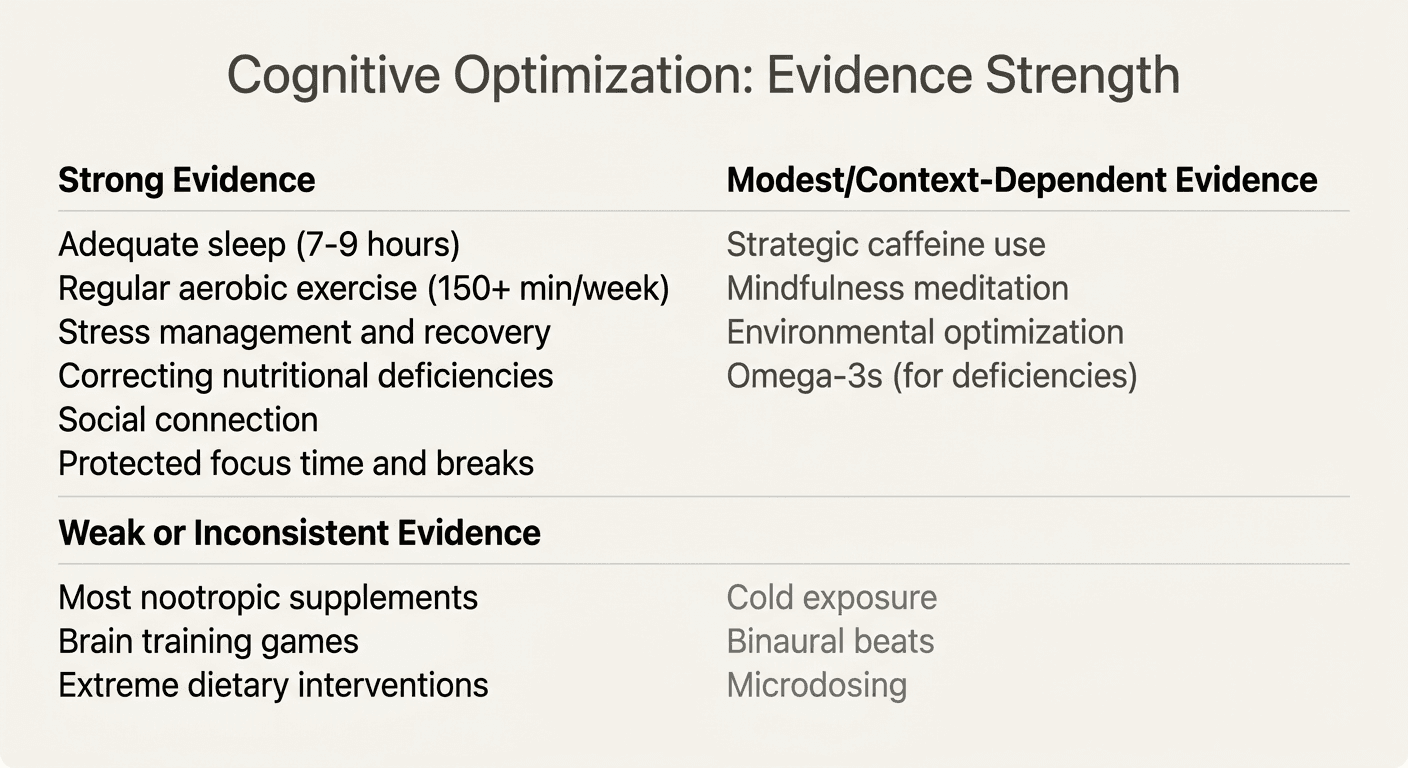
Strong evidence:
- Adequate sleep (7-9 hours for most adults)
- Regular aerobic exercise (150+ minutes per week moderate intensity)
- Stress management and psychological recovery
- Adequate nutrition without deficiencies
- Social connection and engagement
- Structured work with protected focus time and strategic breaks
Modest evidence or context-dependent:
- Caffeine for alertness and attention
- Mindfulness meditation for attention regulation and stress
- Correcting specific nutrient deficiencies
- Environmental design (lighting, noise management, workspace)
Weak or inconsistent evidence:
- Most nootropic supplements for healthy adults
- Brain training games for general cognitive enhancement
- Extreme dietary interventions
- Cold exposure for cognitive enhancement
- Binaural beats and microdosing psychedelics

Cognitive performance optimization for tech professionals should prioritize interventions with strong scientific support over trendy but unproven practices.

About the Resources We’ve Mentioned
LubDubSmile may earn a commission if you explore resources through our links, at no additional cost to you. Our guidance on cognitive performance optimization for tech professionals is based on neuroscience research, not promotional relationships.
Effective cognitive optimization requires no purchases. The foundational practices sleep, exercise, stress management, work structure cost nothing. We’ve prioritized free, evidence-based strategies because genuine cognitive performance comes from respecting your biology, not buying products.
Summary
Cognitive performance optimization for tech professionals depends primarily on foundational health practices: adequate sleep, regular exercise, stress management, proper nutrition, and recovery time. While caffeine and correction of nutritional deficiencies have evidence for supporting cognition, most marketed “brain optimization” supplements and protocols lack rigorous scientific support. Before pursuing peculiar optimization strategies, ensure you’re sleeping 7-9 hours, managing stress effectively, moving regularly, and addressing any underlying health issues. Sustainable high performance comes from working with your biology and respecting your limits, not from trying to hack your way past them.
This content is for educational purposes and does not substitute for professional psychological or therapeutic help.