Why the Right Snacks Matter
“Don’t eat between meals.” That long-standing advice may have caused more confusion than clarity. Modern nutrition research shows that thoughtful snacking choosing nutrient-dense foods rather than ultra-processed convenience items can help stabilize mood, sharpen focus, and regulate appetite throughout the day.
The Centers for Disease Control and Prevention (CDC) and Harvard Health Publishing emphasize that well-planned snacks can support healthy blood sugar levels and help fill common gaps in fruit, vegetable, and whole-grain intake. The aim is balance: snack intentionally, not continuously; nourish the body, not distract the mind.
At LubDubSmile, we treat nutrition guidance the same way we treat mental health advice: practical, evidence-aware, and stripped of moral judgment. Snacking has been framed as either a failure of discipline or a productivity hack. In reality, it is neither. It is a physiological tool that can either destabilize or support your day, depending on how it is approached.
Why Snacking Supports Body and Brain
- Stable Blood Sugar for Steady Energy
The National Institutes of Health (NIH) explains that fluctuating blood glucose levels can lead to fatigue and irritability. Pairing protein with fiber slows digestion and promotes a gradual release of energy.
For example, an apple with two tablespoons of nuts provides a smoother energy curve than a refined carbohydrate alone. - Mood and Focus Regulation
NIH findings link rapid sugar spikes and crashes with reduced attention span. Balanced snacks help stabilize dopamine activity, supporting mental clarity during work or study sessions. - Preventing Impulsive Eating
Hunger increases the likelihood of reaching for quick, high-calorie options. Research from the Harvard School of Public Health found that individuals who consumed nutrient-dense snacks such as nuts or yogurt tended to make healthier choices at dinner compared to those who skipped snacks.
Think of smart snacking as a nutritional buffer that prevents evening overeating.
What Makes a Snack “Smart”?
- Balanced Macronutrients
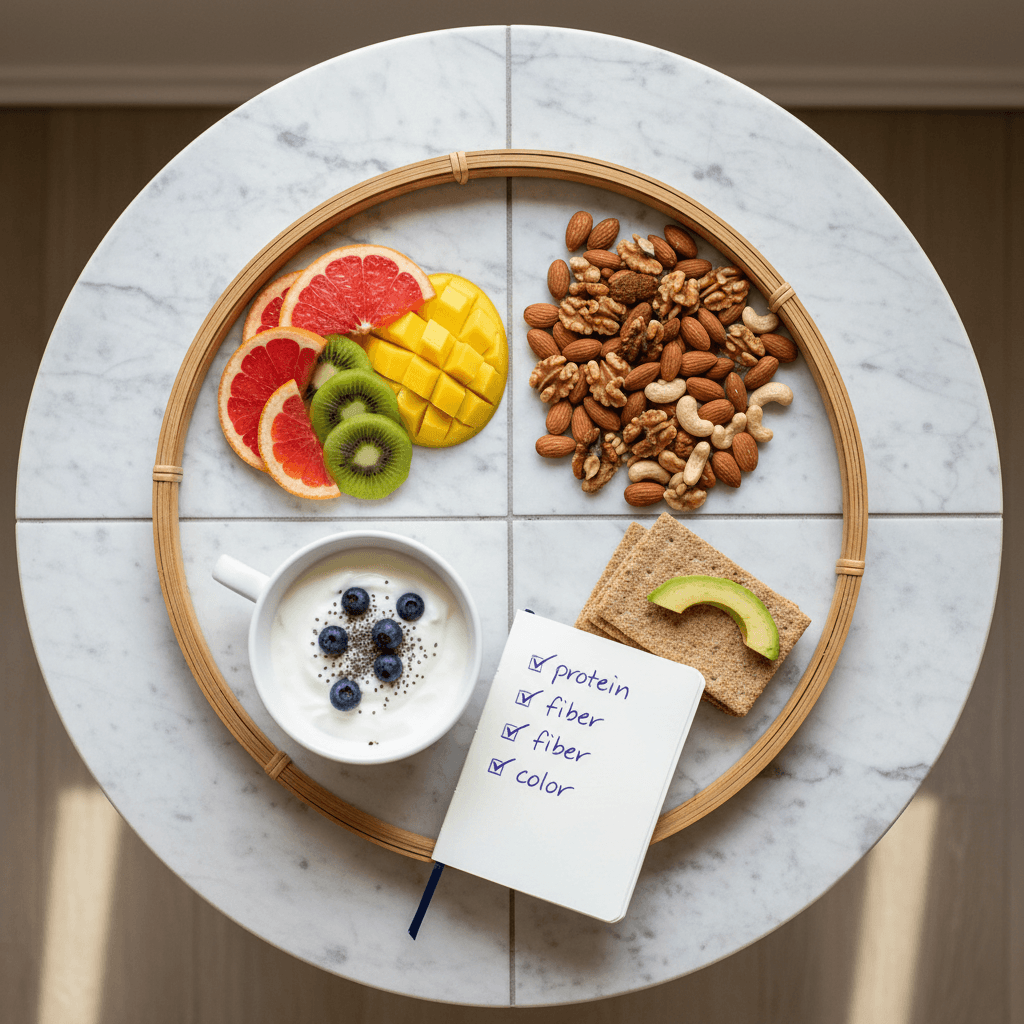
Choose at least two of the following:
- Protein — Greek yogurt, boiled eggs, nuts, roasted chickpeas
- Fiber — fruit, vegetables, oats, whole-grain crackers
- Healthy fats — avocado, nut butter, olive oil drizzle
The Mayo Clinic notes that combining macronutrients can sustain fullness for two to three hours.
For a deeper look at how macronutrient balance affects sustained energy throughout the day, see our guide on balancing carbs, protein, and fat for energy.
- Mindful Portions
A practical range is 100 to 250 calories per snack roughly a cupped handful of nuts or a small serving of yogurt. Awareness matters more than strict calorie tracking. - Timing That Aligns With Your Day
- Midmorning (around 10 a.m.): helps prevent energy dips.
- Midafternoon (3–4 p.m.): reduces pre-dinner cravings.
- Post-workout: replenishing nutrients within 45 minutes supports muscle recovery, according to NIH sports nutrition guidance.
For more on exercise timing and fueling, see Morning vs Evening Workouts: Does Timing Truly Matter?
One distinction worth holding onto: structured, intentional snacking is not the same as constant grazing. The research supporting snacks as metabolic stabilizers assumes defined eating windows, not continuous consumption throughout the day. When snacking becomes automatic rather than responsive, it can undermine appetite regulation rather than support it. The goal here is rhythm, not randomness.
Smart Snack Combinations for Real Life
| Situation | Balanced Option | Why It Works |
|---|---|---|
| Rushed morning | Banana + string cheese | Potassium and protein provide steady, sustained energy. |
| Long meeting | Almonds + grape tomatoes | Fiber and healthy fats help manage cravings and support focus. |
| Afternoon pickup | Apple slices + nut butter | Natural sweetness paired with healthy fat improves satiety. |
| Gym refuel | Low–added-sugar trail mix | Portable protein and micronutrients aid recovery. |
| Night snack | Greek yogurt + cinnamon | Protein and tryptophan may support muscle repair and restful sleep. |
Sources: Harvard Health, Mayo Clinic, and CDC Healthy Eating Guidelines.
How to Read Snack Labels in 60 Seconds
- Ingredients: Choose products with fewer than eight recognizable ingredients.
- Fiber: Aim for at least 2 grams per serving.
- Added sugar: Keep within 10 percent of total daily calories, as recommended by the World Health Organization.
- Sodium: Target under 200 milligrams per snack, following CDC heart-health guidance.
With repetition, these guidelines become intuitive.
The Role of Mindful Eating
A NIH review on mindfulness and health found that mindful eating practices were associated with consuming 10 to 15 percent fewer calories without deliberate restriction.
Try this approach:
- Rate your hunger on a scale of 1 to 10 before eating.
- Minimize distractions by turning off screens.
- Pause after two minutes to notice taste, texture, and satisfaction.
For additional daily balance strategies, explore Morning Routines for Well-Being (Without the 5 A.M. Hype) and Micro-Moments of Calm: How Everyday Mindfulness Can Soothe Stress and Steady the Heart.
Overcoming Common Barriers
“I’m too busy.”
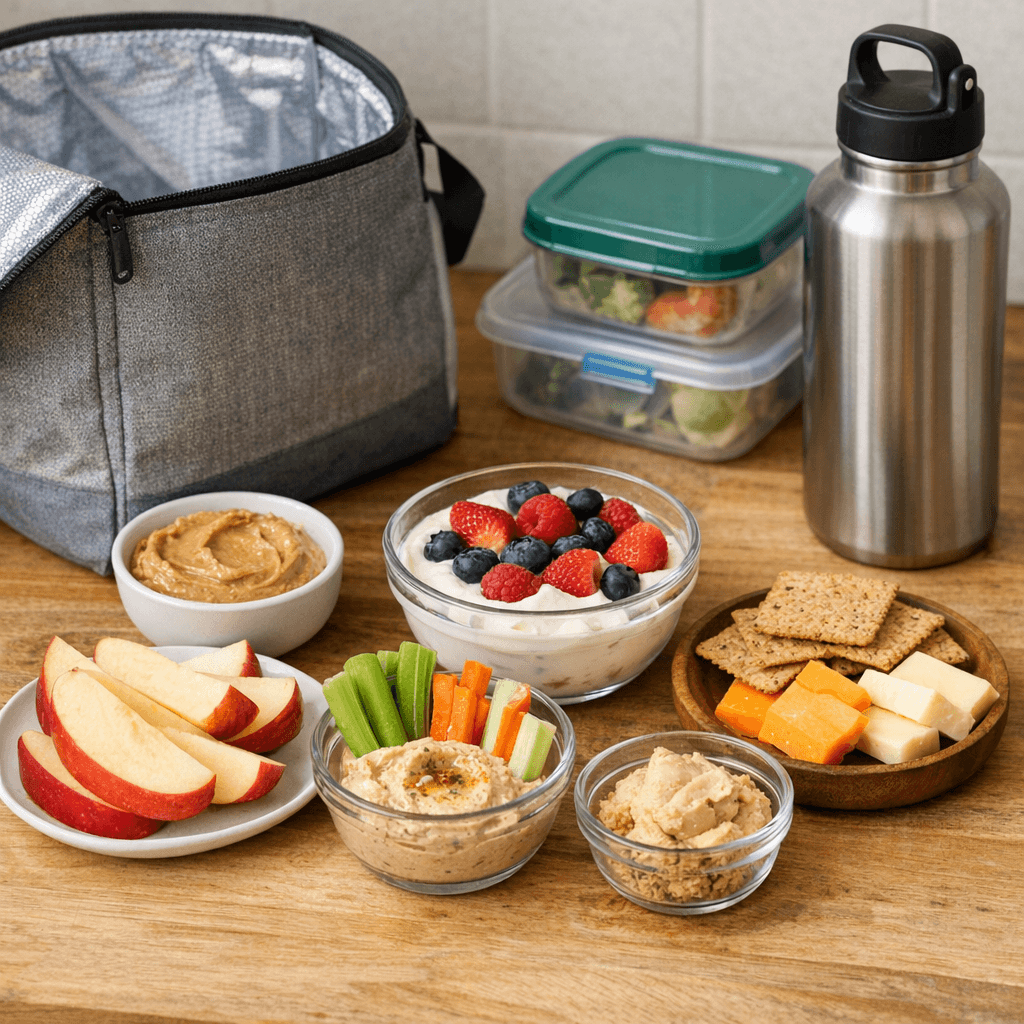
Keep portable options such as single-serve nuts or pre-cut vegetables accessible.
“Healthy snacks cost more.”
Purchase staple items like beans, oats, or popcorn in bulk and portion them at home.
“I snack from stress.”
Pause for a brief walk before reaching for food. Light movement can reduce stress-driven cravings.
If stress eating is a recurring pattern, our perspective on eating as self-care explores how nourishment can shift from reactive to restorative.
Integrating Snacking Into Your Full Day
Snacking works best when paired with foundational habits such as consistent sleep, adequate hydration, and regular physical activity.

Skipping meals or eliminating entire food groups often turns snacks into emergency fuel rather than supportive nourishment. Our article on meal structure benefits explains how consistent meal timing reduces the likelihood that snacks become reactive rather than intentional.
Let snacks serve as bridges between meals small, steady connections that maintain balance throughout the day.
Insight: Purpose Over Perfection
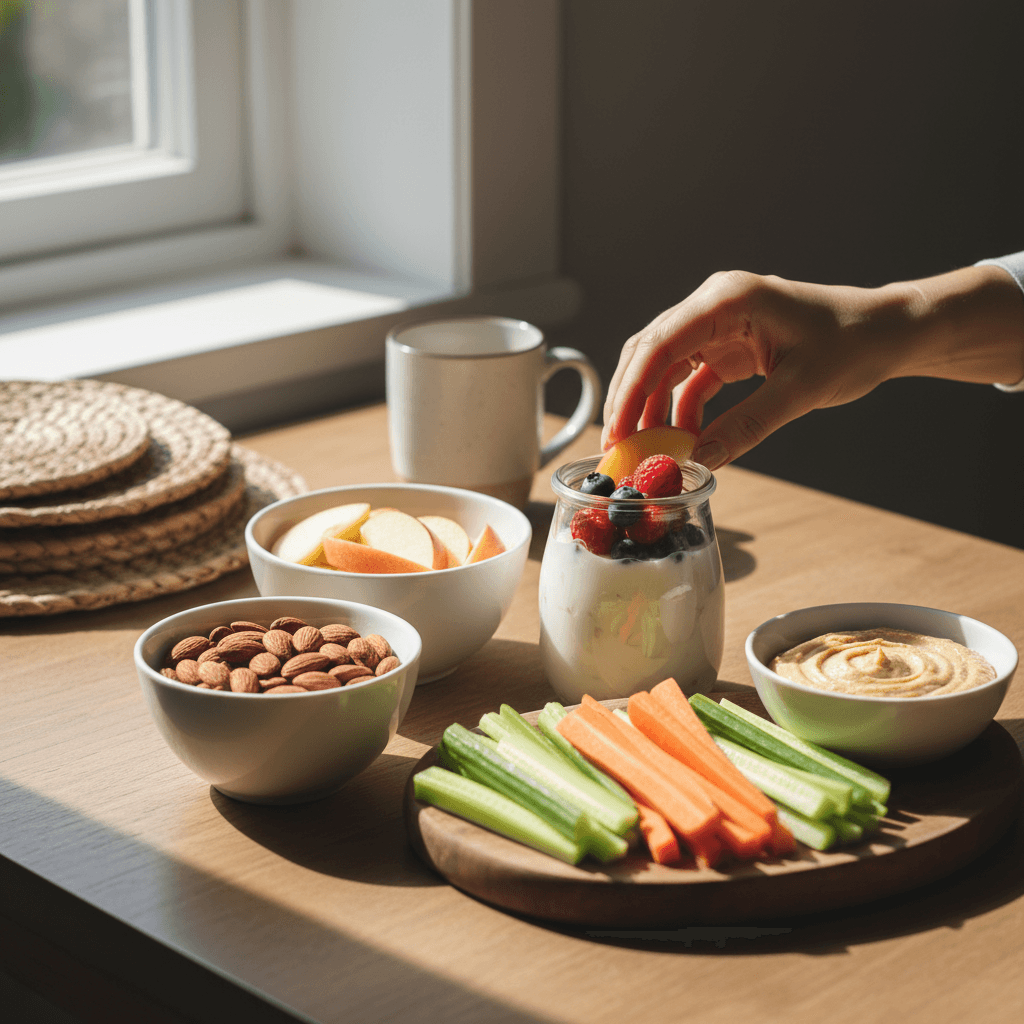
Smart snacking is not about strict counting; it is about tuning into your body’s signals and responding with balance. Whether you choose carrots with hummus or a handful of almonds, each intentional bite supports sustained energy and long-term health.
That is nutrition practiced with awareness and care.
Summary
Snacks that combine protein, fiber, and healthy fats can help stabilize blood sugar and reduce cravings, according to guidance from WHO, CDC, NIH, Harvard Health, and Mayo Clinic sources. Listening to hunger cues and selecting nutrient-dense options supports sustainable well-being.
Disclaimer: This content is provided for general educational purposes only and is not a substitute for personalized medical or nutritional advice. Consult qualified healthcare professionals for individualized guidance.