

Waking Up With Neck Stiffness: Why Your Pillow Might Be the Problem
Do you wake up with neck stiffness most mornings? You’re not alone. Most people accept morning neck stiffness as a normal part of aging or stress. You sleep for seven or eight hours, yet wake up feeling like you spent the night in an awkward position. Your shoulders are tight. Your upper back aches. You tilt your head side to side, trying to work out the kinks before you even start your day.
The assumption is usually that you “slept wrong.” But if neck stiffness happens regularly, the issue isn’t your sleeping habits. It’s likely your pillow. This kind of persistent neck stiffness points to a support problem that affects spinal alignment throughout the night.
Standard pillows especially the fluffy, overstuffed kind or the flat ones that lose their shape over time don’t provide structured support for the natural curve of your neck. When your head sits too high or sinks too low, your cervical spine (the seven vertebrae in your neck) is forced out of alignment for hours. Muscles strain to compensate. Nerves get compressed. You wake up stiff, sore, and unrested, even after a full night’s sleep.
For side sleepers, the gap between the mattress and head is often too wide for a standard pillow to fill properly. Back sleepers struggle with traditional pillows that push the head forward, flattening the natural neck curve. Even stomach sleepers though this position is generally harder on the spine deal with pillows that elevate the head too much, straining the neck in the opposite direction.
The solution isn’t just buying a “firmer” or “softer” pillow. It’s rethinking pillow design entirely specifically, choosing one that supports the shape of your neck, not just the weight of your head.
The Rise of Ergonomic Pillow Design for Neck Stiffness Relief
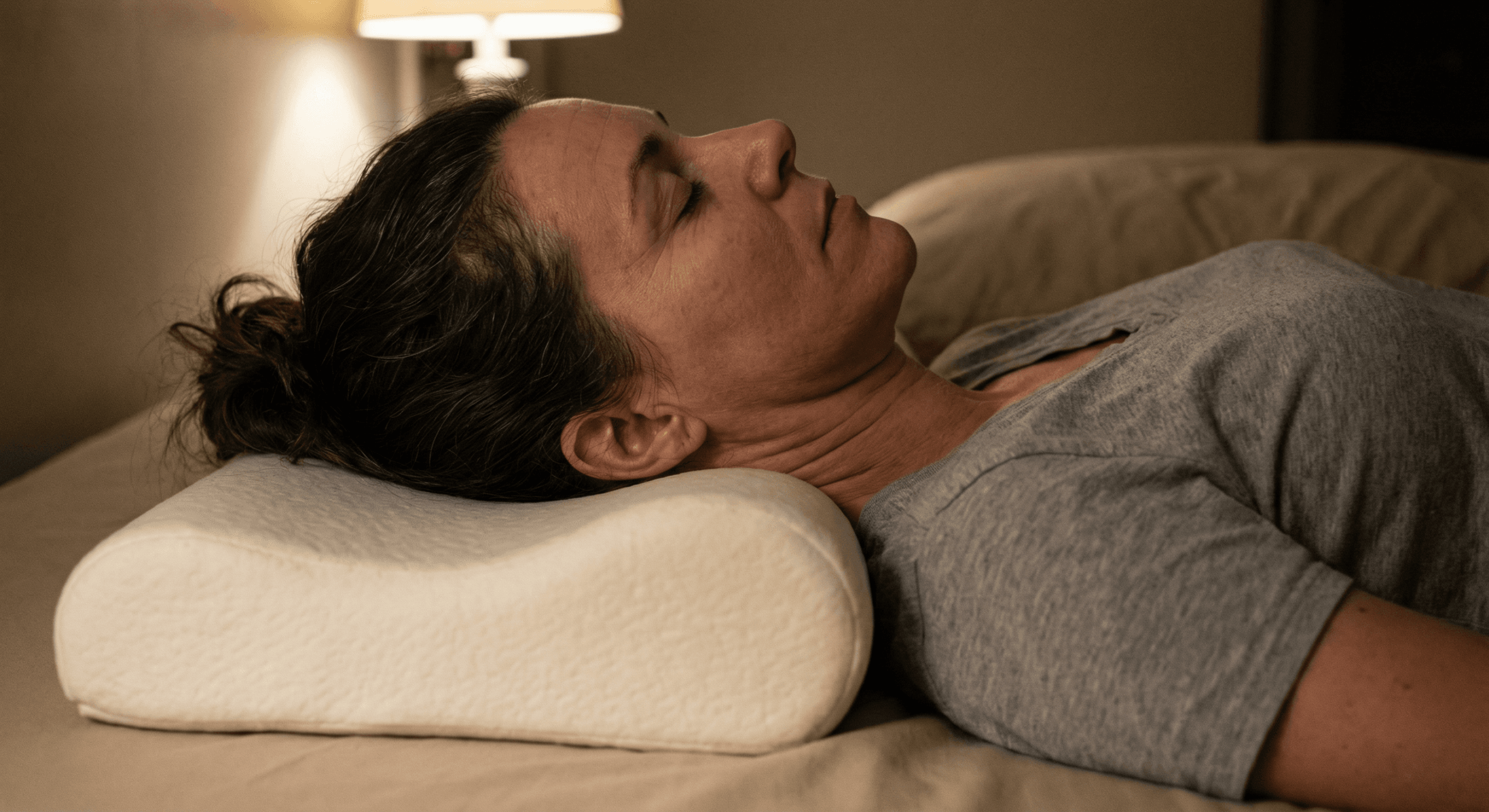
Traditional pillows are essentially rectangles filled with down, polyester fiber, or shredded foam. They compress under pressure but don’t actively support the cervical curve. Ergonomic pillows, by contrast, are engineered with contour a shape intentionally designed to cradle the head while supporting the neck’s natural alignment.
The concept isn’t new. Orthopedic specialists and physical therapists have recommended cervical support pillows for decades, particularly for patients recovering from neck injuries or managing chronic pain. In recent years, ergonomic pillow design has moved from clinical settings into mainstream sleep products. Advances in memory foam technology and growing consumer awareness about sleep posture have driven this shift.
Memory foam originally developed by NASA in the 1960s for aircraft cushioning responds to body heat and pressure. It molds to the exact shape of your head and neck. When combined with an ergonomic contour (typically a “butterfly” or wave shape with a center depression for the head and raised edges for neck support), the result is a pillow that maintains spinal alignment regardless of sleep position.
Research on sleep ergonomics supports this approach. According to NIH research on sleep posture and spinal alignment, cervical pillows can reduce neck pain and improve sleep quality in individuals with chronic neck discomfort. The key is consistent support keeping the head, neck, and spine in a neutral position that mirrors healthy standing posture.
For many individuals, switching to an ergonomic design means waking up with noticeably less neck stiffness within the first week or two of use. This improvement often extends to reduced shoulder tension and fewer morning headaches as well.
Derila Ergonomic Memory Foam Pillow: What It Is and How It Works
Derila is a contoured memory foam pillow designed specifically to support natural neck alignment during sleep. Unlike standard rectangular pillows, Derila features a butterfly-shaped design with a center depression where your head rests and raised side sections that support the cervical curve.
The core is made from high-density viscoelastic memory foam. It softens slightly in response to body heat and molds to your unique head and neck shape. The raised edges provide structure preventing your head from rolling too far to either side while the center cradle keeps your head aligned with your spine.
The pillow comes with a removable, washable cover (typically a breathable mesh or bamboo-blend fabric designed to promote airflow and resist allergens). It’s available in standard pillow dimensions and works for multiple sleep positions:
- Back sleepers: The center depression supports the head while the contoured sides maintain the natural neck curve
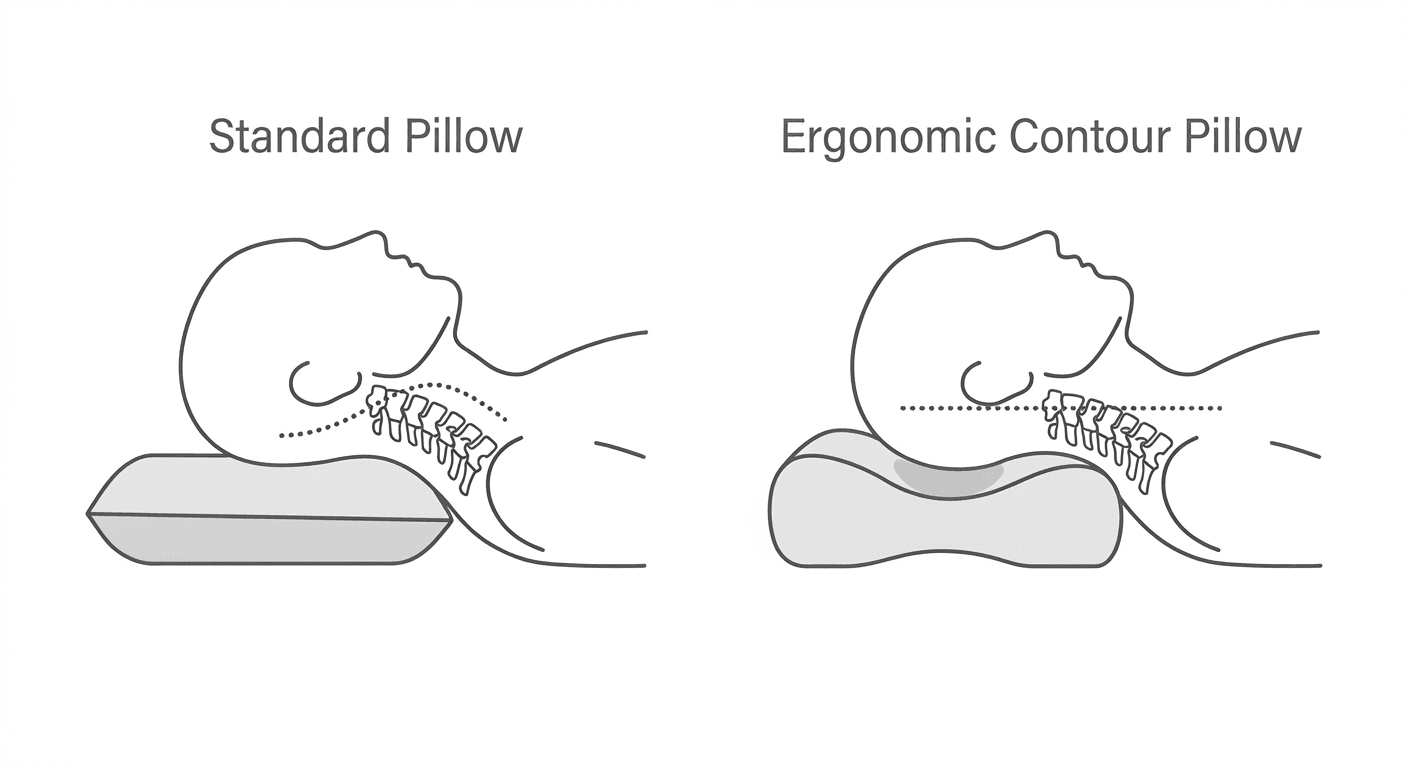
Pillow Types and Neck Alignment Comparison - Side sleepers: The raised edges fill the gap between the mattress and head, keeping the spine straight
- Stomach sleepers: While this position is generally harder on the neck, the lower center profile can reduce strain compared to thick traditional pillows
Derila is a physical sleep product, not a medical device. It’s designed to improve sleep comfort and support posture, not to diagnose, treat, or cure any medical condition. For those dealing with morning neck stiffness related to sleep position, this type of ergonomic support may offer practical relief.
Who This Pillow May Help With Neck Stiffness
Derila is designed for adults typically ages 30–65 who experience:
- Morning neck stiffness or soreness that improves as the day goes on
- Shoulder or upper back tension related to sleep position
- Frequent waking during the night due to discomfort repositioning
- Headaches upon waking, especially tension-type headaches originating from neck strain
- Snoring issues that may be worsened by poor head positioning (elevating the head slightly can help keep airways open)
It’s particularly suited for side and back sleepers who need structured support but find traditional orthopedic pillows too firm or uncomfortable. The memory foam provides a balance supportive but responsive.
It may also appeal to couples looking to upgrade their sleep setup together. The 2-pack pricing ($49.99 per pillow, total $99.98) makes it affordable for two people to try simultaneously. Partners often influence each other’s sleep quality, so coordinated upgrades can benefit both.
Finally, it’s a good fit for individuals who prefer non-invasive, low-risk solutions. Trying a pillow before committing to physical therapy, chiropractic visits, or medication for minor sleep-related discomfort is a practical first step. This aligns with broader wellness strategies discussed in morning routines for well-being.
Who This Pillow May Not Be For
Derila is not appropriate for:
- Individuals with diagnosed cervical spine conditions (herniated discs, severe arthritis, spinal stenosis) without consulting a healthcare provider first
- Anyone with sleep apnea or breathing disorders relying on specific pillow positioning medical guidance is essential
- People who prefer very soft, plush pillows the memory foam is supportive, which some find too firm initially
- Stomach sleepers who can’t adjust while the design accommodates some stomach sleeping, this position generally puts more strain on the neck regardless of pillow type
It’s also not a substitute for professional treatment. If you have chronic neck pain, persistent headaches, numbness or tingling in your arms, or pain that worsens over time, see a doctor or physical therapist. A pillow can support healthy sleep posture, but it won’t address underlying structural issues, injuries, or medical conditions.
Additionally, ergonomic pillows often require an adjustment period. Many users report needing 3–7 nights to get used to the contour shape, especially if they’ve been using flat pillows for years. If you’re not willing to give it at least a week, you may abandon it before experiencing benefits. Understanding micro-recovery strategies for fatigue can help you approach this adjustment with patience.
Pros & Practical Limitations
Pros:
- Ergonomic contour design specifically shaped to support cervical alignment and reduce neck stiffness
- Memory foam construction molds to your unique head and neck shape
- Multi-position support works for back and side sleepers (and some stomach sleepers)
- Breathable, removable cover for easy washing and allergen resistance
- 30-day money-back guarantee allows you to try it risk-free
- Volume pricing makes it more affordable for couples or families (2-pack: $49.99 each; 4-pack: $39.99 each)
Limitations:
- Adjustment period: Some users need several nights to adapt to the contour shape
- Firmness: Memory foam is supportive, which may feel too firm for those accustomed to soft, plush pillows
- Not a medical solution: Won’t cure chronic neck problems, injuries, or structural issues
- Individual variation: Sleep position, body size, and personal preferences affect comfort no pillow works for everyone
- Return shipping: While the 30-day guarantee offers a refund, return shipping is usually at the customer’s expense
- Price point: At $59.99 for a single pillow, it’s mid-range less than premium brands like Tempur-Pedic ($100+), but more than basic retail options ($20–30)
The pillow works best when viewed as a sleep comfort upgrade, not a cure-all for pain. It’s one part of good sleep hygiene, alongside mattress quality, sleep position habits, and overall posture awareness.
Pricing & Transparency
Derila is priced as follows:
- 1 pillow: $59.99
- 2 pillows: $49.99 each (total $99.98)
- 4 pillows: $39.99 each (total $159.96)
The 2-pack option is often the most popular choice for couples. It offers a $20 savings compared to buying two individually while ensuring both partners benefit from the ergonomic design. The 4-pack is ideal for families or those who want consistent support across multiple rooms (master bedroom, guest room, kids’ rooms).
Derila comes with a 30-day money-back guarantee. If the pillow doesn’t meet your expectations, you can request a full refund within 30 days of purchase. Keep in mind that return shipping is typically the customer’s responsibility, which is standard for physical products.
Compared to high-end ergonomic pillows (often $80–150), Derila is moderately priced. Compared to budget memory foam options ($25–40), it’s positioned as a step up in design specificity and contour engineering.
The value depends on how much you currently spend managing sleep-related discomfort. Whether that’s over-the-counter pain relievers, occasional massage, or just accepting neck stiffness as normal, a $50–100 pillow that reduces or eliminates those issues offers clear return on investment. Proper rest also supports balancing energy through nutrition and overall daily performance.
Comparing Derila to Other Ergonomic Pillows
Derila vs. Standard Pillows:
Traditional rectangular pillows lack structured support for the cervical curve. They compress unevenly, lose shape over time, and don’t maintain consistent alignment. Derila’s contour design addresses this by providing targeted support where the neck needs it most.
Derila vs. Tempur-Pedic Contour Pillows:
Tempur-Pedic offers premium ergonomic pillows starting around $100–150. They use proprietary memory foam formulations and have strong brand recognition. Derila offers similar contour design at roughly half the cost. The trade-off is brand prestige and potentially longer-lasting foam durability (Tempur-Pedic warranties are typically longer).
Derila vs. Budget Memory Foam Pillows (Amazon/Retail):
Many $25–40 “memory foam” pillows are shredded foam (loose fill) rather than solid contoured blocks. They offer some moldability but lack the structural support of a true ergonomic shape. Derila’s butterfly contour is more intentionally engineered for cervical alignment.
Derila vs. Adjustable Pillows (Coop, Nest Bedding):
Some brands let you add or remove fill to customize loft (height). This offers flexibility but requires trial and error to get right. Derila’s fixed contour eliminates guesswork it either fits your needs or it doesn’t, but you’ll know quickly.
The best pillow depends on your specific sleep position, body size, and personal preference. Derila’s 30-day guarantee reduces risk if you’re unsure. Quality sleep also connects to broader daily habits that protect your peace.
A Balanced Perspective on Reducing Neck Stiffness
Derila is not a miracle product. It won’t eliminate chronic neck problems, reverse years of poor posture, or work perfectly for every sleeper. What it does offer is a structured, ergonomic alternative to standard pillows one designed specifically to support natural neck alignment during sleep and address persistent neck stiffness.
For individuals who wake up with regular stiffness, headaches, or shoulder tension, the contour design may provide noticeable improvement within the first week or two. For others, especially those accustomed to very soft pillows, the adjustment period may feel uncomfortable initially.
The memory foam construction, breathable cover, and multi-position support make it a solid mid-range option in the ergonomic pillow category. The volume pricing (especially the 2-pack at $49.99 each) makes it accessible for couples looking to upgrade their sleep setup without spending $200+ on premium brands.
The 30-day guarantee lowers risk. The physical product means no ongoing subscriptions or commitments. The design is straightforward no complicated adjustments or assembly. Good sleep supports social fitness and overall physical health by ensuring you wake up ready to engage fully with your day.
Whether Derila is the right fit depends on your sleep position, personal comfort preferences, and whether the contour design aligns with your body’s needs. Readers who feel aligned with this approach may choose to review the full product details directly to determine if it matches their sleep setup.
Disclosure: LubDubSmile may earn a commission if you purchase through links on this page, at no extra cost to you. We only recommend products we believe may benefit our readers.
Disclaimer: Derila is a sleep comfort product and is not intended to diagnose, treat, cure, or prevent any medical condition. Individual results may vary. If you have chronic neck pain, sleep apnea, or other medical issues, please consult a healthcare professional before relying solely on sleep products. This content is for educational purposes and does not substitute for professional medical advice.