
Sleep Hygiene for Adults With Anxiety: Evidence-Based Approaches
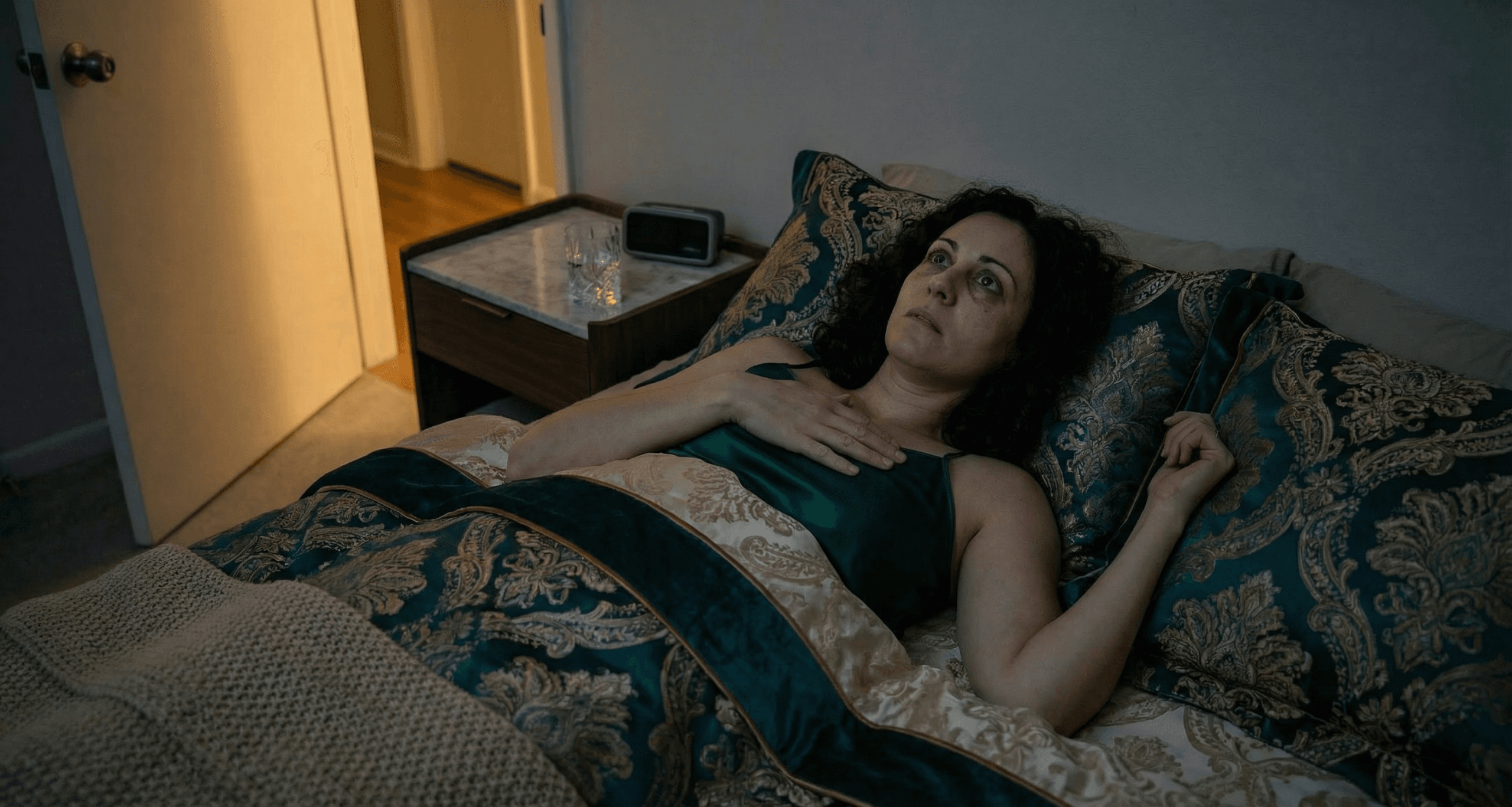
Sleep hygiene for anxious adults requires understanding why your experience differs from ordinary sleep difficulty. You’re exhausted. Your body carries the weight of fatigue, your eyes burn, and every part of you desperately wants sleep. But the moment your head hits the pillow, your mind starts cataloging everything that could go wrong tomorrow.
One thought leads to another, each carrying its own surge of adrenaline. Your heart rate, which should be slowing, climbs instead. Your muscles, which should be releasing, tighten instead. You’re lying in the dark, wide awake, doing exactly what every sleep article tells you and none of it matters because the problem isn’t your sleep environment. The problem is your nervous system.
If someone has suggested you “just relax” and you wanted to scream, this article is for you. Not because it offers magic solutions, but because anxiety-related sleep problems require different approaches than ordinary insomnia. Some approaches you can implement yourself. Others require professional support. Being clear about both treats your struggle with the seriousness it deserves.
Why Sleep and Anxiety Create a Vicious Cycle
How Anxiety Disrupts Sleep
Anxiety is, at its most basic level, your brain’s threat detection system running in overdrive. When anxiety activates whether from actual danger or perceived threats your body prepares for action. Stress hormones surge. Heart rate elevates. Muscles tighten.
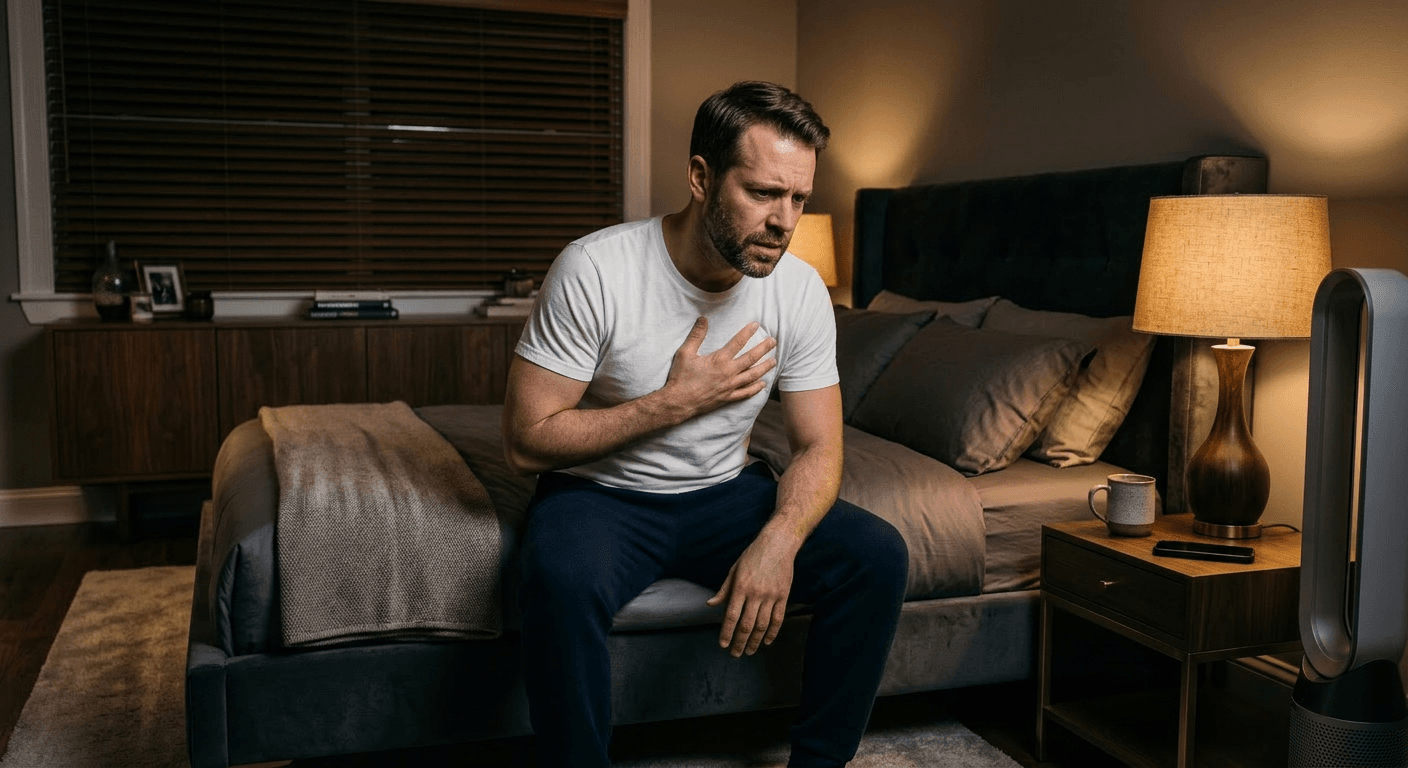
Sleep requires the opposite physiological state. Falling asleep depends on your nervous system shifting from sympathetic activation (alert, mobilized) to parasympathetic dominance (calm, restorative). For people with significant anxiety, this shift doesn’t happen automatically. The threat detection system doesn’t stand down just because the lights went out.
Sleep researchers describe this as “cognitive and physiological hyperarousal” an elevated state of nervous system activation persisting even when you’re lying still in a dark, comfortable room. This isn’t imagination or failure to relax. It’s a measurable physiological state that NIH research has confirmed. Understanding this distinction forms the foundation of effective sleep hygiene for anxious adults.
How Poor Sleep Worsens Anxiety
The relationship runs in both directions it’s a cycle. Anxiety disrupts sleep, and disrupted sleep worsens anxiety. Research from the ADAA confirms that sleep deprivation increases activity in the brain’s emotional reactivity centers while reducing prefrontal cortex capacity the region that regulates emotional responses.
In practical terms: when you haven’t slept well, emotional reactivity increases, managing anxious thoughts becomes harder, and your brain more readily perceives neutral situations as threatening. This increases anxiety, makes the next night harder, and increases reactivity the following day. Over weeks and months, the cycle can escalate until chronic anxiety and chronic insomnia fuel each other continuously.
Why Generic Sleep Tips Don’t Work for Anxious Minds
Standard sleep hygiene advice consistent bedtime, dark room, no caffeine after noon, limiting screens addresses environmental and behavioral factors supporting sleep. These factors matter. But for people with anxiety, they often fall short because the primary barrier isn’t environmental or behavioral. It’s neurological and psychological.
If basic sleep tips haven’t worked for you, that’s not personal failure. That’s evidence your sleep problem involves factors generic advice doesn’t target. Recognizing this shifts the question from “What’s wrong with me?” to “What approaches actually address what’s happening in my brain?” This reframe matters enormously for sleep hygiene for anxious adults.
Chronic Insomnia vs. Occasional Trouble
Everyone experiences occasional nights of poor sleep. Chronic insomnia differs meaningfully. The American Academy of Sleep Medicine defines chronic insomnia as difficulty falling asleep, staying asleep, or waking too early at least three nights per week for three months or longer, with daytime consequences.
When anxiety consistently drives sleep problems, the pattern can become self-sustaining even after the original stressor resolves anxiety about sleep itself becomes the new problem. If your difficulties have persisted beyond a few weeks or you now dread bedtime, this distinction matters because chronic insomnia typically requires structured treatment rather than lifestyle adjustments alone.
Understanding Your Anxiety-Sleep Pattern
Racing Thoughts vs. Middle-of-Night Waking
Anxiety-related sleep problems typically appear in two patterns, each involving different mechanisms.
Sleep-onset difficulty lying in bed unable to fall asleep usually stems from anticipatory anxiety and rumination. Your mind processes the day, worries about tomorrow, and generates “what if” scenarios that block the mental quieting sleep requires.
Middle-of-night waking falling asleep initially but jolting awake at 2 AM or 3 AM involves different physiological factors. Cortisol naturally begins rising in early morning hours, and the anxious nervous system interprets this normal shift as a threat signal. You wake with a surge of dread, and even though nothing has gone wrong, your body acts as though something has.
Understanding which pattern dominates your experience helps you target your approach. Sleep hygiene for anxious adults works best when strategies match specific patterns rather than applying generic techniques.
Sleep Anxiety: When Fear of Not Sleeping Keeps You Awake
One of the cruelest aspects of chronic sleep difficulty is that it generates its own anxiety. You dread bedtime because you know what’s coming. The bed itself becomes associated with wakefulness and frustration rather than rest.
Sleep scientists call this “conditioned arousal” your brain has learned to associate the bed with alertness and anxiety rather than sleep. This conditioning can persist even on nights when baseline anxiety runs lower because the sleep environment itself has become a trigger. Building emotional regulation skills can help interrupt this conditioned response over time.
Physical Anxiety Symptoms That Disrupt Sleep
Anxiety isn’t only mental. Physical symptoms muscle tension, rapid heartbeat, shallow breathing, stomach discomfort, restless legs directly interfere with the physical conditions sleep requires.
These symptoms often intensify at bedtime because the quiet environment removes the distractions that masked them during the day. When you lie still, you notice your heart beating harder, your muscles holding tension, your breathing feeling insufficient. These physical sensations then trigger anxious thoughts (“Why is my heart racing?”), adding another layer to the anxiety-sleep cycle that sleep hygiene for anxious adults must address.
Evidence-Based Strategies for the Anxious Mind
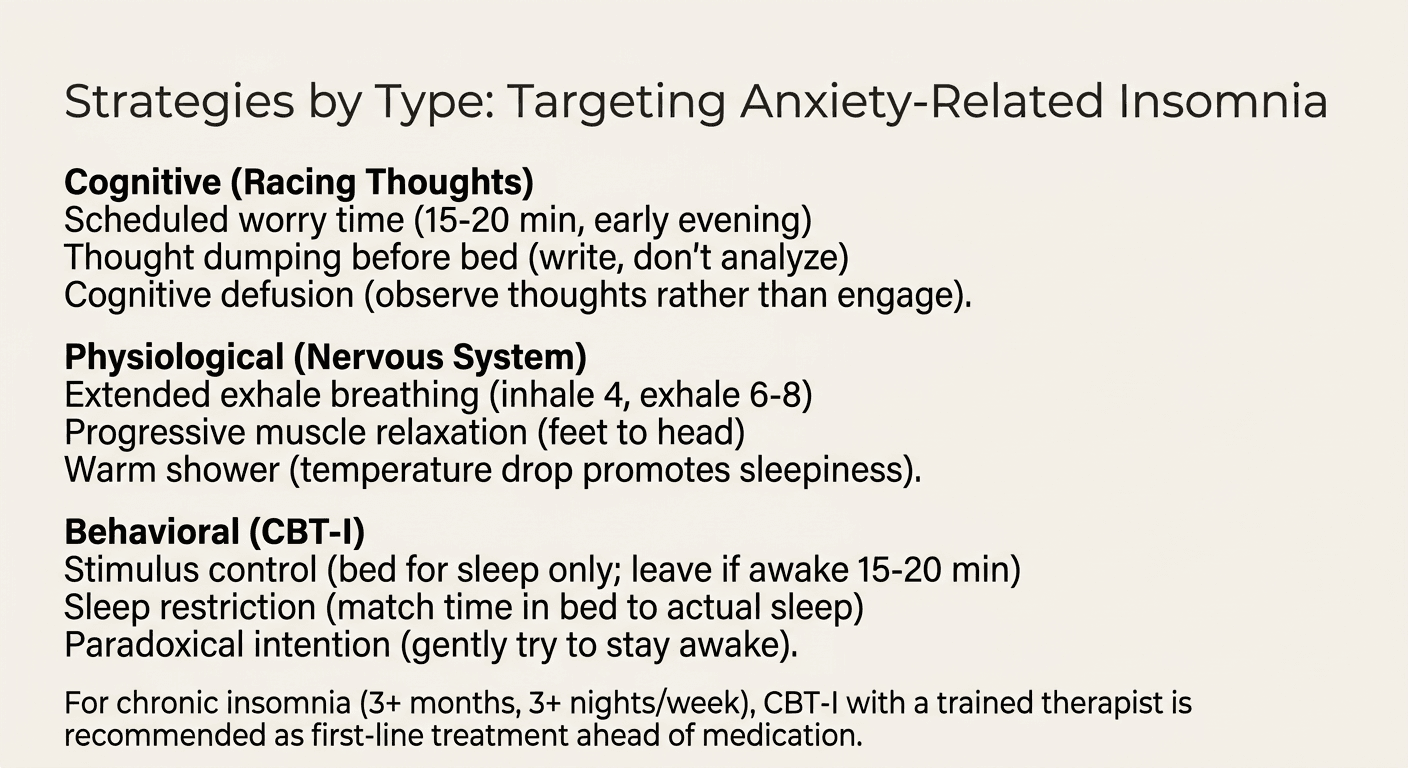
Cognitive Strategies for Racing Thoughts
For many anxious people, the most immediate sleep barrier is cognitive the mind spinning through worries at a pace that prevents the mental quieting sleep requires.
Scheduled worry time: This technique, well-supported in cognitive behavioral therapy, involves setting aside 15-20 minutes during early evening specifically for worrying. During this window, you actively write down worries, consider what falls within your control, and note actions you’ll take tomorrow. When anxious thoughts arise at bedtime, you redirect: “I’ve already addressed that during worry time. I’ll return to it tomorrow if needed.”
Thought dumping before bed: Spending five to ten minutes writing down whatever circulates in your mind not analyzing, just externalizing can meaningfully reduce the mental holding your brain otherwise does all night. Many people describe this as putting thoughts down for safekeeping rather than carrying them into sleep.
Cognitive defusion: Drawn from Acceptance and Commitment Therapy, cognitive defusion involves changing your relationship with anxious thoughts rather than trying to change the thoughts themselves. Instead of engaging with “What if I mess up the presentation?”, you observe it: “I notice I’m having a thought about messing up.” This shift from inside the thought to observing it reduces its power to trigger physiological activation.
Practicing emotional hygiene throughout the day reduces the volume of unprocessed anxiety that arrives at bedtime, making cognitive strategies more effective.
Nervous System Regulation Before Bed
Because anxiety-related insomnia involves physiological hyperarousal not just mental activity physical strategies that directly address nervous system activation matter as much as cognitive ones for sleep hygiene for anxious adults.
Extended exhale breathing: Research on respiratory intervention shows that exhaling longer than you inhale activates the parasympathetic nervous system more effectively than simple deep breathing. A practical pattern: inhale for four counts, exhale for six to eight counts. The extended exhale signals your vagus nerve to shift toward rest.

Progressive muscle relaxation: Systematically tensing and releasing muscle groups directly addresses the physical tension anxiety creates. Starting from your feet and moving upward, tense each muscle group for five to ten seconds, then release for 15-20 seconds, noticing the contrast. APA research supports progressive muscle relaxation as an evidence-based technique for both anxiety and sleep difficulty.
Downregulating your nervous system: The goal before bed isn’t vague “relaxing.” It’s specifically moving from sympathetic to parasympathetic activation. Gentle stretching, warm showers (the subsequent temperature drop promotes sleepiness), and any activity that signals safety to your nervous system all support this shift.
Behavioral Approaches from CBT-I
Cognitive Behavioral Therapy for Insomnia is the gold-standard treatment for chronic insomnia the American Academy of Sleep Medicine recommends it as first-line treatment ahead of medications because of its superior long-term effectiveness.
Stimulus control: This technique directly targets conditioned arousal. The core principles: use your bed only for sleep; go to bed only when genuinely sleepy; if sleep hasn’t come after approximately 15-20 minutes, get up and go to another room until sleepiness returns, then come back. This approach consistently pairs the bed with actual sleep rather than with wakefulness and frustration, gradually rebuilding the connection between bed and sleep that anxiety erodes.
Sleep restriction: This counterintuitive technique involves temporarily limiting time in bed to match the hours of sleep you actually get. If you spend eight hours in bed but sleep only five, you’d temporarily restrict time in bed to approximately five hours. This builds sleep pressure that consolidates sleep over time. Sleep restriction works best with professional guidance, particularly for anxious people, because the temporary sleep deprivation can briefly intensify anxiety before improvements appear.
Mindfulness and Acceptance Approaches
Paradoxical intention: Rather than forcing sleep which creates performance anxiety that blocks it this approach involves gently trying to stay awake. Not through stimulation, but through quiet, passive wakefulness in the dark. Research shows this technique reduces sleep anxiety because you’re no longer failing to sleep. The pressure lifts, and sleep often follows more readily.
Accepting wakefulness: Much suffering in anxiety-related insomnia comes not from wakefulness itself but from the anxious story about wakefulness. “I’ll be useless tomorrow.” “Something is wrong with me.” These thoughts amplify arousal and push sleep further away. Practicing acceptance “I’m awake right now, and this is uncomfortable but not dangerous” reduces the anxiety layer compounding the original problem. This acceptance practice forms a core pillar of sleep hygiene for anxious adults.
Environmental and Timing Factors
Sleep Schedule Consistency
Consistent sleep and wake times support your circadian rhythm. For anxious people, consistency matters even more because irregular schedules add physiological unpredictability to a system already struggling.
Wake time matters more than bedtime. Waking at the same time daily including weekends anchors your circadian rhythm and builds appropriate sleep pressure for the following evening. Varying wake time by more than an hour disrupts this rhythm and typically makes falling asleep the next night harder.
Light Exposure and Screen Content
Morning bright light exposure ideally natural sunlight within the first hour after waking helps anchor your circadian rhythm and supports appropriate melatonin release in the evening. Even 10-15 minutes outdoors makes a measurable difference.
For anxious people, screen content matters as much as screen light. Scrolling news, engaging with triggering social media, or consuming content that activates your threat detection system before bed directly undermines the nervous system downregulation that sleep hygiene for anxious adults requires.
Creating a Sleep Environment That Signals Safety
Anxious sleepers need a bedroom that signals safety, not just comfort. Safety signals might include: a locked door, predictable ambient sounds like a fan or white noise, comfortable temperature, a clear path if you need to get up, and the absence of work-related items that trigger worry associations.
If your partner’s movements or sounds trigger your vigilance, addressing that through white noise or separate blankets protects your sleep environment from becoming a source of hypervigilance rather than restoration.
What to Do at 3 AM
When Anxiety Wakes You
Middle-of-night waking with anxiety has a distinctive quality your body jolts from sleep into full alertness, often carrying dread with no specific content. Your cortisol naturally rises in early morning hours, and your anxious nervous system interprets this normal physiological shift as danger. Nothing has actually gone wrong. Your brain’s alarm system has a low threshold and responds to an internal signal.
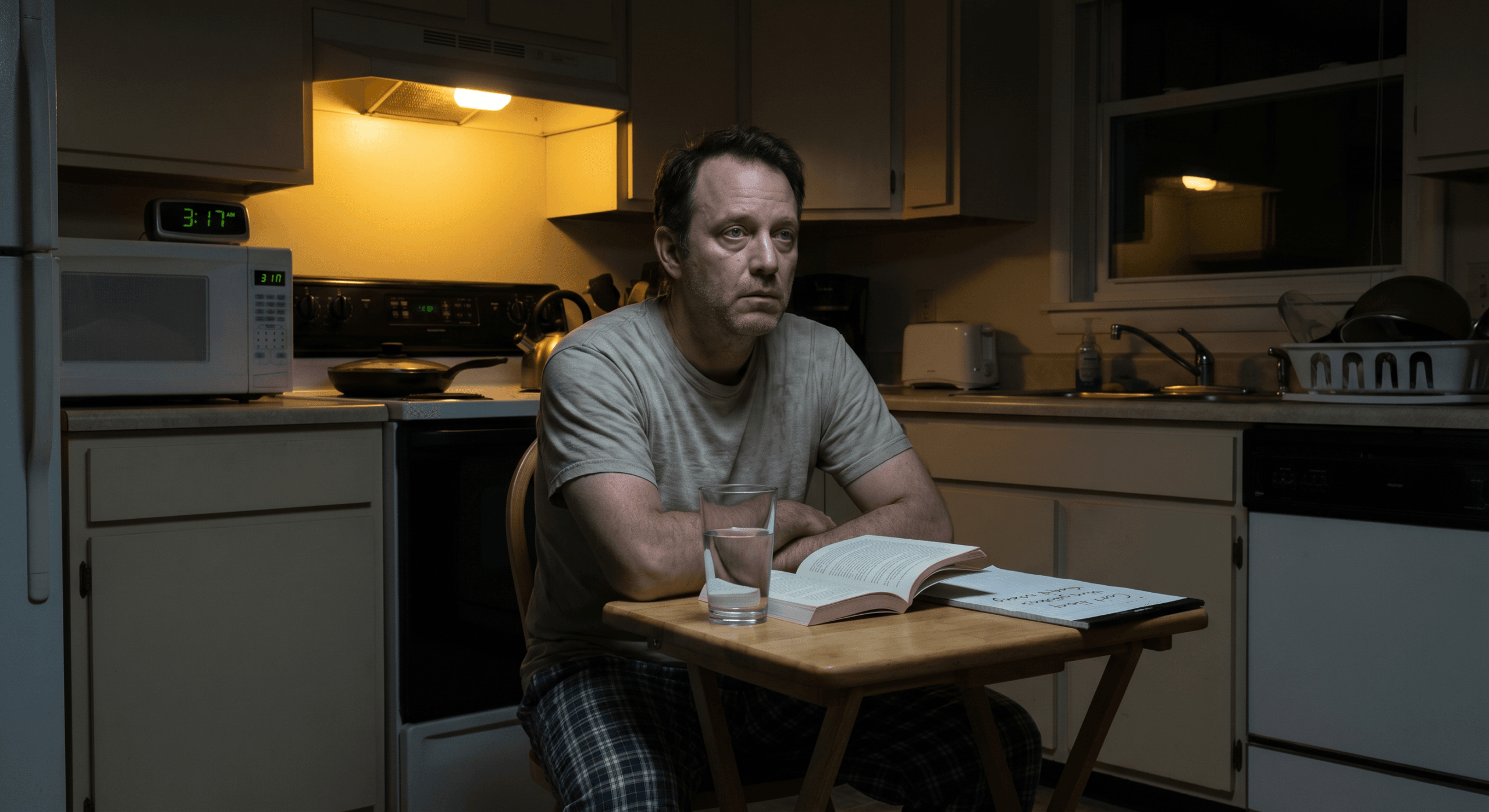
Recognizing this naming what’s happening can reduce the escalation. “My cortisol is rising. This is what it feels like for my nervous system. I’m not in danger.”
CBT-I Guidance on Getting Up
CBT-I guidelines suggest that if approximately 15-20 minutes pass without sleep and frustration or anxiety builds, getting up and going to another room generally serves you better than staying in bed. Keep lights low, avoid screens if possible, engage in something quietly absorbing, and return to bed only when genuine sleepiness returns.
This guidance has strong evidence supporting it. Lying in bed awake and anxious strengthens the association between bed and wakefulness the exact conditioning that sleep hygiene for anxious adults aims to reverse.
Grounding Techniques for Nighttime Anxiety
When anxiety activates at 3 AM, grounding techniques can shift your nervous system away from threat response.
Body scan: Slowly directing attention through your body from feet to head, noticing sensations without judgment, provides structured mental focus and reveals tension you didn’t know you were holding.
Temperature-based grounding: Holding something cool (a glass of water, a cool washcloth on your face) provides a sensory anchor that can interrupt an anxiety spiral before it fully builds.
Extended exhale breathing: Using the same breathing pattern from your bedtime practice helps shift your nervous system toward calm.
Understanding burnout recovery approaches reinforces why nighttime restoration matters for overall nervous system health across the full day.
What to Avoid at Night
Checking the time: Calculating remaining sleep hours generates anxiety about insufficient sleep, which increases arousal and makes returning to sleep harder.
Reaching for your phone: Light, content, and cognitive engagement all increase wakefulness. Even brief checks typically extend into longer scrolling.
Problem-solving: Your 3 AM brain doesn’t make good decisions. Anxiety-driven “solutions” generated at that hour usually look different in daylight. Write the worry down and address it tomorrow.
Forcing sleep: The effort of trying creates performance anxiety that blocks the very thing you’re pursuing. Effective sleep hygiene for anxious adults means releasing this pressure consciously.
Daytime Practices Affecting Night Sleep
Caffeine and Exercise Timing
Caffeine carries a half-life of approximately five to six hours half the caffeine from a 2 PM coffee still circulates in your system at 7 or 8 PM. Anxious people often show heightened caffeine sensitivity, with lower doses producing stronger effects. Stopping caffeine by noon generally supports better evening nervous system regulation.
Regular exercise meaningfully supports both anxiety reduction and sleep quality. Moderate exercise during morning or afternoon hours improves evening sleepiness. Intense exercise close to bedtime within two to three hours can increase physiological arousal that makes sleep onset harder for people whose nervous systems already run hot.
Managing Daytime Anxiety
Anxiety that goes unaddressed during the day doesn’t disappear it surfaces at bedtime when distractions stop and quiet creates space for worry to fill. Daytime anxiety management functions directly as a sleep strategy for sleep hygiene for anxious adults.
Practices that help process anxiety during the day rather than accumulating it for bedtime: scheduled worry time, physical movement that metabolizes stress hormones, brief mindfulness practices preventing anxiety from building unchecked, and addressing actual problems when possible rather than ruminating.
Building Restoration Into Your Day
If your only restoration attempt happens at bedtime, you’re asking your nervous system to make a dramatic shift from full activation to sleep-readiness in a very short window. Building brief restorative moments throughout the day even five minutes of quiet, a short walk, a few slow breaths helps your nervous system practice downregulation rather than running at full alert until collapse.
Exploring morning routines that support wellbeing can help establish daily patterns that make evening wind-down more achievable.
What Probably Doesn’t Help
Sleep Supplements
The supplement industry markets heavily to anxious sleepers, but most sleep supplements carry weak evidence for anxiety-related insomnia. Melatonin may help with circadian rhythm issues like jet lag but doesn’t address the neurobiological hyperarousal that anxiety creates. Other supplements magnesium, valerian, CBD, L-theanine show mixed or insufficient evidence, and some interact with anxiety medications.
Supplements can create a false sense of addressing the problem while the actual causes go untreated. This article doesn’t recommend specific supplements because the evidence doesn’t support doing so and because a clinician who knows your full health picture can offer better guidance than marketing claims.
Sleep Tracking for Anxious People
Sleep tracking devices often make things worse for anxious sleepers. Monitoring sleep data gives the anxious mind more material to worry about “My deep sleep score was only 45 minutes!” “My recovery score was 62!” Sleep researchers have identified this as “orthosomnia” anxiety about achieving perfect sleep metrics that itself disrupts the sleep you’re trying to improve.
If tracking your sleep increases rather than decreases your anxiety, stopping may produce more benefit than any strategy you add.
Elaborate Sleep Routines
A brief wind-down period before bed genuinely helps. Elaborate multi-step routines often create their own pressure. If any deviation from your bedtime sequence feels threatening to your sleep, the routine has become another anxiety source the opposite of what sleep hygiene for anxious adults needs.
Simpler, consistent, and low-stakes serves most anxious sleepers better than elaborate protocols requiring perfect execution.
Professional Treatment Options
CBT-I: The Evidence-Based Standard
CBT-I is the first-line recommended treatment for chronic insomnia ahead of medications. Research comparing CBT-I to sleep medications consistently shows equivalent or better outcomes within weeks, with improvements persisting after treatment ends while medication effects typically disappear when the medication stops.
CBT-I typically involves six to eight sessions with a trained therapist and includes the behavioral techniques described throughout this article alongside cognitive work addressing beliefs and anxieties about sleep. Evidence-based digital programs like the CBT-I Coach app (free, developed by the VA) offer structured support when in-person treatment isn’t accessible.
Therapy for Underlying Anxiety
For people whose sleep problems primarily stem from anxiety disorders generalized anxiety, panic disorder, health anxiety, PTSD treating the underlying anxiety often produces more lasting improvement than addressing sleep alone.
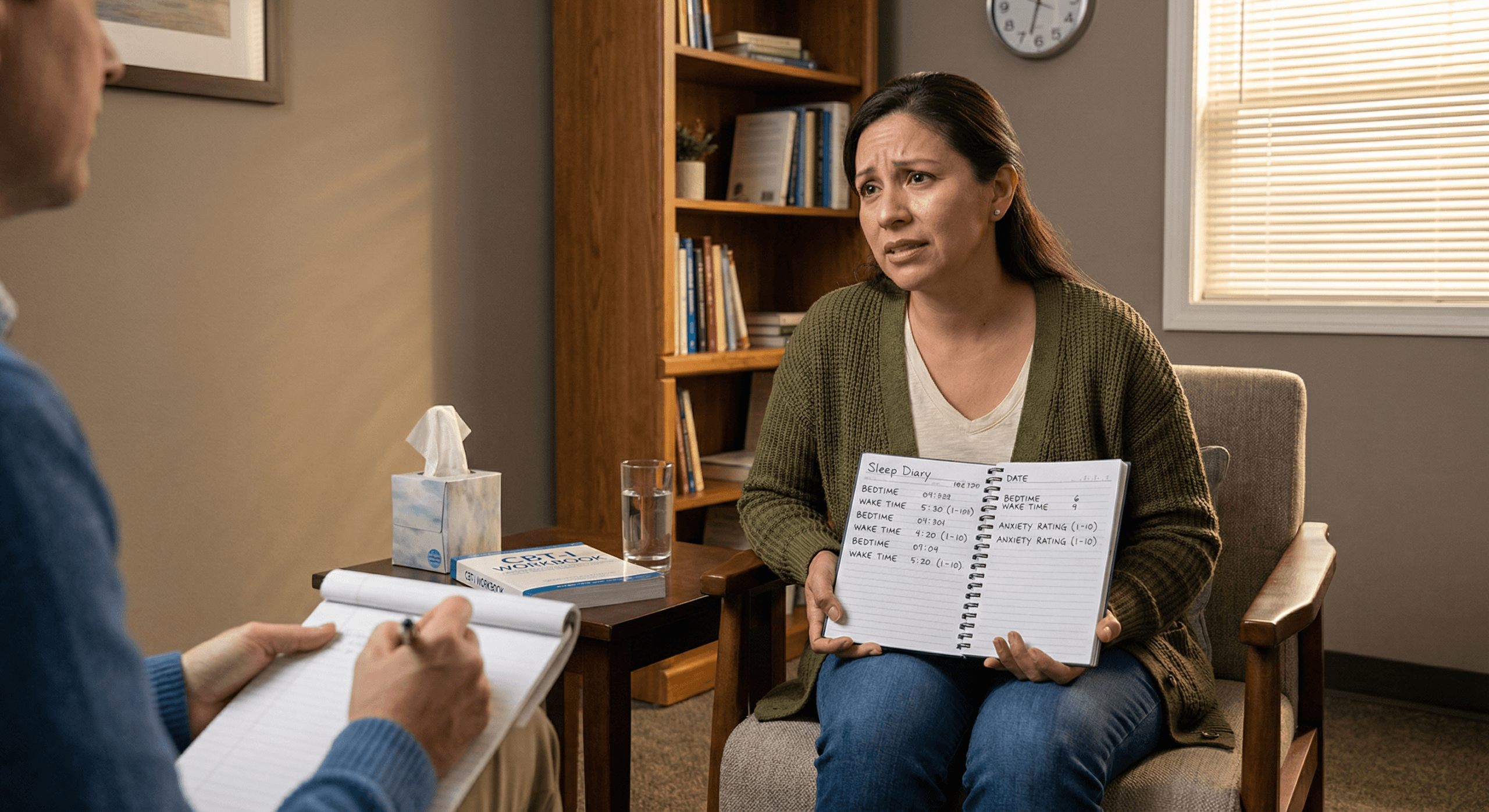
CBT for anxiety disorders carries strong evidence for reducing anxiety symptoms including sleep disruption. Acceptance and Commitment Therapy and, for trauma-related anxiety, EMDR and trauma-focused CBT, also offer evidence-based paths to improvement. Understanding when to seek professional support for anxiety can help clarify whether therapy for anxiety specifically would serve you.
Finding Help
For CBT-I specifically, look for therapists who hold certification in behavioral sleep medicine or have training in CBT-I protocols. The Society of Behavioral Sleep Medicine maintains a provider directory.
Online therapy platforms can provide access to therapists specializing in anxiety and insomnia when local options fall short particularly valuable for accessing CBT-I-trained therapists in areas where they aren’t widely available.
Frequently Asked Questions
How long will it take to improve my sleep?
Some people notice improvements from behavioral changes within one to two weeks. CBT-I typically produces significant improvement within four to eight weeks. Chronic, severe anxiety-related insomnia may take longer, particularly when underlying anxiety also requires treatment. Progress usually looks like more good nights mixed in with bad ones rather than a sudden clean switch.
Should I try sleep medication?
Your healthcare provider answers this question better than any article can. Medication serves a legitimate role it’s not failure to consider it. The decision depends on your specific symptoms, history, and circumstances. If you’re struggling significantly and haven’t discussed medication with your provider, that conversation deserves to happen.
Is my problem anxiety or insomnia?
Often both and the distinction matters less than addressing what you’re experiencing. For many people, anxiety and insomnia become so intertwined that treating one requires treating the other. A mental health professional or sleep specialist can help clarify what’s driving what and what treatment approach fits your situation. Sleep hygiene for anxious adults acknowledges this interconnection rather than treating them as separate problems.
Why do I sleep fine on vacation but not at home?
This pattern points directly to conditioned arousal the learned association between your home sleep environment and wakefulness. CBT-I stimulus control techniques directly target this pattern. The observation that you can sleep well elsewhere is genuinely encouraging: your sleep system functions. The problem is contextual, not fundamental.
Can I recover from years of anxiety-related sleep problems?
Yes. Research documents recovery from chronic insomnia including anxiety-related insomnia that has persisted for years or decades. CBT-I shows effectiveness even for long-standing cases. Recovery doesn’t mean you’ll never have another poor night. It means developing reliable patterns and reducing the anxiety layer that turns ordinary bad nights into catastrophic ones.
Sleep hygiene for anxious adults requires approaches targeting neurobiological hyperarousal not just sleep environment because the primary barrier isn’t a dark room or consistent bedtime but a nervous system that doesn’t downregulate automatically, and evidence-based strategies including cognitive defusion, extended exhale breathing, CBT-I behavioral techniques, and acceptance-based practices can meaningfully address this, while chronic or severe cases deserve professional support through CBT-I or anxiety-focused therapy rather than continued reliance on self-help strategies that weren’t built for what anxiety actually does to sleep.
Anxiety disorders and chronic insomnia often require professional treatment the strategies here can support but may not replace that care. If your sleep problems or anxiety significantly affect daily functioning, please consult a mental health professional or healthcare provider.
This content is for educational purposes and does not substitute for professional psychological or therapeutic help.





Thank you for this beautiful work.
It was fulfilling reading.
Thank you again
Thank you so much for your kind words. We are truly touched to hear that you found this piece fulfilling to read.
Knowing that our work brings a sense of fulfillment to our readers is the greatest reward we could ask for. Thank you for being part of our community.
With gratitude,
The LubDubSmile Team
My name is Sarah, and I am just so incredibly grateful for this article; I shared it with my husband right away because we’ve both been tossing and turning lately, and seeing these practical tips for calming a racing mind has been a total lifesaver for our nighttime routine.
Hi Sarah, thank you so much for sharing! We’re thrilled to hear that you and your husband are finding these tips helpful prioritizing that rest together is such a great way to support each other’s well-being.
Warmly,
The LubDubSmile Team