
DoNotAge All-In-One Supplement Review: A Structured Analysis
This DoNotAge all-in-one review begins where two earlier LubDubSmile articles left off. Our overview of cellular health after 40 examined the biological mechanisms underlying age-related changes NAD+ decline, mitochondrial dysfunction, chronic inflammation, and cellular senescence. Our subsequent investigation into the supplement stacking problem identified the practical challenges health-conscious adults face when sourcing supplements individually: cumulative costs approaching or exceeding $600 per month, declining adherence as complexity increases, and compounding quality variance across multiple manufacturers.
Readers then asked a reasonable question: if consolidated longevity formulations represent a potential solution to the stacking problem, does any specific product actually meet the evaluation criteria we outlined?
This DoNotAge all-in-one review attempts to answer that question for one specific product: the DoNotAge® All-In-One supplement. To be direct: this is not medical advice, a guarantee of outcomes, or a recommendation that any specific individual should use this product. It is a structured, evidence-informed evaluation of whether this product meets the criteria LubDubSmile defined earlier applied consistently, with limitations acknowledged throughout.
Our Evaluation Criteria
Before examining the product, restating the five criteria we established helps frame everything that follows in this DoNotAge all-in-one review.
Criterion 1: Research-backed ingredients. Each compound should carry independent peer-reviewed research supporting its proposed biological mechanism. The strength and nature of that evidence human trials, animal studies, or in vitro data matters and we will specify it for each ingredient.
Criterion 2: Clinically relevant dosages. Ingredients should appear at doses comparable to those researchers used in published studies. Token amounts included solely for label appeal sometimes called “fairy dusting” fail this criterion regardless of an ingredient’s individual merit.
Criterion 3: Full label transparency. Every ingredient and its exact dose should appear clearly on the label. Proprietary blends that conceal individual amounts cannot undergo meaningful evaluation.
Criterion 4: Third-party testing. Independent verification of label accuracy, purity, and manufacturing standards delivers quality assurance that manufacturer claims alone cannot provide.
Criterion 5: Manufacturer credibility. Company history, manufacturing standards, transparency practices, and willingness to provide documentation all contribute to organizational trustworthiness.
We applied these criteria consistently throughout this DoNotAge all-in-one review. Where the product meets a criterion, we say so. Where evidence is limited or questions remain, we say that too.
Product Overview
DoNotAge® is a UK-based longevity supplement company that has operated commercially since 2019. The company positions itself within the longevity science research community, with stated commitments to ingredient transparency, third-party testing, and research-grade dosing. According to the company, its mission centers on making longevity science accessible rather than proprietary.
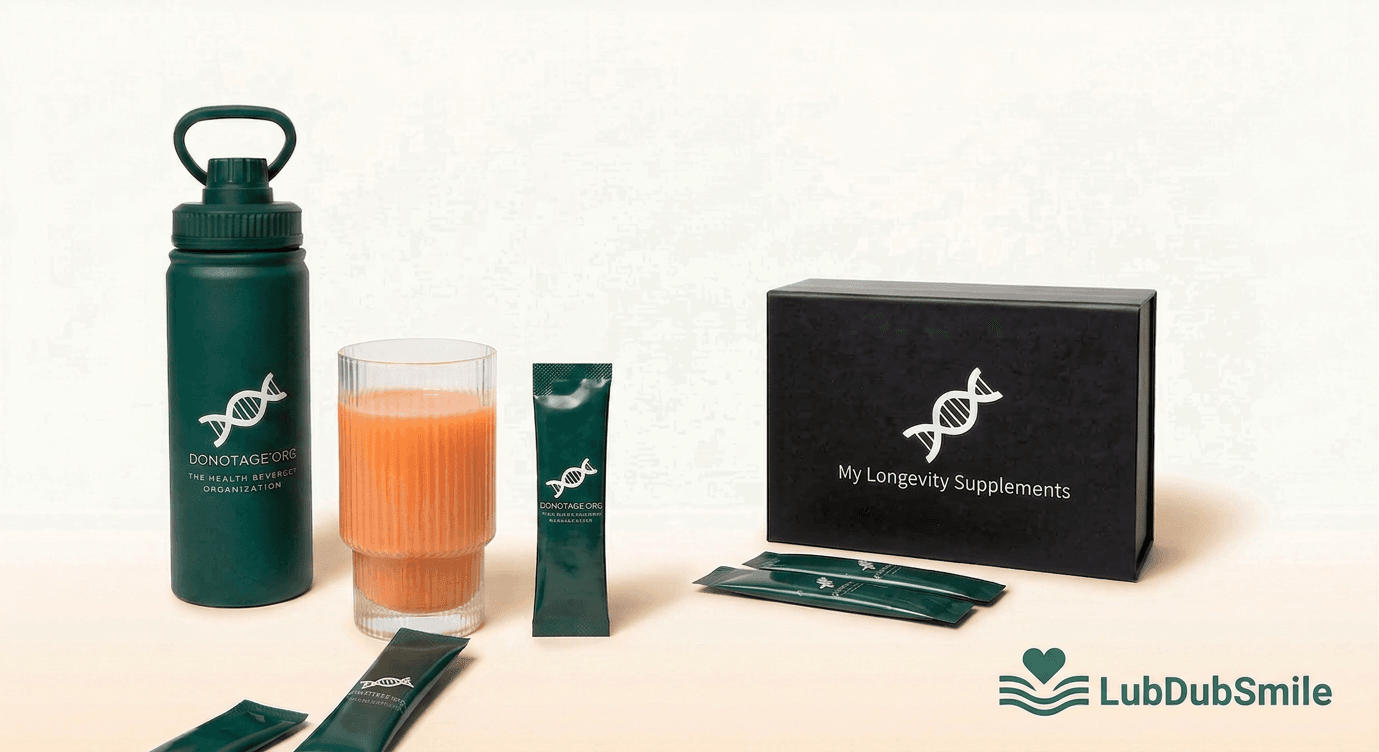
The DoNotAge® All-In-One is the company’s flagship consolidated formulation, designed to replace a multi-supplement stack with a single daily product. The formulation contains fifteen active compounds targeting the cellular mechanisms aging research most consistently identifies.
Product specifications (as stated by manufacturer):
- Format: Capsules
- Serving: Multiple capsules daily (confirm current serving size on product label)
- Price: Approximately $73–$83 per month depending on subscription tier at time of writing
- Subscription discount: Available; reduces per-month cost
- Refund policy: A satisfaction guarantee exists verify current terms directly with DoNotAge® before purchase, as policies can change
Readers should confirm current pricing directly with DoNotAge® before making any purchasing decision.
Exclusive offer: Use discount code LUBDUBSMILE at checkout for 10% off any DoNotAge® product.
Ingredient Breakdown and Dosage Analysis
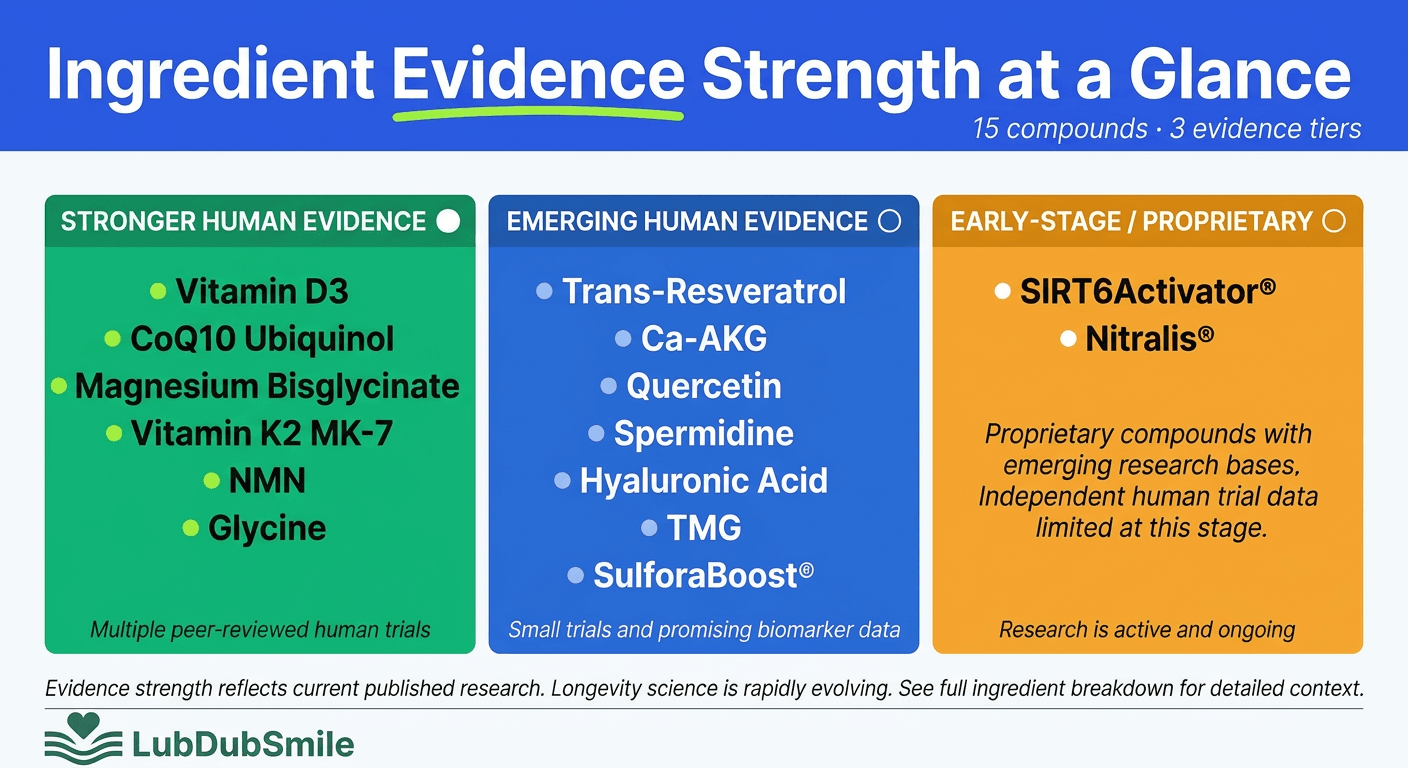
This section of the DoNotAge all-in-one review examines each major compound in the formulation. For each ingredient, we summarize the proposed mechanism, current research findings, how the product dose compares to studied amounts, and an honest assessment of where evidence stands.
Glycine 2,000 mg
What it targets: Glycine is a non-essential amino acid playing roles in collagen synthesis, glutathione production, and mitochondrial function. Research interest has grown partly from studies suggesting glycine levels decline with age.
What research shows: A clinical study in Cell Metabolism (2023) found that combining glycine with N-acetylcysteine (GlyNAC) in older adults produced improvements in markers of oxidative stress, mitochondrial function, and physical function over 16 weeks. Glycine alone has demonstrated sleep quality and metabolic health benefits in human trials, with generally favorable but modest findings.
Dosage comparison: The 2,000 mg dose matches doses researchers used in human studies, including the GlyNAC trials.
Evidence strength: Emerging human evidence with measurable biomarker effects, though long-term outcome data remains limited.
SIRT6Activator® (Fucoidan Extract) 1,600 mg
What it targets: SIRT6 is a sirtuin family protein involved in DNA repair, inflammation regulation, and metabolic function. Researchers identify SIRT6 as a potentially significant regulator of cellular aging processes. SIRT6Activator® is a proprietary fucoidan extract a polysaccharide from brown seaweed developed specifically for proposed SIRT6-activating properties.
What research shows: Fucoidan carries human and animal research supporting anti-inflammatory and immune-modulating properties. Animal studies have shown fucoidan supplementation producing improvements in metabolic markers and inflammatory profiles. Human data specifically examining SIRT6 activation via fucoidan remains limited at this stage.
Dosage comparison: As a proprietary ingredient, direct dose comparison with independent research is not straightforward. The 1,600 mg dose represents substantial inclusion by weight.
Evidence strength: Early-stage human evidence with stronger animal and in vitro data. The SIRT6-specific application represents a relatively recent research direction.
NMN (β-Nicotinamide Mononucleotide) 1,000 mg
What it targets: NMN directly precedes NAD+ in the cellular energy metabolism pathway we explored in our cellular health article. Researchers theorize that NMN supplementation raises cellular NAD+ levels, which decline by approximately 50% between ages 40 and 60.
What research shows: Human clinical trials have demonstrated that oral NMN supplementation measurably increases NAD+ levels in blood and some tissues. A randomized controlled trial in Science (2021) found that 250 mg daily NMN in older adults increased muscle NAD+ levels and improved some markers of physical performance. Researchers are conducting additional trials at higher doses. The functional significance of raising NAD+ levels beyond measurable biomarker changes remains an active research question.
Dosage comparison: The 1,000 mg dose sits at the higher end of human trial doses. Most published trials used 250–500 mg daily. Current trials are examining this higher-dose approach.
Evidence strength: Growing human evidence for NAD+ elevation; functional outcome evidence continues evolving. NMN represents one of the strongest components in this DoNotAge all-in-one review.
Trimethylglycine (Betaine Anhydrous) 1,000 mg
What it targets: TMG functions as a methyl donor in cellular metabolism, supporting the methylation cycle relevant to DNA maintenance, homocysteine regulation, and epigenetic function. TMG also serves as a supportive co-factor when taking NMN, as NAD+ precursor supplementation may affect methylation balance.
What research shows: Human studies confirm TMG lowers elevated homocysteine levels and supports cardiovascular health markers. Its role as an NMN co-factor draws from mechanistic rationale rather than direct long-term human trial data.
Dosage comparison: The 1,000 mg dose matches doses researchers used in human homocysteine and methylation studies.
Evidence strength: Established human evidence for methylation support; NMN co-factor rationale carries mechanistic backing requiring more direct human evidence.
Ca-AKG (Calcium Alpha-Ketoglutarate) 800 mg
What it targets: Alpha-ketoglutarate is a key intermediate in the Krebs cycle the metabolic pathway central to cellular energy production. Research suggests Ca-AKG may support cellular energy metabolism and has attracted interest for potential epigenetic regulation roles. AKG functions as a co-factor for certain enzymes involved in DNA and histone modification.
What research shows: A human study in Aging (2021) found that Ca-AKG supplementation in older adults produced a reduction in biological age markers measured by epigenetic clocks, along with health score improvements over seven months. This small single trial requires replication before researchers can draw firm conclusions.
Dosage comparison: The 800 mg dose matches the dose researchers used in the published human trial.
Evidence strength: Early human evidence from a small trial requiring replication; metabolic research provides mechanistic support.
Trans-Resveratrol 500 mg
What it targets: Resveratrol is a polyphenol researchers examine for proposed effects on sirtuin activation, inflammation regulation, and mitochondrial function. It ranks among the most researched longevity compounds, though human evidence has produced mixed results.
What research shows: Animal research has demonstrated resveratrol effects on metabolic function and lifespan markers. Human trials have produced variable outcomes, with some showing cardiovascular and metabolic improvements and others showing limited effects. The trans form delivers superior bioavailability compared to the cis form, addressing a known challenge with standard resveratrol formulations.
Dosage comparison: The 500 mg dose falls within the range researchers used in human clinical trials, which have examined doses from 75 mg to 1,000 mg daily.
Evidence strength: Substantial research base but mixed human trial results. Trans form selection reflects evidence-informed formulation.
Nitralis® (Fermented Beetroot, Magnesium Ascorbate, Epimedium Extract) 400 mg
What it targets: Nitralis® is a proprietary blend targeting nitric oxide pathway support, cardiovascular function, and cellular energy. Fermented beetroot provides dietary nitrates supporting nitric oxide production; epimedium extract carries cardiovascular and metabolic research supporting its inclusion.
What research shows: Dietary nitrate supplementation from beetroot has human trial support showing improvements in blood pressure, exercise capacity, and vascular function. Individual component research is stronger than research on this specific proprietary combination.
Dosage comparison: As a proprietary blend, direct comparison requires knowing component ratios the manufacturer does not publicly specify in full detail.
Evidence strength: Individual components carry human evidence; the proprietary combination itself has limited independent research.
Quercetin 400 mg
What it targets: Quercetin is a flavonoid with proposed senolytic properties meaning it may support clearance of senescent cells we explored in our cellular health article. It also carries anti-inflammatory and antioxidant properties researchers have examined across multiple contexts.
What research shows: Animal studies have shown quercetin, particularly combined with dasatinib, reducing senescent cell burden. Small human pilot studies have begun examining senolytic approaches, producing some evidence of reduced inflammatory markers. Human evidence remains early-stage and limited in scale.
Dosage comparison: The 400 mg dose matches amounts researchers used in human senolytic pilot studies.
Evidence strength: Emerging human evidence with stronger preclinical data. Senolytic research remains one of the most active and cautiously optimistic areas in longevity science.
Magnesium Bisglycinate 250 mg
What it targets: Magnesium is an essential mineral involved in over 300 enzymatic reactions including ATP production, DNA synthesis, and muscle and nerve function. Magnesium bisglycinate is a chelated form delivering superior absorption and gastrointestinal tolerability compared to less expensive alternatives.
What research shows: Magnesium deficiency is common in adults over 40 and correlates with multiple metabolic and cardiovascular concerns. Supplementation in deficient individuals has demonstrated improvements in relevant markers across multiple human trials.
Dosage comparison: The 250 mg dose contributes meaningfully toward daily requirements, though individual needs vary based on dietary intake and health status.
Evidence strength: Well-established human evidence for magnesium’s physiological roles; absorption research supports the bisglycinate form.
SulforaBoost® (Glucoraphanin + Myrosinase) 230 mg
What it targets: SulforaBoost® delivers sulforaphane a compound from broccoli sprouts through enzymatic conversion of glucoraphanin by myrosinase. Sulforaphane activates the Nrf2 pathway, which regulates cellular antioxidant response and draws research attention in inflammation regulation and cellular protection contexts.
What research shows: Human research on sulforaphane has examined effects in cardiovascular health, blood sugar regulation, and cellular stress response, producing generally positive findings in small trials. The inclusion of active myrosinase is a meaningful formulation detail many broccoli extract products lack this enzyme, reducing sulforaphane yield considerably.
Dosage comparison: Research has employed variable sulforaphane doses. The manufacturer would ideally specify the glucoraphanin amount in 230 mg of SulforaBoost® and its sulforaphane yield.
Evidence strength: Emerging human evidence across multiple health domains; Nrf2 pathway research carries a well-established scientific foundation.
High Molecular Weight Hyaluronic Acid 200 mg
What it targets: Hyaluronic acid is a glycosaminoglycan involved in cellular hydration, joint lubrication, and tissue integrity. High molecular weight (HMW) formulations carry anti-inflammatory properties researchers have examined. Lower molecular weight forms produce different biological profiles.
What research shows: Oral hyaluronic acid supplementation has human trial support showing improvements in skin hydration, joint comfort, and markers of tissue function. HMW specifically has research examining its interaction with inflammatory pathways.
Dosage comparison: The 200 mg dose matches amounts researchers used in published human trials on oral hyaluronic acid.
Evidence strength: Moderate human evidence, particularly for joint and skin-related outcomes.
Coenzyme Q10 (Ubiquinol) 200 mg
What it targets: CoQ10 is an essential component of the mitochondrial electron transport chain and a cellular antioxidant. Ubiquinol is the reduced, active form. CoQ10 levels decline with age and deplete with statin medications, making this clinically relevant for many adults over 40.
What research shows: Human research confirms CoQ10 supplementation produces improvements in markers of mitochondrial function, exercise capacity, and cardiovascular health. Ubiquinol has demonstrated superior bioavailability compared to standard ubiquinone in human pharmacokinetic studies.
Dosage comparison: The 200 mg dose sits at the higher end of human trial doses and matches therapeutic amounts clinicians use in clinical contexts.
Evidence strength: Well-established research base with meaningful human trial data. Evidence-informed formulation supports ubiquinol form selection.
Vitamin K2 (MK-7) 120 mcg
What it targets: Vitamin K2 in MK-7 form supports calcium metabolism, directing calcium toward bone tissue and away from arterial walls. It works synergistically with vitamin D3 and carries longer half-life and superior bioavailability compared to MK-4.
What research shows: Human research supports K2 MK-7 for bone density maintenance and arterial calcification reduction. MK-7 is the preferred research form due to its superior bioavailability.
Dosage comparison: The 120 mcg dose matches and somewhat exceeds doses researchers used in published human trials.
Evidence strength: Moderate-to-strong human evidence for bone and cardiovascular-adjacent outcomes.
Vitamin D3 50 mcg (2,000 IU)
What it targets: Vitamin D3 supports immune function, bone metabolism, cardiovascular health, and multiple other physiological systems. Deficiency runs highly prevalent in adults over 40, particularly in northern latitudes or among those with limited sun exposure.
What research shows: Human evidence for vitamin D3 supplementation spans multiple health domains extensively. The 2,000 IU dose falls within commonly recommended supplementation ranges, though optimal individual dosing depends on baseline levels and ideally requires blood testing guidance.
Dosage comparison: This dose matches standard supplementation doses researchers employed in trials.
Evidence strength: Well-established human evidence base. Vitamin D3 carries the strongest individual evidence base in this DoNotAge all-in-one review.
Spermidine 8 mg
What it targets: Spermidine is a polyamine attracting significant research interest for its role in inducing autophagy the cellular process clearing and recycling damaged components. Autophagy efficiency declines with age, and spermidine levels also decrease over time.
What research shows: Animal research on spermidine has demonstrated autophagy induction and associations with extended healthspan. Human observational studies have found associations between higher dietary spermidine intake and favorable cardiovascular and cognitive markers. Small intervention trials are emerging. The 8 mg dose in this formulation is notably higher than what many commercial spermidine products offer.
Dosage comparison: The 8 mg dose sits at the higher end of commercially available amounts and reflects an emerging higher-dose approach researchers are currently exploring.
Evidence strength: Promising animal data; emerging human observational and early intervention evidence. The premium dosage represents a differentiating factor in this DoNotAge all-in-one review.
Cost Comparison vs. Individual Stacking
As we detailed in our supplement stacking investigation, sourcing the fifteen compounds in this formulation individually at mid-range quality produces a monthly cost estimate of approximately $422 to $601, with the manufacturer’s own estimate for premium-quality individual sourcing at $603 or above per month.

This DoNotAge all-in-one review notes that the consolidated approach may represent meaningful cost efficiency relative to equivalent individual stacking particularly for compounds like SIRT6Activator®, NMN at 1,000 mg, and spermidine at 8 mg, which carry premium pricing when sourced separately. Cost comparisons of this nature carry inherent limitations: quality tiers vary between products, individual sourcing allows selective ingredient inclusion, and the comparison assumes equivalent bioavailability across all formulations. Consider these figures illustrative rather than definitive.
Quality and Manufacturing Standards
According to DoNotAge®, GMP-certified manufacturing facilities produce the All-In-One formulation and third-party testing covers ingredient identity, label accuracy, and contaminant screening. The company states that certificates of analysis are available upon request.
The inclusion of proprietary branded ingredients SIRT6Activator®, Nitralis®, and SulforaBoost® suggests active licensing relationships with ingredient developers, which generally implies adherence to specification standards those ingredient companies require.
Readers wanting to verify quality documentation should request current certificates of analysis directly from DoNotAge® before purchase. Manufacturing standards and testing protocols can change, and independent consumer verification remains advisable regardless of stated credentials.
Limitations and Important Unknowns
This section is not supplementary. It is essential to any responsible DoNotAge all-in-one review.
Longevity science is a rapidly evolving field where preliminary findings frequently attract attention outpacing the strength of available evidence. Several significant limitations apply to this product and to the broader category it represents.
Long-term human outcome data remains limited. Most research supporting individual ingredients involves short-duration trials measuring biomarkers rather than long-term health outcomes. Researchers have not established whether measurable changes in NAD+ levels, inflammatory markers, or epigenetic clocks translate to meaningful improvements in healthspan or longevity through long-term randomized controlled trials.
No supplement has demonstrated ability to extend human lifespan in long-term randomized trials. This is the current state of the science, stated plainly. Research is promising and continues to accelerate, but promising and proven are not the same thing.
Individual response variation is significant and poorly predicted. The same formulation may produce measurably different outcomes in different individuals based on genetics, baseline nutritional status, lifestyle factors, and health conditions.
Interaction effects between fifteen compounds are not fully characterized. While individual ingredients carry research support, researchers have not yet studied the specific combination as a complete formulation in published trials.
Supplements do not substitute for lifestyle foundations. Sleep quality, physical activity, nutritional adequacy, and stress management remain the most consistently evidence-supported contributors to healthy aging. No supplement formulation replaces these foundations.
Understanding healthy aging without obsession provides useful context for maintaining perspective on where supplementation fits within a broader health approach.
Who This May Suit
Based on the formulation’s ingredient profile and the research context surrounding each compound, this DoNotAge all-in-one review identifies the following groups who may find this product worth considering:
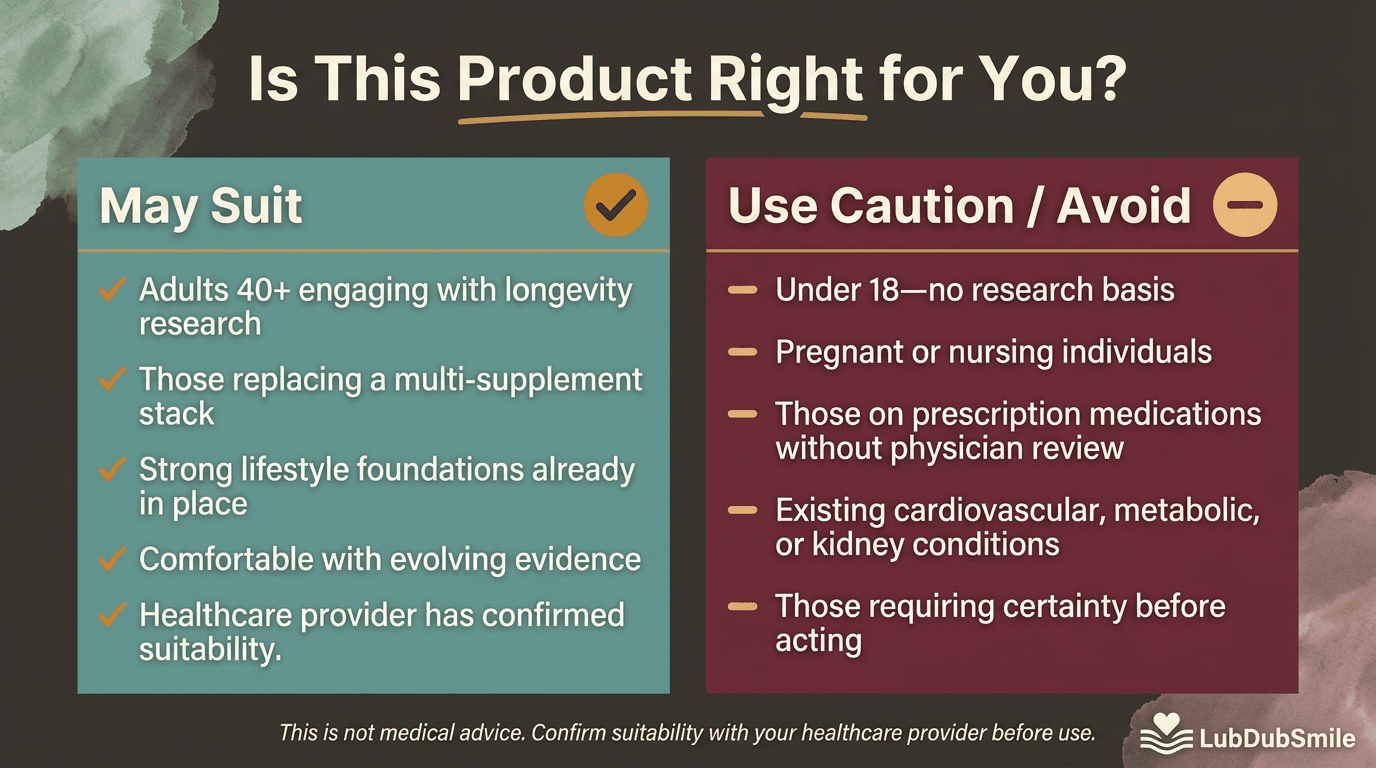
Adults aged 40 and over who engage with current longevity research and want to address multiple cellular mechanisms through a single consolidated formulation.
Those currently stacking multiple longevity supplements individually who have concerns about cost, compliance, or quality variance across multiple suppliers.
Health-conscious individuals with strong lifestyle foundations already established consistent exercise, adequate sleep, nutritional adequacy who want to build on that base rather than replace it.
Those comfortable with evolving research who understand that many ingredients in this category carry promising but preliminary evidence, particularly for long-term human outcomes.
Those without contraindications who have reviewed the ingredient list with a healthcare provider and confirmed appropriateness for their individual health status.
Who Should Avoid This Product
The following groups should exercise caution or avoid this product without explicit physician guidance:
Individuals under 18. The compounds in this formulation carry no research basis in younger populations. The biological rationale for their use targets age-related decline patterns researchers observe in adults.
Pregnant or nursing individuals. Several compounds lack safety data for pregnancy or lactation a precaution applying broadly to longevity supplements.
Those taking prescription medications. Compounds including quercetin, resveratrol, and vitamin K2 carry known or potential interactions with certain pharmaceuticals. Anyone on anticoagulants, immunosuppressants, or other chronic medications should review this formulation’s full ingredient list with their prescribing physician before use.
Those with existing health conditions including cardiovascular disease, metabolic disorders, kidney disease, or autoimmune conditions should seek explicit medical clearance before beginning this or any multi-compound supplement regimen.
Those expecting rapid or dramatic results. The mechanisms this formulation targets operate over extended timeframes. Anyone seeking acute effects would benefit more from addressing immediate health priorities first.
Those requiring scientific certainty before acting. Meaningful questions remain unanswered about this supplementation category. Readers needing certainty may prefer waiting for more mature long-term human trial data.
Final Assessment
This DoNotAge all-in-one review evaluated the product against five criteria our supplement stacking article established.
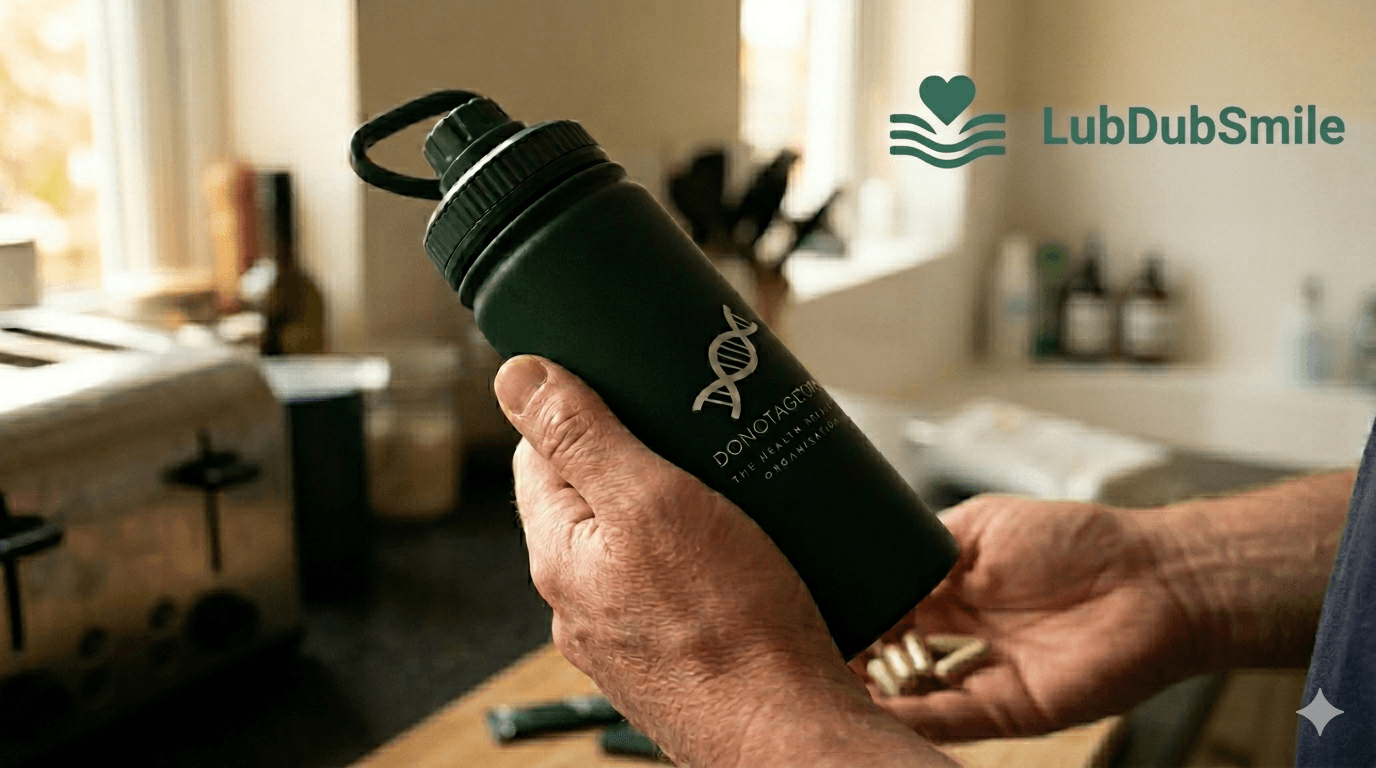
Research-backed ingredients: The formulation’s core compounds NMN, CoQ10 ubiquinol, trans-resveratrol, quercetin, spermidine, Ca-AKG, glycine, TMG, magnesium bisglycinate, vitamin D3, and vitamin K2 each carry independent peer-reviewed research supporting their proposed biological mechanisms. Evidence strength varies by ingredient as the breakdown above details. Proprietary ingredients including SIRT6Activator®, Nitralis®, and SulforaBoost® carry emerging research bases with less independent published data than the commodity compounds. Criterion met with noted variation in evidence maturity.
Clinically relevant dosages: Key compounds including NMN (1,000 mg), Ca-AKG (800 mg), glycine (2,000 mg), quercetin (400 mg), CoQ10 ubiquinol (200 mg), and spermidine (8 mg) appear at doses matching or exceeding amounts researchers used in published studies. Criterion met.
Full label transparency: All ingredients and individual dosages appear on the product label. No proprietary blends conceal individual amounts. Criterion met.
Third-party testing: According to the manufacturer, the product undergoes third-party testing with certificates of analysis available on request. Independent consumer verification remains advisable. Criterion met, subject to verification.
Manufacturer credibility: DoNotAge® has operated since 2019 with stated commitment to transparency and research alignment. Ingredient choices reflect engagement with current longevity research literature. Criterion met.
This DoNotAge all-in-one review concludes that the product meets the standards we defined for transparency, dosage relevance, and research support. That finding does not eliminate uncertainty inherent in this research field, does not constitute an outcome guarantee, and does not replace individual medical assessment.
For those meeting the appropriate profile who have confirmed suitability with a healthcare provider, the DoNotAge® All-In-One represents a consolidation approach addressing the cost, compliance, and quality variance problems we identified in our stacking analysis. Whether it represents value for any specific individual depends on factors this DoNotAge all-in-one review cannot assess.
Explore DoNotAge All‑In‑One a consolidated formulation in longevity and cellular health research.
Takeaway Summary
This DoNotAge all-in-one review finds that the formulation meets all five evaluation criteria research-backed ingredients at clinically relevant doses, full label transparency, third-party testing, and manufacturer credibility while acknowledging that no longevity supplement has demonstrated human lifespan extension in long-term trials, individual response variation remains significant, and lifestyle foundations of sleep, exercise, nutrition, and stress management remain the most evidence-supported contributors to healthy aging that no supplement can replace.
This content is for educational purposes and does not substitute for professional psychological or therapeutic help.