

Calm vs. Headspace: Feature and Pricing Comparison for 2026
Choosing a meditation app is more than a financial decision it’s a choice about how you want to approach your mental wellness. For adults managing work stress, struggling with sleep, or simply seeking a more grounded daily routine, apps like Calm and Headspace offer accessible entry points into mindfulness practice. But with similar pricing, overlapping features, and competing claims about effectiveness, the question isn’t just which app is “better.” It’s which one aligns with how you actually live, learn, and practice. This meditation app comparison helps you evaluate both platforms based on features, teaching style, and value.
Both Calm and Headspace are established, well-regarded platforms with millions of users and evidence-based approaches. They require paid subscriptions for full access. Also position themselves as tools for reducing stress, improving sleep, and building sustainable meditation habits. But their teaching styles, content structures, and user experiences differ in ways that matter when you’re deciding where to invest your time and money in this meditation app comparison.
This comparison walks through what each app offers, how their pricing structures compare, and how to assess which might fit your goals, experience level, and daily routine.
Pricing Note: All pricing information is current as of January 2026. Both platforms frequently update features and offer promotions; verify current pricing and features before subscribing.
What Calm and Headspace Actually Offer: Understanding Meditation Apps

How These Apps Fit Into a Mental Wellness Routine
Meditation apps are designed to make mindfulness practice accessible, structured, and convenient. They provide guided audio sessions, teaching techniques for managing stress, improving focus, and cultivating awareness. Most users engage with them daily or several times per week. They use meditation as a preventive wellness tool similar to exercise or healthy eating rather than a reactive intervention during crisis.
These apps work best as part of a broader mental health approach. That may include therapy, social support, physical activity, and adequate sleep. They’re tools for building skills and habits, not standalone solutions for mental health conditions. This connects to broader patterns discussed in building emotional regulation skills daily consistent practice matters more than any single tool.
Meditation Apps vs. Therapy: What’s the Difference?
Meditation apps offer structured mindfulness training. Therapy involves working one-on-one with a licensed professional to address specific psychological issues. You process emotions and develop coping strategies tailored to your circumstances.
Apps can complement therapy by reinforcing skills like emotional regulation, present-moment awareness, and stress management. Some therapists recommend them as homework between sessions. But they don’t provide diagnosis, personalized treatment plans, or the relational support that therapy offers.
If you’re experiencing moderate to severe anxiety, depression, trauma symptoms, or thoughts of self-harm, professional care should be your primary resource. Apps can serve a supplemental role if appropriate.
What Research Says About App-Based Mindfulness Practice
Research on mindfulness meditation generally shows benefits for stress reduction, anxiety management, and sleep quality. According to National Center for Complementary and Integrative Health research on meditation, studies suggest that meditation may help reduce symptoms of anxiety and depression. However, effects are modest and vary widely among individuals.
Research specifically on meditation apps is more limited but growing. A 2019 meta-analysis published in JAMA Internal Medicine found that mindfulness-based interventions delivered via apps showed small to moderate improvements in stress, anxiety, and depression symptoms. However, adherence rates vary significantly many users stop using apps within weeks. Effectiveness depends heavily on consistent practice.
Headspace has funded and participated in peer-reviewed research published in journals like Health Psychology and Frontiers in Human Neuroscience. Studies show reductions in stress and improvements in focus among users who practiced regularly. Calm has also conducted studies, though with less extensive public research portfolios.
The takeaway in this meditation app comparison: meditation apps can support mental wellness, but they’re not miracle interventions. Consistent practice matters more than the specific app you choose.
Calm’s Features, Structure, and Approach to Mindfulness
Core Meditation Programs and Session Formats
Calm offers a large library of guided meditations organized by theme: stress, anxiety, sleep, focus, relationships, self-esteem, gratitude, and more. Sessions range from 3 to 25+ minutes, allowing flexibility for different schedules.
The Daily Calm is a cornerstone feature a new 10-minute guided meditation released each day, narrated primarily by Tamara Levitt. It provides a consistent anchor for daily practice without requiring you to choose from hundreds of options.
Calm also offers meditation programs (multi-day series on specific topics) and unguided timed sessions for experienced practitioners who prefer silence or ambient sound without instruction.
Sleep Stories, Music, and Supplemental Content
Calm is perhaps best known for its Sleep Stories narrated bedtime stories for adults, designed to help you fall asleep. These 30- to 45-minute audio experiences feature soothing voices, gentle narratives, and calming soundscapes. Celebrity narrators include Matthew McConaughey, Harry Styles, Stephen Fry, and others.
Beyond meditation and sleep, Calm offers:
- Sleep meditations and wind-down exercises
- Music and soundscapes for relaxation, focus, or sleep
- Breathing exercises
- Gentle stretching and movement routines
- Masterclasses on topics like mindful eating, managing anxiety, and building resilience
User Interface and Experience Design
Calm’s interface is minimalist and visually calming, with nature imagery and soft color palettes. Navigation is straightforward, organized by category (Sleep, Meditation, Music, etc.). The app offers personalized recommendations based on your usage and tracks progress (total minutes meditated, session streaks).
The design emphasizes ease and comfort. It’s approachable for beginners and those who want a low-friction daily routine.
Guided vs. Unguided Practice Options
Calm offers both guided meditations (with instruction throughout) and unguided timed sessions. You can set a timer for silent meditation with optional background sounds (rain, ocean, bells). This flexibility accommodates both beginners who need structure and experienced practitioners who prefer minimal guidance.
Headspace’s Features, Structure, and Approach to Mindfulness
Core Meditation Courses and Skill Progression
Headspace takes a more structured, course-based approach. The Basics Course a 10-session foundational meditation program is available even on the free version. It’s highly regarded for teaching meditation fundamentals clearly and progressively.
Beyond Basics, Headspace offers themed courses (anxiety, stress, sleep, focus, self-compassion, anger, grief). These build skills step-by-step. Each course typically contains 10 to 30 sessions, guiding you deeper into specific techniques or topics.
This structure appeals to people who want a clear learning path rather than choosing randomly from a large library.
Mental Health-Specific Content (Anxiety, Sleep, Focus)
Headspace includes targeted content for specific mental health concerns:
- SOS meditations: Quick sessions for moments of acute stress or panic
- Sleep meditations and Sleepcasts: Audio experiences designed to help you fall asleep (similar to Calm’s Sleep Stories, but with different narration styles)
- Focus Music: Neuroscience-backed playlists designed to enhance concentration, created in collaboration with researchers
Headspace positions itself as a “mental fitness” tool. It emphasizes skill-building and evidence-based practice.
User Interface and Experience Design
Headspace’s interface is bright, friendly, and character-driven. It features illustrated buddy animations and a playful aesthetic. Navigation is organized by activity type (Meditate, Sleep, Move, Focus), with personalized daily recommendations.
The app tracks your progress with streak counters and total minutes meditated. It integrates with Apple Health, Google Fit, and some wearables.
The tone is warm, approachable, and designed to demystify meditation for beginners and skeptics.
Integration with Daily Routines and Habit Building
Headspace emphasizes habit formation. It offers short sessions (3–5 minutes) for busy schedules, commute-friendly meditations, and wake-up/wind-down routines. The app encourages daily practice through reminders and streak tracking. It reinforces consistency over duration. These principles align with broader wellness strategies discussed in emotional hygiene daily habits that protect your peace.
Side-by-Side Meditation App Comparison: Features
Content Library Size and Variety
Calm:
- 500+ guided meditations
- 100+ Sleep Stories
- Extensive music and soundscape library
- Masterclasses and programs
- Daily Calm (new meditation daily)
Headspace:
- 500+ guided meditations
- Structured courses (50+ multi-session programs)
- Sleepcasts and sleep meditations
- Focus Music playlists
- Movement and exercise content

Understanding different matching approaches helps determine which dating platform comparison suits your preferences.
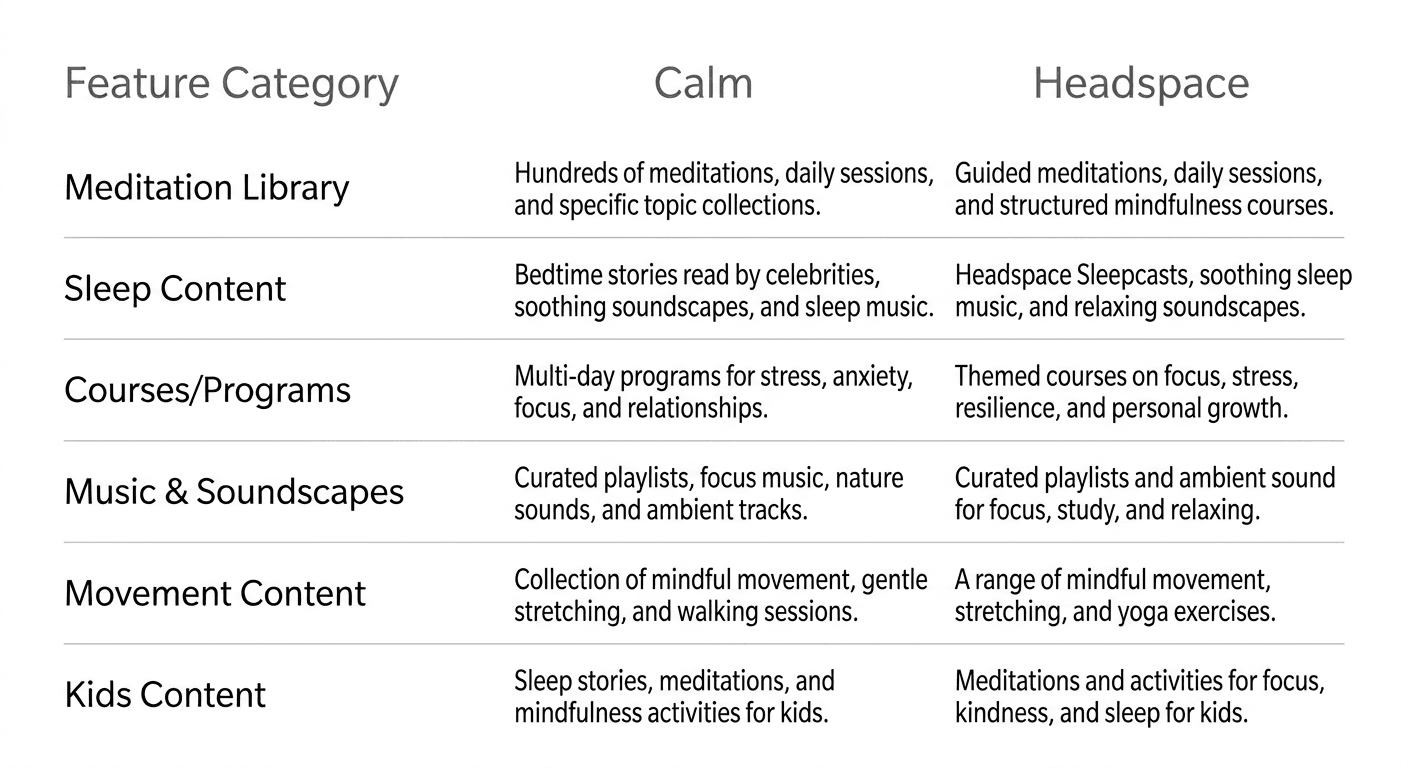

Both offer comparable library sizes in this meditation app comparison. Calm leans toward variety and ambient content. Headspace leans toward structured, progressive learning.
Personalization and Progress Tracking
Both apps offer:
- Progress tracking (minutes meditated, sessions completed, streaks)
- Personalized recommendations based on usage patterns
- Mood check-ins and goal-setting features
Headspace’s recommendations emphasize course progression. Calm’s recommendations emphasize thematic variety and mood-based suggestions.
Offline Access and Cross-Device Functionality
Both apps allow:
- Offline downloads of sessions (Premium required)
- Access via mobile app (iOS/Android) and web browser
- Synchronization across devices
User experience is smooth on both platforms, with full feature parity between mobile and web.
Specialized Content (Kids, Work, Movement, etc.)
Calm:
- Calm Kids: Meditations and Sleep Stories for children (ages 3–17)
- Calm Business: Corporate wellness subscriptions
Headspace:
- Headspace for Kids: Age-specific meditations (ages 5+)
- Headspace for Work: Enterprise/corporate programs
- More extensive movement content (yoga, stretching, mindful exercise)
Headspace offers slightly more movement integration. Both offer family and workplace solutions.
Calm Pricing Breakdown
Subscription Tiers and Costs
Calm Premium:
- Annual Plan: ~$69.99/year (most common)
- Monthly Plan: ~$14.99/month
- Lifetime Access: ~$399.99 one-time payment (occasional promotional pricing around $299)
Free vs. Premium Feature Access
Free:
- Select meditations and breathing exercises
- Limited Daily Calm access
- Some music and soundscapes
Premium Required For:
- Full meditation library
- All Sleep Stories
- Complete music and soundscape collections
- Masterclasses
- Offline downloads
The free version is quite limited. A 7-day free trial of Premium is available for new users.
Family Plans and Corporate/Educational Discounts
Calm does not currently offer a multi-user family plan. Each user requires a separate subscription.
Calm Business provides corporate subscriptions for workplace wellness programs. Some employers or insurance plans may cover Calm through Calm Health (clinical version), though this is less common than Headspace’s insurance partnerships.
Trial Periods, Billing, and Cancellation Policies
- Free Trial: 7 days of Premium for new users
- Billing: Annual plans billed upfront; monthly plans billed monthly
- Auto-Renewal: Enabled by default; must manually cancel
- Cancellation: Can cancel anytime; access continues through end of paid period
- Refunds: Generally not offered after trial period ends
Headspace Pricing Breakdown for 2026
Subscription Tiers and Costs
Headspace Plus:
- Annual Plan: ~$69.99/year (often discounted to ~$49.99–$59.99 during promotions)
- Monthly Plan: ~$12.99/month
- Family Plan (up to 6 users): ~$99.99/year
Free vs. Premium Feature Access
Free:
- Basics Course (10-session foundational program)
- Select single meditations
- Some breathing exercises
Premium Required For:
- Full meditation library and all courses
- Sleep content (Sleepcasts, sleep meditations)
- Focus Music
- Movement sessions
- Offline downloads
Headspace’s free offering is more substantial than Calm’s, particularly the complete Basics Course.
Family Plans and Corporate/Educational Discounts
Family Plan: Up to 6 users for ~$99.99/year, each with separate accounts and personalized tracking. This offers significant value for households.
Student Discount: Verified students can access Headspace for ~$9.99/year or similar deep discounts.
Headspace for Work: Corporate wellness subscriptions. Many employers and insurance plans cover Headspace through Headspace Health partnerships, sometimes at no cost to employees.
Trial Periods, Billing, and Cancellation Policies
- Free Trial: 7 to 14 days of Premium (varies by promotion)
- Billing: Annual plans billed upfront; monthly plans billed monthly
- Auto-Renewal: Enabled by default; must manually cancel
- Cancellation: Can cancel anytime; access continues through end of paid period
- Refunds: Generally limited; verify refund policy before subscribing
Pricing Comparison: Which Offers Better Value?
Cost Per Month Across Subscription Lengths
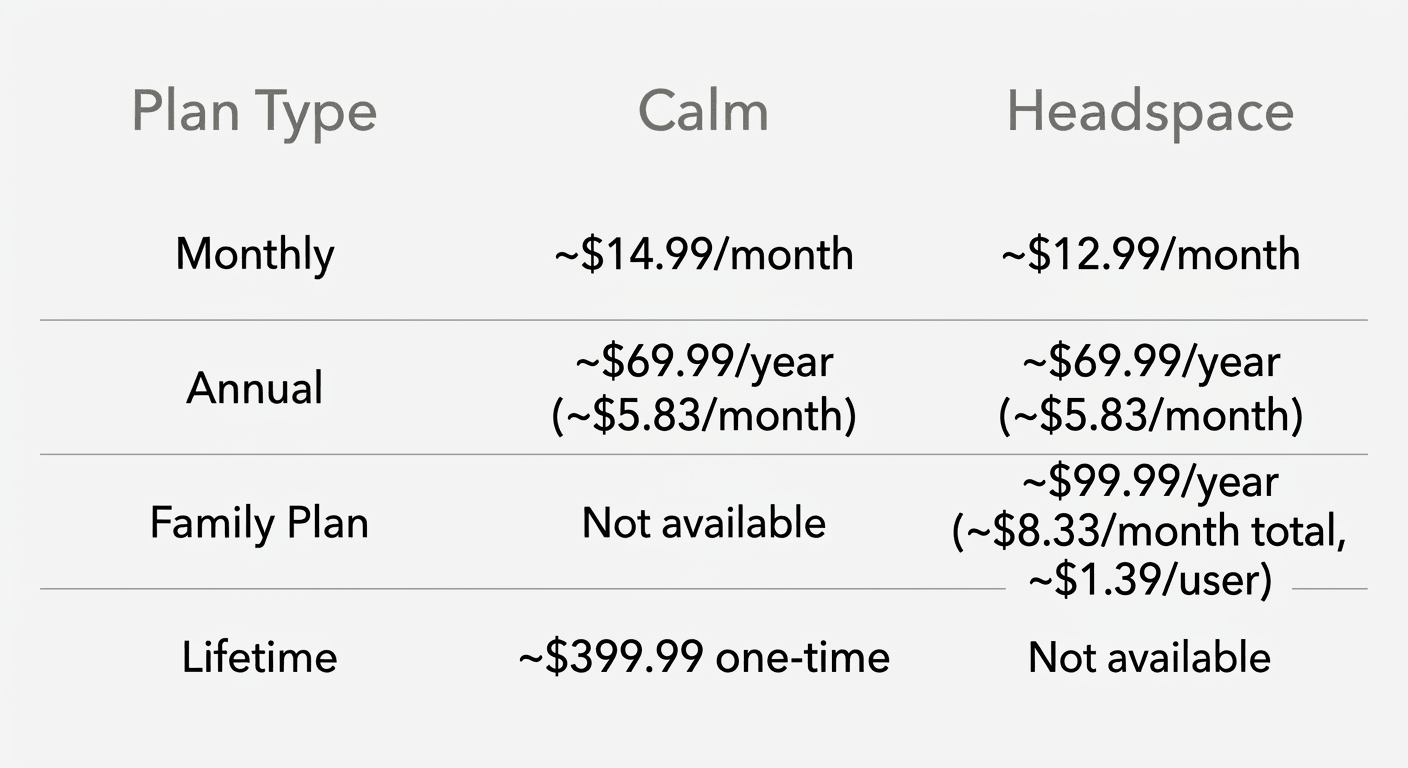
At the annual subscription level in this meditation app comparison, pricing is nearly identical. Headspace offers better value if you need a family plan. Calm offers a lifetime option for those who want to avoid recurring payments.
What You’re Paying For: Content Volume vs. Quality
Both apps offer comparable content volume. The difference is structure and style:
- Calm provides a broad, exploratory library with strong sleep content and celebrity narrators.
- Headspace provides structured courses with progressive skill-building and evidence-based framing.
Quality is high on both platforms. What matters more is which teaching approach resonates with you.
Return on Investment: How to Assess Value for Your Needs
Value depends on:
- Consistency: Do you use the app regularly? A $70/year subscription is worthwhile if you meditate several times per week. It’s not if the app sits unused.
- Feature alignment: Do you need Sleep Stories? Structured courses? Focus Music? Choose based on what you’ll actually use.
- Free alternatives: YouTube, Insight Timer, and other platforms offer free guided meditations. Paid apps offer curation, progress tracking, and polished production but they’re not the only option.
If you’re uncertain, use free trials on both apps to test which interface and teaching style feel right before committing.
Which App Fits Your Goals, Experience Level, and Lifestyle?
When Calm May Be a Better Fit
Consider Calm if you:
- Struggle with sleep and want extensive bedtime content (Sleep Stories, sleep music)
- Prefer a broad library to explore thematically rather than following structured courses
- Enjoy variety in narrators and ambient soundscapes
- Want a lifetime payment option to avoid recurring subscriptions
- Value the Daily Calm as a consistent anchor for daily practice
- Prefer minimal structure and choose sessions based on mood
When Headspace May Align Better
Consider Headspace if you:
- Are new to meditation and want clear, progressive instruction (Basics Course is excellent for beginners)
- Prefer structured courses that build skills step-by-step
- Need family access (Family Plan offers significant savings)
- Value evidence-based framing and research collaboration
- Want Focus Music for work or concentration support
- Have employer or insurance coverage through Headspace Health
- Appreciate a friendly, approachable tone with Andy Puddicombe’s narration
Considerations Beyond Features: Consistency and Personal Preference
The most effective meditation app in this meditation app comparison is the one you’ll use consistently. Interface aesthetics, narrator voice, session length options, and daily reminders all influence adherence. If one app feels more inviting or intuitive, that subjective experience matters more than feature checklists.
Both apps offer free trials. Spend a week with each to assess:
- Which narrator voice feels calming to you?
- Which session structure fits your schedule?
- Which app’s reminders and tracking motivate you?
- Which interface you naturally return to?
These principles connect to broader self-care strategies discussed in micro-moments of calm and everyday mindfulness.
Free Alternatives and Hybrid Approaches
If paid subscriptions feel prohibitive, consider:
- Insight Timer: Freemium app with thousands of free guided meditations
- YouTube: Free guided meditations, sleep stories, and soundscapes
- Library apps: Many public libraries offer free access to meditation apps through services like Libby
- Hybrid approach: Use free resources daily and subscribe to a paid app only when you need structure or specific content
There’s no requirement to pay for meditation. Apps offer convenience and curation, but effective practice is possible without them.
Frequently Asked Questions About Calm and Headspace
Can I try both apps for free before paying?
Yes. Both offer free trials (7 to 14 days) of their Premium features. You can also access limited free content indefinitely without subscribing. Headspace’s free Basics Course is particularly robust.
Do these apps actually help with anxiety or sleep issues?
Research suggests that regular mindfulness meditation may support reductions in anxiety and improvements in sleep quality. However, results vary widely. Apps are most effective when used consistently and as part of a broader wellness approach. For clinical anxiety disorders or chronic insomnia, professional treatment should be your primary intervention. Apps can serve a supplemental role if appropriate. Understanding anxiety vs overwhelm differences can help you assess when professional help is needed.
Can I use these alongside therapy or medication?
Yes. Many therapists recommend meditation apps as complementary tools for building mindfulness skills between sessions. Apps do not interfere with therapy or medication. However, they should never be used as replacements. Always consult your healthcare provider about integrating new wellness practices into your treatment plan.
What if I’ve never meditated before?
Both apps are beginner-friendly. Headspace’s Basics Course is especially well-suited for first-time meditators, offering clear, step-by-step instruction. Calm’s shorter sessions (3–5 minutes) and Daily Calm provide accessible entry points. Start with short sessions and increase duration gradually as the practice feels more comfortable.
Are there refund policies if the app doesn’t work for me?
Refund policies are limited on both platforms. Generally, refunds are not offered after the free trial period ends. Some users report success contacting customer support for refunds within the first few days of a subscription, but this is not guaranteed. Use free trials to assess fit before committing financially.
Final Considerations and Important Disclaimers
Making an Informed Choice
Calm and Headspace are both high-quality, evidence-informed meditation apps with similar pricing and overlapping features in this meditation app comparison. Your choice should be based on teaching style preference, specific content needs (sleep stories vs. structured courses), and family access requirements. Both apps are tools their effectiveness depends on your consistent engagement and realistic expectations about what meditation can and cannot do for your mental health.
When to Seek Professional Support
Meditation apps are wellness tools that may support mental health. They are not substitutes for professional medical or therapeutic care. If you are experiencing moderate to severe anxiety, depression, thoughts of self-harm, trauma symptoms, substance use issues, or other significant mental health challenges, please consult a qualified healthcare provider. Apps can complement professional treatment but should never replace it.
If you’re in crisis, contact the 988 Suicide and Crisis Lifeline (call or text 988) or go to your nearest emergency room. For ongoing support, consider reviewing therapy cost comparison resources.
Pricing: Accurate as of January 2026. Both platforms frequently update features and offer promotional discounts. Verify current pricing, trial terms, and features directly with Calm or Headspace before subscribing.
Effectiveness: Results from meditation apps depend on consistent personal practice, individual circumstances, baseline mental health, and realistic expectations. No app guarantees specific mental health outcomes. Research supports meditation as a helpful practice for many people, but individual responses vary widely.
This content is for educational purposes and does not substitute for professional psychological or therapeutic help.