

Redefining Strength After 40: Emotional and Physical Resilience
Redefining strength after 40 begins with a particular moment many people describe sometimes gradually, sometimes suddenly when the approach that carried them through their twenties and thirties simply stops working. The ability to push through exhaustion, to will their way past discomfort, to recover quickly and try harder next time starts to feel less like strength and more like a strategy running out of runway.
You used to power through exhaustion, but now recovery takes days instead of hours. You’ve achieved much of what you thought you wanted, but instead of satisfaction you feel a quiet “is this all there is?” Caring for aging parents while supporting adult children leaves you depleted in ways that sleep alone doesn’t fix.
This isn’t weakness. This is information.
The question midlife asks quietly at first, then more insistently isn’t whether you’re still strong enough. It’s whether the definition of strength you’ve been living by actually serves the person you’ve become and the life you still have ahead.
At LubDubSmile, we cover midlife not as a problem to be optimized away but as a genuinely distinct life stage with its own intelligence. The wellness industry tends to approach the forties and fifties through a lens of damage control: slow the decline, maintain the numbers, keep performing. The research we find more interesting, and more honest, points in a different direction. It suggests that what midlife asks of people is not more of the same effort applied more efficiently, but a qualitative shift in how strength is understood and exercised. That shift is the subject of this article, and we have tried to write it in a way that serves people actually living inside this stage rather than people observing it from outside.
Why Strength Needs Redefining at This Stage
The Strength That Got You Here May Not Serve You Now
The version of strength that carried most people through early adulthood was built on particular resources: physical recovery that forgave almost anything, emotional compartmentalization that allowed pushing feelings aside, and relentless forward momentum that felt sustainable because the runway seemed endless.
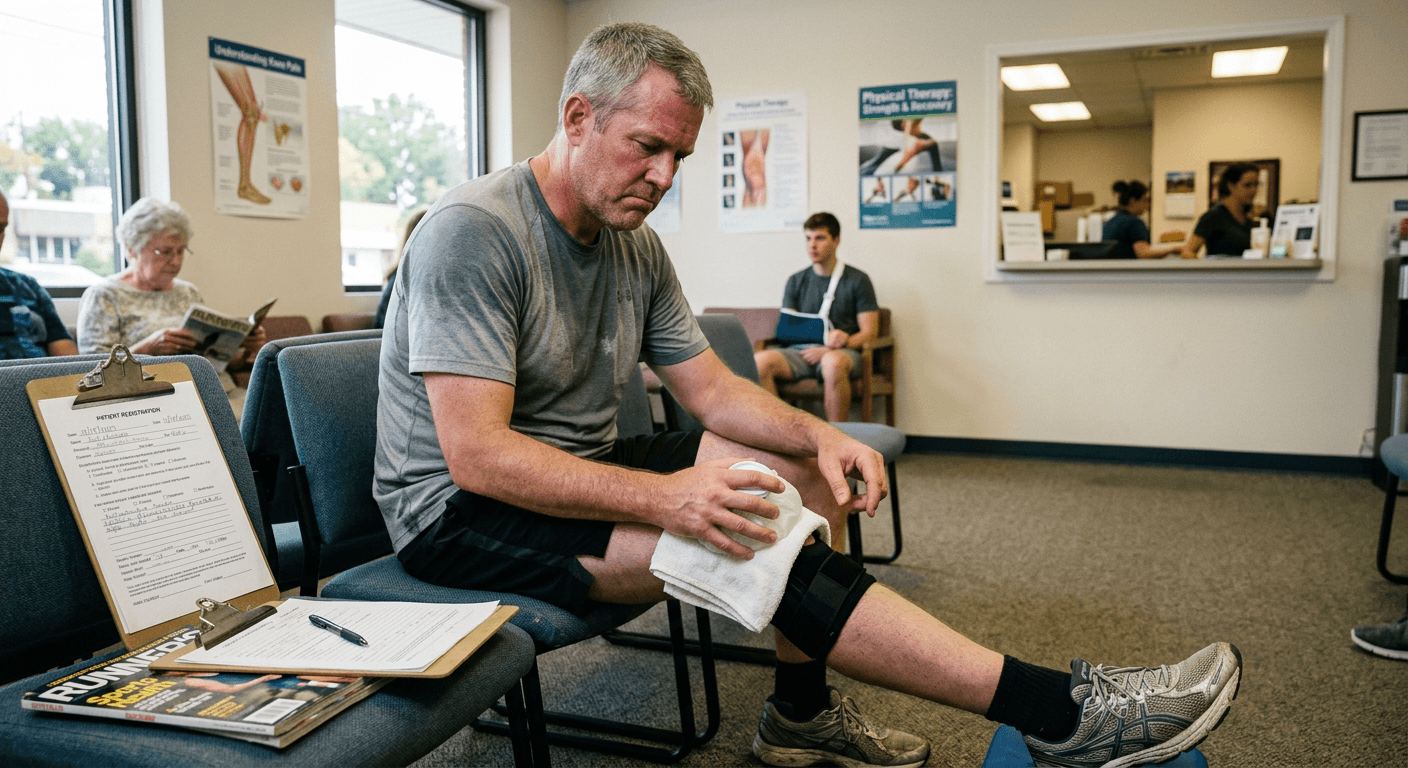
That kind of strength worked. It helped you build careers, navigate early relationships, establish yourself, absorb setbacks and keep moving. Genuine grief accompanies acknowledging that it no longer works the same way not because you’ve failed, but because the life stage has shifted and the approach hasn’t caught up.
Redefining strength after 40 means recognizing that what got you here may not serve you now. That recognition isn’t defeat. It’s the beginning of something more intelligent.
When “Pushing Through” Stops Working
Pushing through is valid when recovery is fast, reserves are deep, and the pushing doesn’t create cascading costs that compound over time. In your twenties and thirties, you could often push through because the system bounced back.
After 40, the calculus changes. Physical recovery takes longer not dramatically at first, but measurably. Emotional suppression that once felt temporary accumulates into something more stubborn. The ability to ignore your body’s signals doesn’t disappear, but the cost of doing so climbs.
When pushing through stops working when you push and don’t recover, when you override and feelings don’t stay overridden that’s not a sign you’ve gotten weaker. It’s a sign that a strategy has hit its limits and something more sophisticated is required. This understanding forms the foundation of redefining strength after 40.
The Cultural Myths About Strength We Absorbed Young
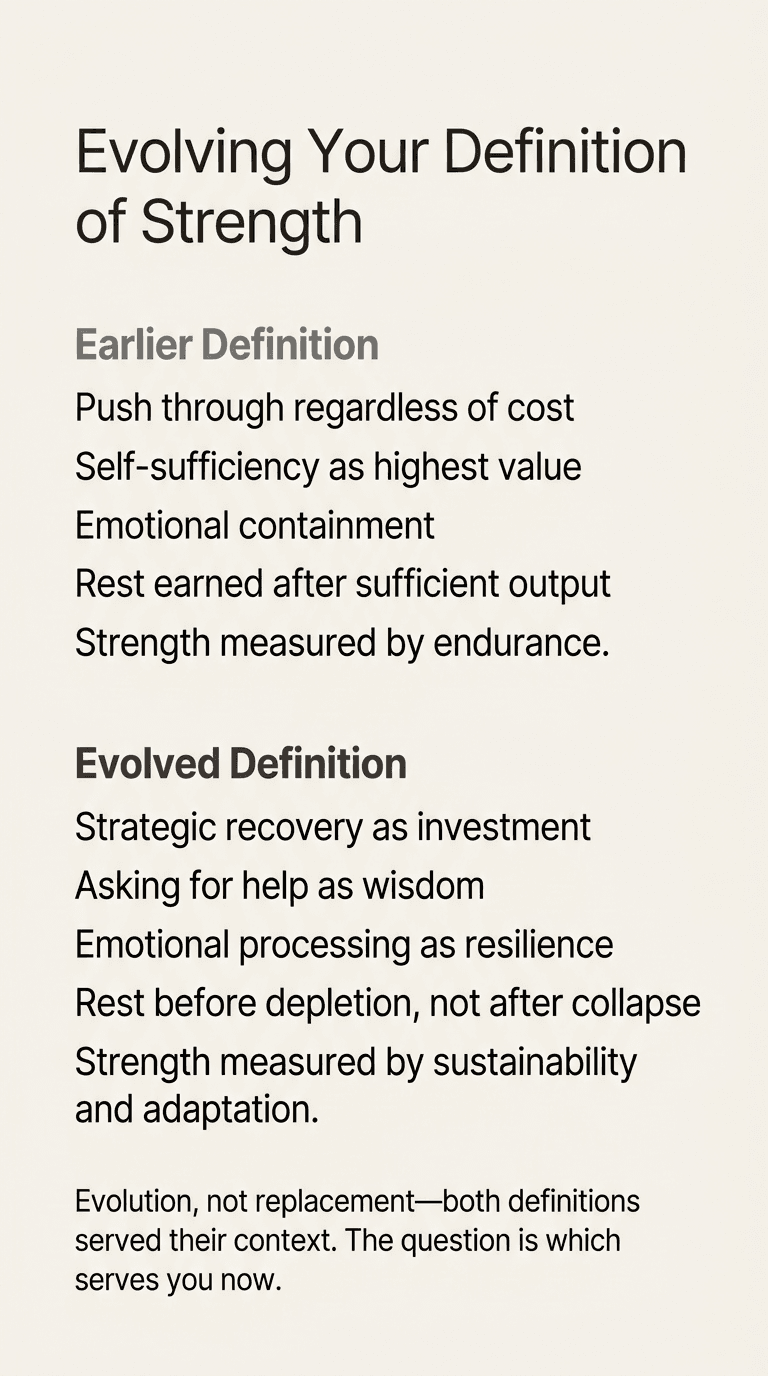
Most people now in their forties absorbed a fairly coherent cultural narrative about what strength looks like: self-sufficiency, persistence regardless of cost, emotional containment, physical endurance, not needing help, not showing struggle.
These narratives were often gendered in different directions but the core framework was similar: strength is what you project outward and maintain regardless of what’s happening inward. Psychologists who study lifespan development describe midlife as a period of integration bringing together what we’ve learned with who we’re becoming.
Part of redefining strength after 40 involves honestly assessing which cultural strength narratives were actually wisdom and which were mythology of a culture that doesn’t deal well with human limitation.
What Midlife Asks: Integration, Not Endurance
Erik Erikson, the developmental psychologist whose work on life stages remains foundational, described midlife as the stage of “generativity versus stagnation” channeling accumulated experience toward something meaningful beyond oneself.
The key word is integration. Midlife doesn’t ask for more endurance of what came before. It asks for wisdom to bring together what you’ve learned about yourself, about what matters, about what the body and psyche actually need into an approach that can sustain you for decades ahead.
That integration requires, for most people, redefining strength after 40 in fundamental ways.
Permission to Evolve Your Definition
Redefining strength after 40 isn’t lowering standards. It isn’t accepting decline. It’s aligning your approach with actual circumstances and accumulated wisdom rather than continuing to apply a twenty-five-year-old’s strategy to a forty-five-year-old’s life.
You have permission to evolve this definition. Not just because it’s compassionate, though it is but because it’s accurate and intelligent. The definition you’ve been operating from was always incomplete. Now you have the experience to build something more honest.
Physical Strength After 40: Honoring Change Without Surrendering
What Actually Changes Physically
Physical changes after 40 are real, and honesty about them serves better than either catastrophizing or minimizing. Hormonal shifts whether perimenopause and menopause in women or gradual testosterone decline in men affect energy, body composition, recovery, sleep quality, and emotional regulation. Muscle mass declines without intentional resistance training. Recovery from exertion takes longer.
These changes are normal. They’re not signs of failure, poor choices, or inadequate discipline. What varies is how significantly they affect any individual, depending on genetics, health history, lifestyle, and factors beyond complete control.
What’s also true is that many physical changes attributed to “just aging” are actually products of disuse, chronic stress, poor sleep, or manageable conditions. Understanding your preventive health screening options helps distinguish between normal adaptation and addressable conditions.
Recovery, Energy, and Your New Relationship with Your Body
For many adults after 40, the most significant physical shift isn’t capacity but recovery. You may still be capable of significant exertion but the time required to restore yourself afterward is longer, and the cost of consistently skipping restoration is higher.
This changes the math of what’s sustainable. This changes the math of what’s sustainable, and for those who want to understand the biological mechanisms underlying these recovery changes, our review of cellular health after 40 provides the research context for why the body’s relationship with effort and restoration shifts so measurably at this stage. Training, working, caregiving, or living in ways that don’t account for adequate recovery isn’t discipline; it’s an accounting error that will eventually require payment with interest.
Exercise scientists studying aging physiology consistently find that adults who adapt training to include adequate recovery sustain fitness and health far better over time. The goal of redefining strength after 40 isn’t doing less; it’s doing smarter.
Strength Training for Longevity
If there’s one physical practice researchers consistently identify as particularly valuable after 40, it’s resistance training. Muscle tissue is metabolically active, supports joint health, maintains functional capacity, and protects against falls and fractures that become increasingly consequential with age.
Harvard Medical School research confirms that people engaging in regular resistance training after 40 consistently show better metabolic health, bone density, functional independence, and cognitive outcomes.
The orientation shift worth making is from training for appearance to training for longevity and function. The question becomes not “how do I look?” but “what do I want to be able to do at 65 or 75, and what builds the foundation for that now?”
Listening to Your Body vs. Letting It Run the Show
Honoring your body’s signals doesn’t mean being governed entirely by comfort. Discomfort during exercise or the effort required to maintain physical capability aren’t signals to stop they’re the normal cost of staying capable.
The distinction worth developing is between productive discomfort (the effort of resistance training, pushing physical limits) and genuine warning signals (pain different from normal effort, symptoms that persist or worsen, fatigue unresponsive to rest). Learning to hear the difference is itself a sophisticated physical skill central to redefining strength after 40.
When Physical Changes Warrant Medical Attention
Some changes people attribute to “just getting older” are actually treatable conditions. Hormonal imbalances, thyroid dysfunction, sleep disorders, and depression presenting as fatigue can produce symptoms mimicking normal aging but responding to intervention.
Concerning symptoms persistent fatigue unimproved by rest, unexplained pain, significant mood changes, cardiovascular symptoms warrant medical consultation, not just mindset shifts. Accepting normal aging is wisdom. Accepting symptoms that could indicate treatable conditions without seeking evaluation isn’t.
Movement as Sustainability
Many adults who built fitness practices in younger years did so through frameworks that were at least partly punitive exercise as penance, performance, or proof of discipline. These frameworks become increasingly unsustainable as life complexity grows.
Movement as sustainability asks different questions: what can I do consistently that makes my body feel capable? What movement do I actually want to do? What builds the physical foundation I need for decades ahead? These questions often produce more sustainable answers than punitive frameworks, and our piece on healthy aging without obsession explores what that shift looks like in practice for adults who have spent decades in a more performance-driven relationship with their bodies.
Emotional Strength After 40: Beyond Stoicism
Why Emotional Resilience Isn’t Suppression
Emotional strength and emotional suppression are often confused, but they’re almost opposite things. Suppression manages emotion by refusing to process it, which means emotions accumulate rather than move through.
Emotional resilience, by contrast, is the capacity to experience difficult feelings without being destroyed by them to feel grief, fear, anger, or disappointment while still functioning. This requires actually engaging with emotional experience rather than bypassing it.
Research on emotional regulation consistently finds that suppression, while reducing emotional expression momentarily, actually increases physiological stress and is associated with worse long-term mental health outcomes. What looks like strength often costs significantly more than it appears.
The Strength in Vulnerability

Asking for help still feels like failure for many adults after 40, even when they know intellectually it isn’t. This feeling has roots in cultural narratives about self-sufficiency that run deep.
Dr. Brené Brown’s research on vulnerability and shame argues that vulnerability is not weakness but “the birthplace of innovation, creativity, and change.” Allowing others to see your struggle, asking for support, acknowledging that you don’t have everything handled these aren’t failures. They’re demonstrations of a more honest and sustainable version of strength.
The strongest thing you can do now may be what you couldn’t have done at 25: ask for help without qualification and accept support without immediately reciprocating. This capacity is central to redefining strength after 40.
Processing Accumulated Grief
By their forties, most people have accumulated significant losses: relationships that ended, careers that didn’t unfold as imagined, people who’ve died, versions of themselves they’ve had to release. You’re grieving not just specific losses but the life you thought you’d have by now.
This accumulation is real, and processing it requires actual engagement rather than continued postponement. Grief doesn’t disappear when unaddressed. It tends to show up sideways: as irritability, numbness, compulsive behavior, or physical symptoms.
Processing accumulated grief ideally with support from therapy, trusted relationships, or meaningful community isn’t weakness. It’s the work of becoming more integrated. Exploring emotional hygiene practices can support this ongoing emotional maintenance.
Holding Complexity: Gratitude AND Grief
One genuine gift of accumulated life experience is the capacity to hold contradictions. You can love your life and grieve what didn’t happen in it. Genuine gratitude and genuine sadness can coexist simultaneously. Real strength and real struggle can share the same moment.
This complexity isn’t confusion or inconsistency. It’s accuracy. Life at this stage is genuinely complex, and the emotional sophistication to hold multiple truths simultaneously is itself a form of strength unavailable in the same way at twenty-five.
Self-Compassion as Foundation
Dr. Kristin Neff, whose research at the University of Texas at Austin established self-compassion as measurable and learnable, identifies three components: self-kindness, common humanity, and mindfulness.
Her research consistently finds that self-compassion supports rather than undermines resilience. People who treat themselves harshly when struggling tend toward avoidance and shame. Those who treat themselves with compassion are more likely to acknowledge mistakes, learn from difficulty, and sustain effort over time.
Self-compassion after 40 isn’t lowering standards. It’s building the emotional foundation that actually supports long-term strength and is essential for genuinely redefining strength after 40.
There is a distinction worth drawing carefully here between self-compassion as described in the research literature and self-compassion as it is often popularized. Dr. Neff’s work is genuinely rigorous, and what it shows is not that people should lower expectations or reduce effort, but that harsh self-criticism is a less effective motivational strategy than most high-achievers believe it to be. The research is consistent: self-criticism increases avoidance, reduces risk-tolerance, and correlates with worse long-term outcomes precisely the opposite of what people deploying it tend to want. Self-compassion, by contrast, supports sustained engagement with difficult goals because it removes the threat of self-destruction from the cost of failure. For adults in their forties who have spent decades using self-criticism as fuel, this finding tends to land as both a relief and a genuine challenge. It is easier to believe that kindness toward yourself is a luxury than to accept that your primary motivational strategy may have been working against you.
Resilience That Sustains (Not Just Survives)
From Brittle Endurance to Flexible Resilience
Researchers studying resilience across the lifespan have found that effective resilience isn’t rigid endurance but flexible adaptation the capacity to bend without breaking, absorb impact and return to function, change form when circumstances require.
Brittle endurance can look impressive until the moment it fails dramatically and often completely. Flexible resilience is less visually striking but far more durable. It includes knowing when you’re being pressed beyond limits before you break.
Rest as Strength
Many adults after 40 carry an internalized framework where rest must be earned it’s what you get after you’ve done enough. This framework becomes increasingly unsustainable as recovery needs grow.

Rest before collapse is strength, not weakness. Research on sleep consistently shows that adults who prioritize rest particularly after 40, when hormonal changes can compromise sleep quality maintain better cognitive function, emotional regulation, physical performance, and immune function.
Rest isn’t what you do after strength. Rest is part of what makes strength possible. Understanding burnout recovery approaches reinforces this connection.
Building Support Systems
Independence has its place, but treating self-sufficiency as the highest virtue becomes increasingly costly as life complexity grows. Adults navigating midlife best tend not to be those who most successfully go it alone, but those who build genuine support systems.
Research on resilience and aging consistently finds that social connection is among the strongest predictors of wellbeing at midlife and beyond. Not surface connection, but genuine relationships including capacity for honesty, vulnerability, and real support.
Building and maintaining these relationships is itself a form of strength work central to redefining strength after 40.
Midlife Transitions That Test (And Build) Strength
Career Transitions and Professional Identity
Many adults at midlife encounter professional plateaus or reinventions achievement of goals that were supposed to feel more satisfying, ceilings of advancement, or the persistent sense that the career they’ve built doesn’t fit the person they’ve become.
These transitions require distinguishing between identity invested in a specific role and identity rooted in values and capabilities. That’s difficult and important work.
Caregiving, Empty Nest, and Relationship Changes
Adults in their forties often find themselves in what researchers call the “sandwich generation” managing needs of aging parents while raising or launching children, often while maintaining full professional engagement. The demands are real, and the resources are typically inadequate.

Caregiving demands strength in forms that have nothing to do with pushing harder: asking for help, setting limits, processing grief for parents who are diminishing, and maintaining your own wellbeing as a prerequisite for sustainable care.
Midlife relationships also undergo significant stress. Redefining strength after 40 includes navigating these relationship changes with honesty rather than endurance alone. Understanding emotional maturity in relationships can support these transitions.
Confronting Mortality and Finding Meaning
Midlife is, for most people, the first time they encounter mortality as a personal and proximate reality. Parents die. Peers face serious illness. The body communicates its impermanence in ways it didn’t at thirty.
This confrontation, when engaged honestly, tends to produce either deeper meaning or defended numbness. Those who engage it allowing awareness of impermanence to inform how they allocate time and what they prioritize often describe it as among the most clarifying experiences of their lives.
When Reframing Isn’t Enough
Recognizing When Professional Support Is Needed
Midlife transitions are genuinely difficult, and struggling with them is normal. But normal difficulty and clinical conditions requiring professional support are different things.
Depression can look like a midlife identity crisis. Anxiety can look like reasonable concern. Grief that needs processing can look like persistent low mood. If you’re experiencing symptoms significantly affecting your ability to function persistent loss of interest, overwhelming worry, grief that doesn’t soften over time these warrant professional evaluation.
Understanding when to seek professional support can help clarify whether what you’re experiencing warrants individual strategies or therapeutic guidance.
Professional Support as Wisdom
Seeking professional support therapy, medical care, or both is itself a demonstration of the kind of strength this article describes. It’s asking for help rather than going it alone. It’s treating your own wellbeing as worthy of real investment.
If you’ve been telling yourself that needing support means you’ve failed to be strong enough, that’s exactly the narrative redefining strength after 40 invites you to reconsider.
Frequently Asked Questions
Is it normal to feel weaker after 40, or is something wrong?
Some experience of changed capacity, slower recovery, and different energy patterns is entirely normal after 40 and reflects real physiological changes. What’s not normal and warrants medical evaluation is fatigue that doesn’t improve with adequate rest, significant unexplained changes in mood or cognition, or anything significantly affecting your ability to function.
How do I stay physically strong without the intensity I used to have?
Shift from intensity-focused to consistency-focused training, and from performance-oriented to function-oriented goals. Resistance training is worth prioritizing not for aesthetics but for metabolic health, bone density, and functional capacity. Adequate recovery between sessions is where adaptation actually happens at this stage.
What if I don’t feel emotionally resilient does that mean I’m failing?
No. Feeling stretched, depleted, or emotionally unsteady during genuinely difficult circumstances isn’t failure it’s accurate response to real difficulty. If you’re experiencing persistent difficulty that doesn’t soften with time, that’s information worth taking seriously, possibly with professional support.
Is redefining strength just accepting decline?
No though it does include accepting what is actually true about this life stage. Honoring the reality that recovery takes longer isn’t deciding that physical capability doesn’t matter. Redefining strength after 40 means aligning your approach with current reality and accumulated wisdom rather than continuing to apply younger frameworks.
Moving Forward: Strength as Wisdom
This is evolution, not defeat. What midlife asks for isn’t less of you. It asks for a more sophisticated version one that has integrated enough experience to know which battles are worth fighting and which old strategies have run their course.
You can be strong and ask for help. Accepting limitations while maintaining agency isn’t contradiction it’s the texture of a life examined with honesty. Strength that looks different than it did at thirty is not diminished strength. What you’re developing the capacity to hold complexity, to rest without guilt, to know what matters and organize around it is strength that younger people typically don’t have.
Redefining strength after 40 means evolving from brittle endurance toward flexible resilience integrating physical honesty about recovery needs, emotional capacity to hold complexity without suppression, the wisdom to ask for help without treating the need as failure, and the courage to organize your life around what actually matters rather than what you thought was supposed to matter.
This article explores frameworks for understanding strength and resilience after 40, but it’s not a substitute for professional mental health or medical care. If you’re experiencing persistent depression, grief, anxiety, or significant physical symptoms, please consult qualified healthcare providers or mental health professionals.
This content is for educational purposes and does not substitute for professional psychological or therapeutic help.