
Why Parental Self-Care Is Not Selfish: And How to Practice It
Is parental self-care selfish? No. Parental self-care is not selfish because selfishness means prioritizing your own needs at the genuine expense of others and maintaining your health, rest, and sense of self makes you more available to your children, not less. The guilt most parents feel around parental self-care is not a moral signal. It’s a product of cultural frameworks that equate parental sacrifice with parental love.
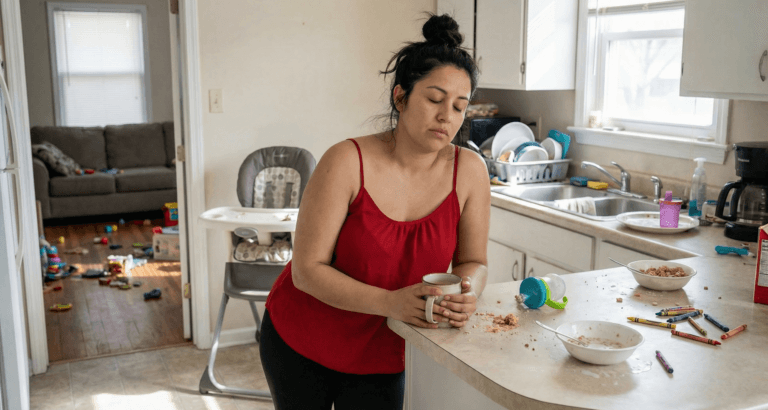
You take 20 minutes to yourself and spend the entire time feeling guilty, which means you didn’t actually rest you just felt bad somewhere quieter, you cancel the gym for the fourth time because someone needs something, you realize you haven’t done anything for yourself in six weeks, you’re short with your kids all day, snapping over small things, and somewhere underneath the shame you know you’re not a patient parent right now because there’s nothing left not because you don’t love them.
This is what sustained self-neglect looks like in parenting. Not dramatic. Not obvious. Just a slow erosion of capacity that eventually shows up as the very thing you were sacrificing yourself to avoid: being less present, less warm, less patient with the people you’re giving everything to.
Most self-care articles for parents offer either slogans (“you can’t pour from an empty cup”) or activity lists (bubble baths, morning routines, saying no more often). Neither addresses what actually keeps most parents from caring for themselves: guilt that runs so deep it transforms parental self-care into suffering. This article takes the guilt seriously enough to address it at its roots, and it offers practical guidance across every domain of your life. For a practical companion to this article, self-care for parents: practical strategies covers the micro-level habits that make parental self-care sustainable day to day.
The research on parental depletion is unambiguous and worth stating plainly: sustained self-neglect reduces parenting quality in measurable ways, and the cultural frameworks that equate self-sacrifice with devoted parenting are producing the outcome they claim to prevent. LubDubSmile covers parental self-care not as a lifestyle aspiration but as a documented functional concern, and the evidence cited here reflects that standard.
The Permission Parental Self-Care Actually Requires
Where the Guilt Comes From
The guilt most parents feel when taking time for themselves didn’t appear spontaneously. Cultural messages about what good parents look like constructed it. Family patterns that decades of observation absorbed built it. Gendered expectations that attach particular weight to maternal self-sacrifice reinforced it. Sometimes explicit instruction that your needs are secondary to your children’s installed it directly.
Your mother made her children her entire identity and told you it was the only way to really love them and you’re either replicating it or exhausting yourself refusing to. This isn’t weakness or irrationality. It’s the predictable result of absorbing a framework about parental virtue that equates self-sacrifice with love.
The pattern that martyred parents follow is particularly durable because people who genuinely believed it modeled it. Parents who sacrificed themselves for their children weren’t usually doing so cynically they believed, because earlier generations taught them, that love required this. Children who grew up watching that pattern absorbed it as the template for devoted parenting. The guilt you feel when taking time for yourself is not evidence that parental self-care is wrong. It’s evidence of how thoroughly the template took hold.
There is a specific irony embedded in the martyred parenting template that rarely gets named: the parenting outcomes it is designed to produce are precisely the ones it undermines. Parents who model complete self-erasure in the name of devotion are not modeling devotion. They are modeling a relationship with self-worth that their children absorb directly and that the research on self-compassion and adult wellbeing consistently shows produces worse long-term outcomes than modeling balanced self-regard. The framework defeats itself. Naming that is not an invitation to guilt about how you were raised or how you have parented. It is an invitation to examine whether continuing the template serves anyone.
What Selfishness Actually Is (And Why Self-Care Doesn’t Qualify)
Selfishness means prioritizing your own needs at the genuine expense of others who depend on you consistently, without regard for their wellbeing. A parent who takes 30 minutes for a walk while a capable co-parent or older child is present is not being selfish, a parent who sleeps in occasionally is not being selfish or a parent who maintains friendships, medical appointments, and interests outside of caregiving is not being selfish.
What selfishness is not: meeting your own basic needs. Maintaining your health. Preserving enough of yourself that you can continue to show up for the people who need you. Having an identity that extends beyond your parenting role. These aren’t luxuries that compete with your children’s wellbeing. They’re the conditions that make sustained parenting possible.
The guilt telling you otherwise is not a moral signal. It’s programming.
The Real Argument: Why Parental Self-Care Is Not Selfish
Signs You Need Parental Self-Care (And May Not Be Seeing Them)
Before examining why parental self-care matters, it’s worth naming the signs that you need it because depletion often arrives gradually enough that parents don’t recognize it until it’s severe.
Signs that parental self-care has become urgent:
- You’re consistently short or explosive with your children over minor triggers
- You feel resentment toward your children that you immediately feel ashamed of
- You’ve stopped doing anything you used to enjoy not because you chose to but because it simply didn’t happen
- You feel emotionally flat or numb rather than warm toward the people you love
- Rest doesn’t restore you the way it used to
- You’ve deferred medical, dental, or mental health care for more than a year
- You feel like a function rather than a person
These aren’t character failures. They’re information that parental self-care has become genuinely urgent rather than aspirational.
Why Parental Self-Care Matters: What Your Children Learn From Watching You

Albert Bandura’s social learning theory foundational to developmental psychology established that children learn not primarily through what they hear but through what they observe. Your children watch how you treat yourself with the same attention they bring to everything else about you.
When they watch you consistently prioritize everyone else at the cost of your own health, rest, interests, and wellbeing, they learn that this is what adults do. That your needs don’t really matter. That parental self-care is indulgent while self-neglect is virtuous. That love requires sacrifice of self.
You see a parent at school who seems to take care of themselves and wonder how they don’t feel guilty and you realize you’ve never actually questioned whether you should. That parent is teaching their children something different: that devotion and humanness can coexist, that love and limits belong together, that giving and restoration go hand in hand. Both lessons are real. Both are entering the next generation.
Depleted Parents Cannot Provide What They Don’t Have
Researchers studying parental burnout including psychologists Dr. Moïra Mikolajczak and Dr. Isabelle Roskam, whose work has produced some of the field’s most rigorous findings identify chronic depletion as the mechanism through which parental burnout affects children. Parental self-care doesn’t create emotional unavailability. Sustained self-neglect does it leaves parents with insufficient capacity for warmth, patience, and genuine presence over time.
You’re short with your kids all day, snapping over small things, and you realize you’re not a patient parent right now because there’s nothing left. This is not a character failure. It’s the predictable result of operating beyond capacity without restoration. The capacity for warmth and patience is not infinite and self-renewing. It requires input. Depletion produces exactly the parenting outcomes that guilt around parental self-care was supposed to prevent.
You Are a Person Before and Beyond Being a Parent
This is worth stating directly, without qualification: you existed as a full human being before your children arrived. You had needs, interests, relationships, health, and worth before you became a parent. Parenthood cancelled none of that.
Your children need you to be their parent. They don’t need you to disappear as a person in order to perform that role. A parent who has retained some sense of self who has interests, friendships, health, and a measure of restoration tends to be more present, more interesting, and more emotionally available than one who has genuinely sacrificed everything.
Your children don’t need a sacrificed parent. They need a sustained one.
Physical Parental Self-Care: Your Body Is Not Last on the List
Medical and Dental Appointments You’ve Been Postponing
The medical appointment you’ve been postponing for two years. The dental cleaning that’s three overdue. The symptom you’ve been managing by ignoring it. These are not self-care luxuries they’re basic maintenance of the body you parent with.
Parents, particularly mothers, consistently defer their own medical care. This isn’t trivial. Unaddressed health issues don’t resolve through neglect; they worsen. Taking care of your physical health is taking care of your capacity to parent and it’s also simply taking care of yourself, which you deserve regardless of the parenting justification.
Physical parental self-care for mothers carries particular cultural weight the expectation of self-sacrifice is often more acute, and the guilt around taking time for health appointments more intense. For fathers, the pattern often differs: less guilt around appointments, but more likelihood of not noticing depletion because the cultural template for paternal parenting doesn’t emphasize emotional maintenance.
Sleep: Protecting What Little You Have
Researchers studying parental wellbeing consistently identify sleep as the single most significant factor in parental capacity. Its deprivation doesn’t merely create discomfort it affects emotional regulation, patience, judgment, and immune function in measurable ways.
Protecting whatever sleep is available to you going to bed earlier when possible, taking turns with nighttime duties when there’s a co-parent, accepting that rest is not laziness is among the most concrete physical parental self-care practices available.
If your current life phase makes adequate sleep genuinely impossible (a newborn, a child with significant sleep challenges), survival mode applies: do what you can, release what you can’t control, and know this phase has an end. Working through fatigue as a parent offers specific micro-recovery strategies for the phases when sleep protection is genuinely impossible.
Movement That Fits Actual Parent Life
Not the gym membership you’re not using. Not the hour-long workout that requires childcare you don’t have. Movement that actually fits your life: walking to and from places rather than driving when possible, stretching for five minutes while the kids watch something, dancing in the kitchen while making dinner, chasing toddlers across playgrounds.
Movement supports physical health, reduces stress hormones, and provides some restoration even when it’s brief and unglamorous. The bar isn’t a fitness achievement. It’s moving your body today in whatever form is available. This is physical parental self-care at its most realistic.
Eating Real Food (Not Just Kids’ Leftovers)
Making yourself a plate when you make theirs. Eating before you reach the point of shaky hunger. Keeping something accessible for yourself, not just for their lunchboxes.
This isn’t about nutrition optimization. It’s about treating your body as though it deserves food which is what physical parental self-care, at its most basic level, actually requires.
Emotional Parental Self-Care: Processing What Parenting Stirs Up
Allowing Yourself to Feel Negative Emotions About Parenting
Parenting produces a full range of human emotions including ones that are difficult to acknowledge: resentment, boredom, frustration, grief for the life before, anger at the relentlessness of the demands. These are normal. They are not evidence that you don’t love your children or that you’re a poor parent.
Emotional parental self-care includes the simple act of allowing yourself to feel what you actually feel without immediately suppressing it, performing a different emotion, or converting genuine feeling into guilt about having it.
Grief, resentment, and anger are information, not failure. They point toward something: unmet needs, unsustainable expectations, exhaustion that has accumulated, something that requires attention. Suppressing them doesn’t make them disappear it makes them emerge sideways, often onto the people you’re trying to protect from them.
Processing Emotions Before They Spill Onto Your Children
Emotions that don’t receive processing tend to seek expression. For parents under sustained pressure, emotions that go unexpressed frequently surface as impatience with children, reactions that don’t fit the trigger, emotional unavailability, or the particular kind of exhausted harshness that parents feel most ashamed of afterward.
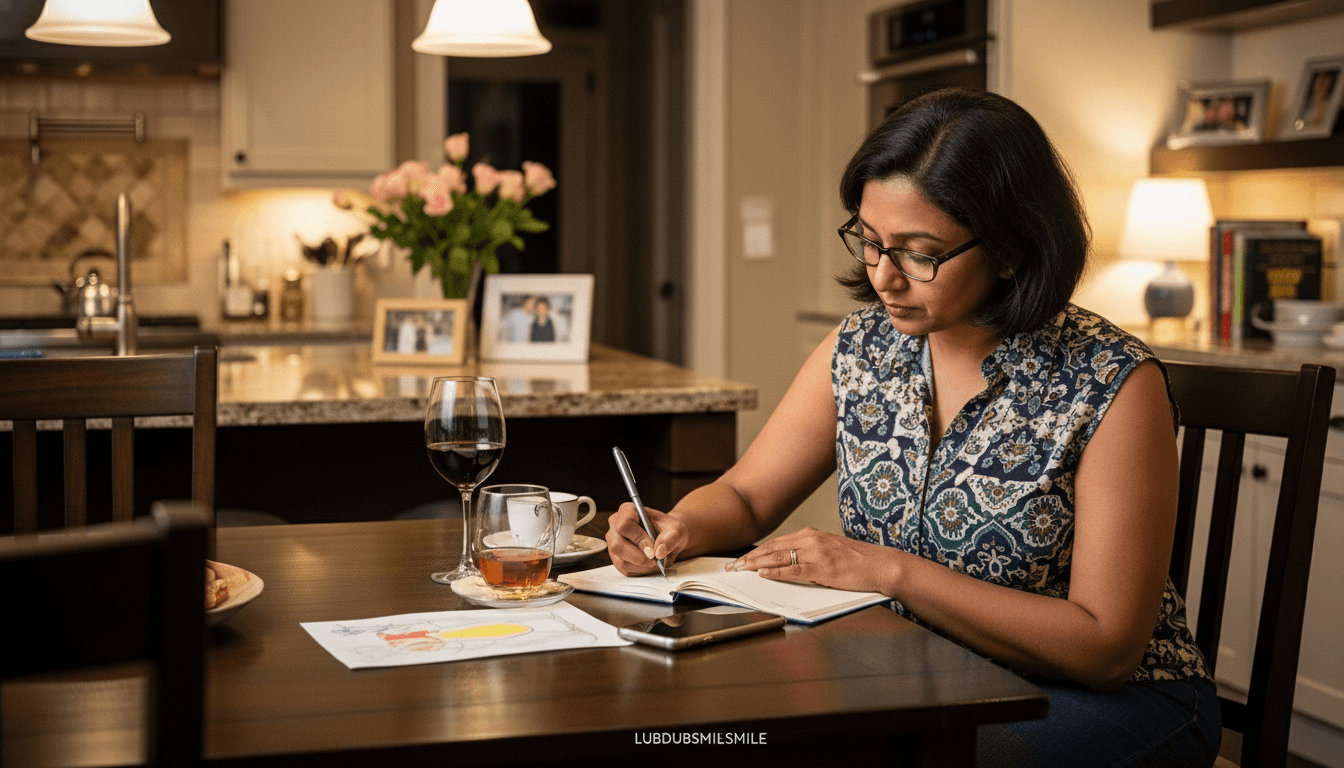
Emotional parental self-care through journaling, conversation with people you trust, therapy, or acknowledged feeling rather than immediate suppression processes the emotional material before it backs up. Not because your children can’t see you have emotions, but because they shouldn’t become the primary recipients of emotions that aren’t theirs to manage.
Emotional hygiene as a daily practice offers practical frameworks for this kind of ongoing emotional maintenance small, consistent habits that prevent the backup that eventually produces the emotional flooding parents most want to avoid.
Therapy as Parental Self-Care (Not Luxury)
Therapy for parents isn’t crisis intervention. It’s professional support for navigating one of the most demanding ongoing roles a human being can occupy, often while simultaneously managing everything else adult life requires.

Therapists who work with parents can help process emotional load that has accumulated, examine guilt patterns that don’t serve you, address burnout before it becomes severe, and support the identity work that parenting requires. This is parental self-care. It’s also an investment in your parenting capacity not because your children are the reason to do it, but because you deserve support too.
If cost creates a barrier, many employers offer Employee Assistance Programs (EAPs) with therapy sessions included. Comparing therapy platforms can help identify accessible options for parents who can’t manage in-person appointments.
Mental Parental Self-Care: Your Mind Needs Space Beyond To-Do Lists
Mental Load and the Cognitive Exhaustion of Parenthood
The mental load of parenting the invisible cognitive work of tracking, planning, anticipating, and organizing family life genuinely exhausts in ways that often remain invisible even to the parent carrying it. Remembering who needs what for which day, tracking developmental milestones, managing the social calendars of people who can’t manage them, monitoring the household, planning ahead while executing the present.
This cognitive load is real work. Acknowledging it as such rather than treating it as invisible background noise is part of mental parental self-care. So is finding ways to reduce it where possible: systems that eliminate repetitive decisions, sharing the mental load rather than just task execution, and allowing some things to remain untracked because they’re genuinely not important enough to hold.
Quiet Without Guilt: Allowing Your Mind to Rest
The mind that constantly monitors, plans, and manages doesn’t restore simply by stopping those activities. Rest for the mind often requires something that fully occupies attention without demand: a novel, a conversation, a piece of music, something that draws the brain into engagement that isn’t parenting-related.
Quiet without guilt sitting without a purpose, allowing your mind to wander, doing something that has no productive function genuinely restores the overextended parental brain. The discomfort of purposelessness is worth tolerating for the rest it provides.
Disconnecting From Parenting Comparison Culture
Scrolling parenting content, parenting forums, and parenting social media is the opposite of mental rest for parents. It consumes more information about parenting while also generating comparison and inadequacy. Mental parental self-care sometimes looks like consciously consuming content that has nothing to do with parenting your interests, your curiosity, your sense of humor and treating that as restoration rather than frivolity.
Social Parental Self-Care: Maintaining Your Identity in Relationships
Friendships You’ve Let Fade and How to Tend Them
Most parents experience significant social contraction friendships that parenting’s consuming demands claimed as casualties and that never fully recovered. The friends who knew you before you had children, who see you as more than your parenting role, who remember your interests and humor and perspective these connections are worth tending, even imperfectly.
Social parental self-care includes reaching out to people you’ve lost touch with. Accepting imperfect contact (a text, a call while kids are occupied) rather than waiting for the perfect conditions that never arrive. Being honest about your current season’s limitations without using them as a permanent excuse for complete social isolation.
Adult Conversation That Isn’t About Children
A particular kind of restoration comes from conversation about things that have nothing to do with parenting your interests, ideas, experiences, humor. Not every social interaction needs a parenting focus. Regular engagement with your non-parenting self supports the sense of being a whole person rather than a function.
This might look like protecting a monthly dinner with friends where children are not the primary topic. It might look like maintaining a colleague relationship that involves conversation about shared professional interests. It might look like reading something and then having a conversation about it with someone who’s also interested.
Romantic Relationship as Priority (Not Afterthought)
For partnered parents, the relationship that produced or supports the family frequently receives the least intentional investment. Everything else gets scheduled; the partnership operates on whatever remains.
Social parental self-care for partnered parents includes treating the relationship as something that requires investment rather than assuming it sustains itself through proximity and shared logistics. This doesn’t require elaborate date nights it requires some deliberate attention to the relationship as a relationship, not a co-parenting arrangement.
Professional and Creative Parental Self-Care: Who Are You Outside of Caregiver?
Maintaining Identity Beyond the Caregiving Role
For parents who stepped back from careers or creative pursuits to prioritize caregiving, reclaiming identity after kids addresses the question of who they are outside that role and why that question matters now, not only when children are grown. Professional identity, creative expression, skills and expertise that exist independent of parenting these are not luxuries to return to when children are grown. They’re dimensions of selfhood that matter now.
Professional and creative parental self-care is about maintaining threads of identity that parenting alone cannot provide. This might look like maintaining professional connections during a period of reduced work. It might look like returning to a creative practice in whatever abbreviated form is currently possible. It might look like developing skills for reasons that have nothing to do with your resume or your children’s needs.
Returning to Interests You Dropped Without Noticing
Many parents dropped interests music, sport, creative work, areas of study, community involvement without making a deliberate decision to do so. The demands of parenting simply crowded them out. And then you realize you’ve been in this mode for so long that you don’t clearly remember what you used to care about outside of caregiving and work.
Part of parental self-care is noticing what’s missing and allowing yourself to reclaim it, even imperfectly. A musical instrument touched once a week. A creative practice maintained in brief sessions. A sport played less skillfully than before but still played. These aren’t perfect restoration of the pre-parent self they’re threads of continued identity that matter.
Spiritual and Meaning-Based Parental Self-Care
Connection to Purpose Beyond Daily Parenting Tasks
The day-to-day execution of parenting the meals, the transport, the logistics, the supervision can consume so much attention that it crowds out the connection to meaning that makes all of it feel worthwhile. Spiritual parental self-care, understood broadly, is whatever reconnects you to something larger than the immediate demands: your values, your sense of purpose, your connection to beauty, community, faith, or the natural world.
This looks different for everyone. For some, it’s explicit religious or spiritual practice and the communities and rituals that go with it. For others, it’s time in nature, contemplative practice, creative engagement, civic involvement, or genuine moments of presence that break through the routine.
Whatever form it takes for you, it’s worth protecting not as something to return to when parenting demands ease, but as something maintained alongside them, even in abbreviated form.
Practical Parental Self-Care: The Infrastructure That Makes Everything Possible
Asking for Help (Specifically, Not Vaguely)
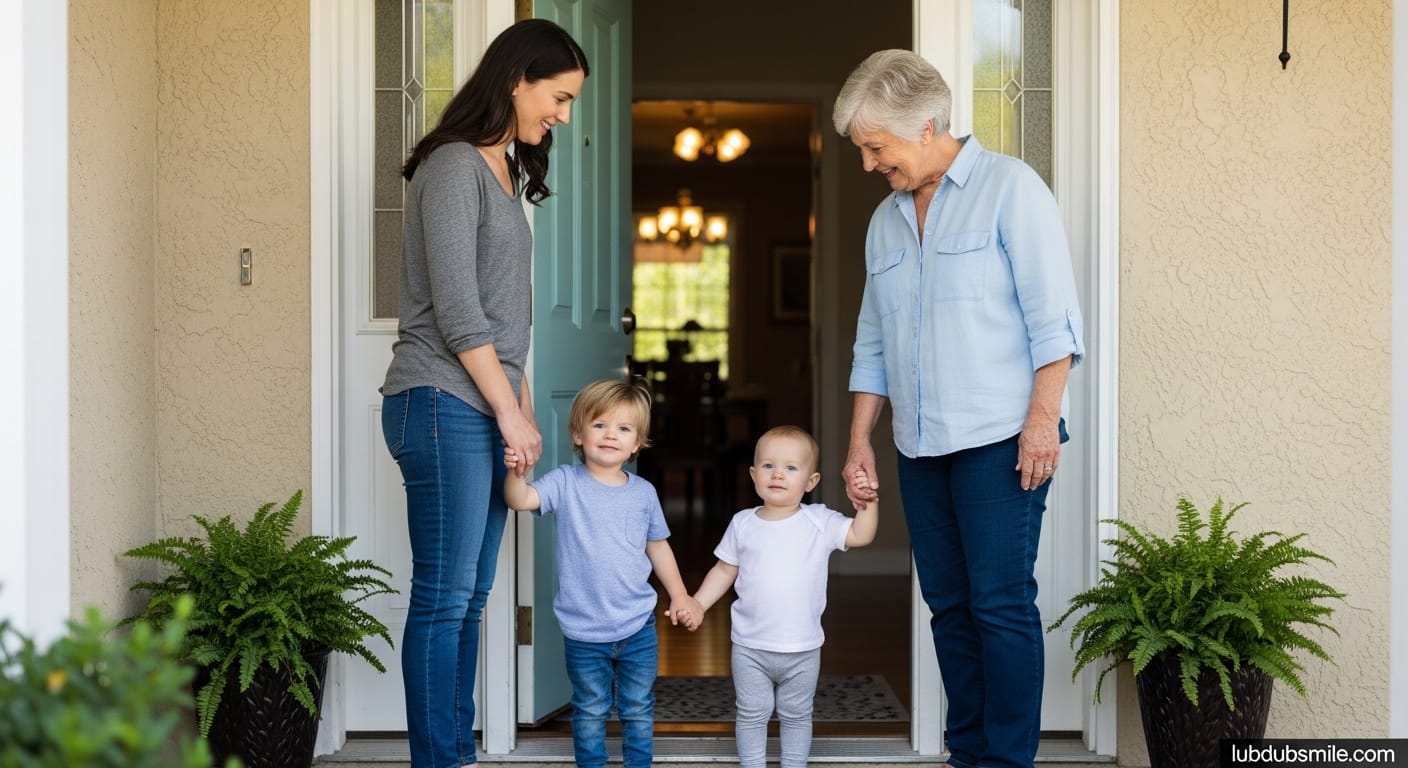
Vague wishes for help rarely produce actual help. “I need more support” is genuinely harder for most people to respond to than “I need you to handle bedtime on Tuesdays and Thursdays.” “I’m overwhelmed” invites sympathy more reliably than assistance. “Can you take the kids Saturday morning so I can have two hours alone” produces a concrete response to a concrete request.
Asking for specific help from a partner, from family, from other parents with whom you might reciprocate is practical parental self-care. It also requires tolerating the discomfort of appearing to need something, which the martyr parent pattern specifically conditions against.
Delegating without guilt addresses exactly this resistance the conditioned discomfort of asking for help that keeps many parents carrying loads they don’t have to carry alone.
Negotiating Domestic Labor More Equitably
For partnered parents whose domestic and emotional labor is significantly imbalanced, renegotiating that distribution is practical parental self-care. Not as a single conversation that produces immediate transformation, but as an ongoing process of naming what’s invisible, making explicit what assumptions have kept hidden, and working toward an arrangement that doesn’t require one parent to carry disproportionate load while the other maintains more individual margin.
This is harder than it sounds and often benefits from explicit conversation about the mental load specifically not just task execution, but planning, remembering, anticipating, and coordinating, which often remains invisible and unshared even when physical tasks distribute more evenly.
Using Available Resources You’re Not Using
Employee Assistance Programs often provide free short-term counseling, financial consultation, and other support that many employees don’t know exist or don’t access. Community organizations, parenting support groups, library programs, and community centers may offer resources that reduce load or provide connection.
Accessing these resources is practical parental self-care. Using what’s available to you is not weakness it’s good resource management.
Managing Guilt Around Parental Self-Care: What Actually Works
Expecting Guilt Without Obeying It
The goal of this article is not to make parental guilt disappear. That’s not realistic. The goal is to create enough ground to stand on that the guilt, when it comes, doesn’t automatically override your parental self-care.
Guilt will come when you leave the children with someone else. It will come when you close the bedroom door for an hour. It will come when you make a choice that’s about you rather than about them. This is so reliable that it’s worth planning for rather than treating each instance as a surprise.
Expecting guilt without obeying it is the practice. The guilt says “this is wrong.” You’ve examined that claim and found it doesn’t hold up. You can notice the guilt, acknowledge it, and continue the parental self-care anyway. That’s not suppression it’s informed choice.
Burnout recovery strategies offer a useful companion framework here because the same mechanisms that drive parental burnout are the ones that make guilt around parental self-care so persistent and so difficult to override through willpower alone.
Distinguishing Guilt That’s Information vs. Guilt That’s Programming
Genuine guilt the kind that’s actually useful signals that you’ve acted against your values. It’s worth listening to because it contains real information.
Programmed guilt the kind most parents experience around self-care signals that you’ve deviated from an absorbed framework that equates parental self-sacrifice with parental love. This guilt is not signaling a genuine moral transgression. It’s signaling that you’ve done something your conditioning doesn’t recognize as acceptable.
Asking “what, specifically, is the harm?” when guilt arises around parental self-care is useful. If the children are safe and cared for, if your needs are real, if taking this time is sustainable and proportionate the guilt isn’t detecting harm. It’s running a program. And programs, once you recognize them, can be questioned.
Self-Compassion When Parental Self-Care Feels Impossible
Dr. Kristin Neff’s research has established self-compassion as a measurable and learnable capacity. She identifies three components that directly apply to parental self-care: self-kindness (treating yourself with the warmth you’d offer a good friend in the same situation), common humanity (recognizing that your struggle is shared by millions of other parents, not uniquely your failing), and mindfulness (seeing your situation clearly without either dramatizing it or suppressing it).
When parental self-care feels impossible when the constraints are real, when there genuinely is no margin, when the guilt is overwhelming self-compassion is the self-care. Treating yourself as someone whose difficulty is real and understandable, rather than as someone who should simply be doing better.
Parental Self-Care by Life Stage and Circumstance
Infants and Toddlers: Survival Mode
In the intensive early years, parental self-care is survival maintenance. Sleep when you can. Eat actual food. Accept help in whatever form exists. Lower every standard that can be lowered. Don’t measure yourself against parents of older children who have more margin.
Some days, parental self-care is drinking a full cup of coffee while it’s hot. That counts.
School-Age Children: Reclaiming Small Margins
As children become more independent, small pockets of time begin to appear. The first 15 minutes after school drop-off. Nap time used for yourself rather than productivity. One evening per week that belongs to you.
Parental self-care in this phase involves both using the margins that appear and actively protecting them rather than immediately filling them with more obligation.
Single Parents: Self-Care Without a Co-Parent
For single parents, every suggestion that assumes a partner who can “take over” doesn’t apply and reading advice built around that assumption can feel isolating and irrelevant.
Parental self-care for single parents requires creativity: reciprocal childcare arrangements with other single parents, accepting family help more fully when it’s offered, accessing community resources, being specific about what would help when people offer vague assistance. It also sometimes requires acknowledging that the constraints are genuinely harder and that the bar for parental self-care has to be realistic not abandoned, but honestly set.
Parents of Children With Additional Needs
Parents of children with significant medical, developmental, behavioral, or emotional needs often face caregiving demands that far exceed what most parenting resources acknowledge. Respite care, peer support from other parents in similar circumstances, specific organizational support, and professional mental health support are all particularly relevant for this group.
Parental self-care for these parents may require more deliberate seeking of appropriate support rather than adaptation of general advice.
Frequently Asked Questions
Is parental self-care selfish?
No. Parental self-care is not selfish because selfishness means prioritizing your own needs at the genuine expense of others and your basic needs, health, and sense of self are not luxuries that compete with your children’s wellbeing. They’re the conditions that make sustained, present parenting possible. The guilt most parents feel around parental self-care is not a moral signal. It’s a product of frameworks that equate self-sacrifice with love and that equation doesn’t hold up under examination.
Why is parental self-care important?
Parental self-care is important because depleted parents don’t parent better they parent worse. Research identifies chronic depletion as the mechanism through which parental burnout produces emotional unavailability, impatience, and reduced warmth in parents. Your capacity for patience and genuine presence requires restoration. Without parental self-care, that capacity depletes over time regardless of how much you love your children.
What are signs that a parent needs self-care urgently?
Signs that parental self-care has become urgent include: consistent emotional explosiveness over minor triggers, resentment toward your children followed by shame, stopping all previously enjoyable activities without a deliberate choice, emotional flatness or numbness toward people you love, rest that no longer restores you, deferred medical care for more than a year, and feeling like a function rather than a person. These aren’t character failures they’re signals that the self-care deficit has become serious.
What if I genuinely have no time or money for parental self-care?
When resources are genuinely limited, whatever is available counts. Basic physical needs (food, sleep, hygiene) qualify as parental self-care under real constraint. Five minutes of quiet counts. A walk that’s only possible because the kids came with you counts. An honest text to a friend instead of a phone call counts. The practice isn’t about achieving the ideal it’s about maintaining something rather than nothing, in whatever form your actual circumstances allow.
How do I stop feeling guilty about parental self-care?
Expect the guilt rather than trying to eliminate it first it will still be there. Take the time anyway, let the guilt coexist with the break, and notice that the catastrophe you feared doesn’t materialize. Over time, evidence accumulates: you took time for yourself, your children were fine, and you returned with slightly more capacity than you left with. Guilt doesn’t respond well to argument. It responds, slowly, to repeated experience that contradicts it. That accumulation of evidence is how parental self-care gradually becomes something that guilt no longer controls.
What are parental self-care ideas I can actually use?
Start with whatever is smallest and most accessible. A locked bathroom door for five minutes. Coffee consumed while it’s still hot. A text to a friend. A walk around the block without your phone. One medical appointment booked. One evening protected from additional obligations. Parental self-care ideas don’t need to be elaborate to be real they need to be consistent enough that you remain someone with needs that sometimes get met, not just a function for everyone else’s needs.
Is it okay to let my children see me practice parental self-care?
Not only okay actively valuable. Children who see their parents care for themselves learn that adult needs are legitimate, that maintenance of a self is compatible with loving others, and that the people who care for them are also people who deserve care. A parent who models self-neglect as the price of devotion teaches that lesson too. Visible parental self-care is one of the most enduring things you can model for your children’s own future relationship with their needs.
Moving Forward: Parental Self-Care as Ongoing Practice
Parental self-care isn’t a problem to solve or a routine to optimize. It’s an ongoing practice within a life that will keep being demanding, keep generating constraints, and keep producing guilt that tells you your needs are secondary.
The practice is returning to it anyway. Not perfectly. Not comprehensively across every domain every week. But consistently enough that you remain someone not just a function. That your health gets maintained, your emotions receive processing before they back up, your relationships include some restoration and your life includes some evidence that you exist as a person and not only as a parent.
If you’re experiencing persistent burnout, depression, or physical health deterioration that isn’t responding to individual parental self-care practices, please consult a healthcare provider or mental health professional. When to seek professional support can help you assess whether what you’re experiencing warrants individual strategies or professional guidance. Postpartum Support International offers resources for parents struggling with mental health concerns at any stage of parenting not just the early postpartum period.Parental self-care matters not as an instrument of your children’s wellbeing, though your wellbeing genuinely does affect theirs but because you are a person. The kind who deserves to exist, to be maintained, to be cared for.
That was true before you had children. It remains true now.
Takeaway Summary
Parental self-care is not selfish because depleted parents don’t parent better they parent worse and because the guilt most parents feel around self-care is not a moral signal but a product of frameworks that equate sacrifice with love, which children then absorb as their own template for human worth.
This article addresses parental self-care broadly, but it is not medical or mental health advice. If you’re experiencing persistent burnout, depression, or physical health deterioration, please consult healthcare providers or mental health professionals.
What parental self-care looks like and what’s accessible varies enormously based on circumstances, support, resources, and life stage. These are starting points, not prescriptions. Individual parental self-care practices don’t fix systemic issues inadequate childcare, unequal domestic labor, insufficient parental leave.
This content is for educational purposes and does not substitute for professional psychological or therapeutic help.