
Audio-Based Cognitive Support for Adults Over 40: What the Evidence Actually Shows
Binaural beats, brain entrainment tools, and audio-based cognitive support occupy a space where genuine neuroscience and aggressive marketing collide making honest evaluation genuinely difficult for the adults most interested in the topic. Binaural beats and cognitive function connect through a real neurological phenomenon: when each ear receives a slightly different audio frequency simultaneously, the brain perceives a third tone at the difference between the two. The cognitive effects of this phenomenon are considerably more modest than most commercial products suggest.
One safety note before proceeding: adults with epilepsy, seizure disorders, or significant psychiatric or neurological conditions should consult a healthcare provider before using binaural beats or any audio entrainment tool. Rhythmic auditory stimulation carries specific risks for these populations that marketing materials frequently understate.
If you have spent time on a binaural beats app hoping to sharpen your focus, or read about MIT’s gamma frequency research and wondered whether the consumer products claiming to replicate it are legitimate, this article gives you an honest account of what the evidence actually supports and what it does not.
This is a topic where the science is real, the marketing is frequently not, and the adults most likely to be searching for answers are the ones with the most legitimate reasons to care. Evidence on audio-based cognitive tools does not sort neatly into ‘it works’ or ‘it doesn’t.’ It sorts into what it works for, under what conditions, and compared to what alternatives. That is the evaluation standard applied throughout this article.
The gap between what audio cognitive tools can genuinely do and what their marketing claims they can do is significant. Some tools carry genuine evidence. Others operate almost entirely on neuroscience-adjacent language that sounds compelling and means very little. Adults over 40 navigating real cognitive health concerns deserve a clear map of which is which.
Adults experiencing significant, progressive, or functionally disruptive cognitive changes should pursue medical evaluation as a first step not audio tools. No audio-based cognitive tool substitutes for clinical assessment. This article addresses that boundary clearly throughout.
Understanding the Landscape: Evidence vs. Marketing
Why This Space Is Particularly Prone to Pseudoscience
The audio cognitive tools market sits in unusually fertile territory for pseudoscience. Legitimate neuroscience research on brain waves, auditory processing, and neural entrainment exists and the marketing machine consumed it wholesale, reproducing findings from mouse studies and preliminary human trials as established proof of consumer product effectiveness.
Several factors make this space particularly vulnerable to overclaiming. Brain function is genuinely complex and researchers have not fully understood it, which creates interpretive room marketers exploit. The placebo response is robust in cognitive domains. People who believe they are enhancing their brain function often report doing so regardless of whether the mechanism is real. Adults over 40 experiencing real cognitive concerns represent an anxious, motivated market with genuine willingness to invest in solutions.
Do binaural beats actually work? The honest answer depends entirely on what you mean by “work.” For relaxation and anxiety reduction, the evidence is reasonable. For direct cognitive enhancement in healthy adults, the evidence is considerably weaker, more inconsistent, and frequently misrepresented in product marketing.
What “Brain Frequency Optimization” Actually Means
The term “brain frequency optimization” appears constantly in audio cognitive tool marketing and carries almost no clinical meaning. Brain waves the electrical oscillations neurons produce occur at different frequencies researchers associate with different mental states. Delta waves dominate deep sleep. Theta waves appear in drowsiness and early meditation. Alpha waves characterize relaxed wakefulness. Beta waves accompany active thinking. Gamma waves, oscillating above 30Hz, appear during complex cognitive processing.
The leap from “these frequency patterns correlate with mental states” to “exposing yourself to audio at these frequencies will put your brain into the corresponding state and enhance the associated cognitive function” involves several assumptions the research does not fully support. Correlation between brain state and frequency is not the same as causation from external frequency exposure to brain state change. The brain is not a passive receiver that entrains to whatever frequency it hears. The actual mechanisms by which audio might influence neural oscillations are more complex, less reliable, and more individually variable than the marketing suggests.
The Evidence Hierarchy That Matters Here
Not all evidence in this space carries equal weight. Understanding the hierarchy helps you evaluate claims honestly:
- Systematic reviews and meta-analyses: Multiple studies synthesized; highest reliability
- Randomized controlled trials in humans: Direct evidence but results vary significantly
- Small controlled human studies: Suggestive but not conclusive; replication needed
- Animal model research: Genuinely informative but not directly applicable to humans
- Case studies and anecdotal reports: Lowest reliability; most common in marketing
- Expert opinion and theoretical mechanisms: Useful context but not evidence of effectiveness
Most commercial audio cognitive products cite level 4 or 5 evidence as if it were level 1 or 2, and understanding cognitive performance and brain health as a broader discipline helps contextualize where audio tools fit within a comprehensive evidence-based approach.
How the Brain Responds to Sound: Legitimate Neuroscience
Auditory Processing and Cognitive Engagement
Sound engages the brain in ways that genuinely affect cognitive function through mechanisms that are real, documented, and often considerably more modest than the marketing suggests. Auditory processing activates extensive neural networks, engages attention systems, and produces arousal responses that can influence cognitive performance in the short term.
The auditory cortex does not operate in isolation. Sound processing involves the limbic system, affecting emotional state and stress response. It engages the reticular activating system, influencing arousal and alertness. Meaningful sound particularly music activates reward pathways and produces neurochemical responses with genuine cognitive implications.
These mechanisms are real. They provide the legitimate scientific foundation that audio cognitive tool marketing builds on and frequently overbuilds on, extending from documented mechanisms to undocumented outcome claims. Adults noticing stress-related cognitive changes may benefit from understanding emotional hygiene and the daily habits that protect mental clarity before investing in audio cognitive tools.
How Stress Affects Cognitive Function in Adults Over 40
Chronic stress represents one of the most significant and modifiable threats to cognitive function in midlife. Sustained cortisol elevation damages hippocampal neurons the cells most directly involved in memory formation and consolidation. Adults navigating demanding careers, family pressures, and the physiological changes of midlife often carry chronic stress loads that directly impair the cognitive functions they most care about: memory encoding, executive function, processing speed, and attentional focus.
Adults who genuinely manage chronic stress through evidence-based means protect cognitive function through a pathway with substantially stronger evidence than direct audio cognitive enhancement claims. Burnout recovery research consistently demonstrates that stress reduction produces measurable cognitive improvements a mechanism audio tools can support indirectly, even when direct cognitive enhancement claims remain unproven.
There is a pattern worth naming directly here. The adults most motivated to explore audio cognitive tools are frequently those carrying the highest chronic stress loads: people in demanding midlife roles, managing competing pressures, noticing cognitive changes they find unsettling, and looking for accessible interventions they can control. That motivation is entirely reasonable. What the evidence suggests, though, is that chronic stress itself is doing more damage to the cognitive functions they want to protect than most audio tools can repair. The most honest reframe is this: tools that genuinely reduce stress are doing real cognitive work, but the stress reduction is the mechanism, not the frequency.
Audio tools that genuinely reduce chronic stress through relaxation response activation, mindfulness support, or parasympathetic nervous system engagement provide real cognitive benefit through this indirect pathway. The cognitive benefit is genuine. It operates through stress reduction rather than direct brain enhancement, a distinction that matters for honest evaluation.
What Brain Waves Actually Are
Brain waves are not discrete channels you can tune like radio stations. They are emergent patterns of neural activity. Billions of neurons fire in rough synchrony, producing electrical oscillations that EEG measures at the scalp. Different oscillatory frequencies dominate under different conditions, but these patterns overlap, vary continuously, and differ significantly between individuals.
The concept of entrainment the idea that the brain can match an external rhythmic stimulus has some support in research, particularly for relatively simple stimuli like rhythmic beats. The extent to which this matching translates into clinically meaningful changes in cognitive function is where the evidence becomes substantially more uncertain and individually variable. Researchers have documented some entrainment effects. Specific cognitive outcome production through frequency targeting is considerably less established.
Binaural Beats: What We Actually Know
How Binaural Beats Work Mechanically
Binaural beats require stereo headphones to function. When your left ear receives a tone at 200Hz and your right ear receives a tone at 210Hz simultaneously, your brain perceives a third pulsing tone at 10Hz the difference between the two. The audio does not actually contain this beat. It arises from the brain’s integration of the two separate signals. The 10Hz difference frequency falls in the alpha range, which proponents claim shifts brain activity toward alpha-dominant states associated with relaxed alertness.
The mechanism is neurologically real. The auditory brainstem integrates these signals, and EEG studies documented frequency-following responses measurable changes in neural oscillations that loosely correspond to the binaural beat frequency. The question is whether this response is robust enough, consistent enough, and cognitively meaningful enough to justify the cognitive enhancement claims attached to it.
What the Research Actually Shows
A 2017 meta-analysis examining binaural beats research found consistent evidence for anxiety reduction and relaxation effects across multiple studies. The evidence for direct cognitive enhancement improved memory, enhanced attention, faster processing in healthy adults is considerably more mixed. Effect sizes are smaller, methodological variation between studies is significant, and consistent replication has proved elusive.
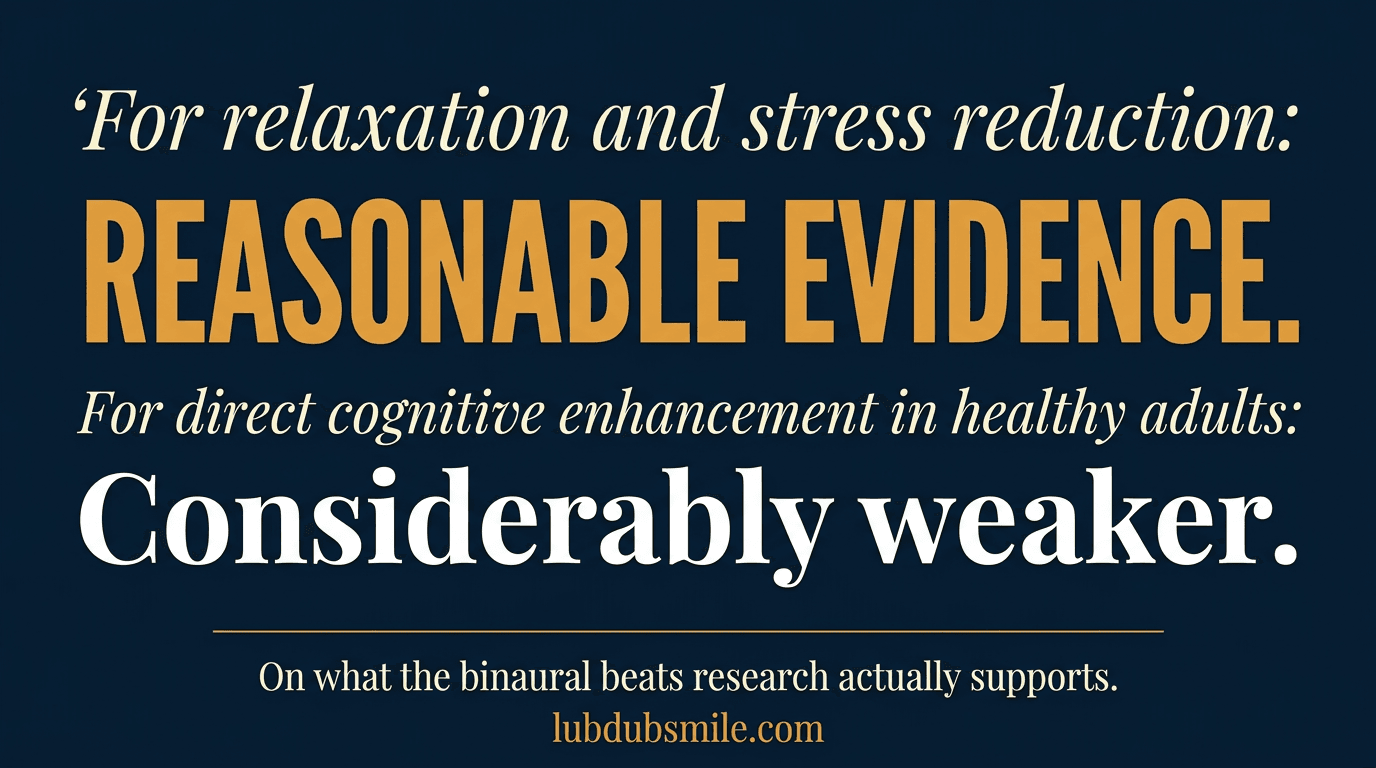
Research published in Psychological Research found that binaural beats in the alpha frequency range improved attention task performance in some participants under some conditions. Research published in Frontiers in Human Neuroscience found effects on memory consolidation under specific conditions. These findings are real. They are also considerably more modest, condition-specific, and inconsistently replicated than the commercial applications built on them suggest.
Where the evidence is most consistent: binaural beats at delta and theta frequencies show reasonable support for sleep onset facilitation and anxiety reduction. Where the evidence is weakest: specific cognitive enhancement claims tied to specific frequency ranges for healthy adults. Adults exploring these tools may find an honest comparison of meditation apps useful for understanding which audio platforms provide the most evidence-aligned experience.
Do Binaural Beats Actually Improve Cognitive Function?
The honest answer requires separating what “cognitive function” means in this context. If relaxation and reduced anxiety indirectly support cognitive performance through reduced cortisol, improved attentional capacity, and better sleep quality then binaural beats may contribute to cognitive function through this indirect pathway with reasonable evidence behind it.
If “improve cognitive function” means directly enhancing memory encoding, processing speed, or executive function in healthy adults through frequency entrainment, the evidence is considerably weaker, more variable, and more preliminary than most products in this space acknowledge. Individual responses vary significantly. Expectation effects are substantial. The specific frequency-outcome claims that dominate marketing “432Hz improves creativity,” “40Hz enhances focus” researchers have not robustly supported in clinical evidence.
The Frequency Ranges and What Each Is Claimed to Do
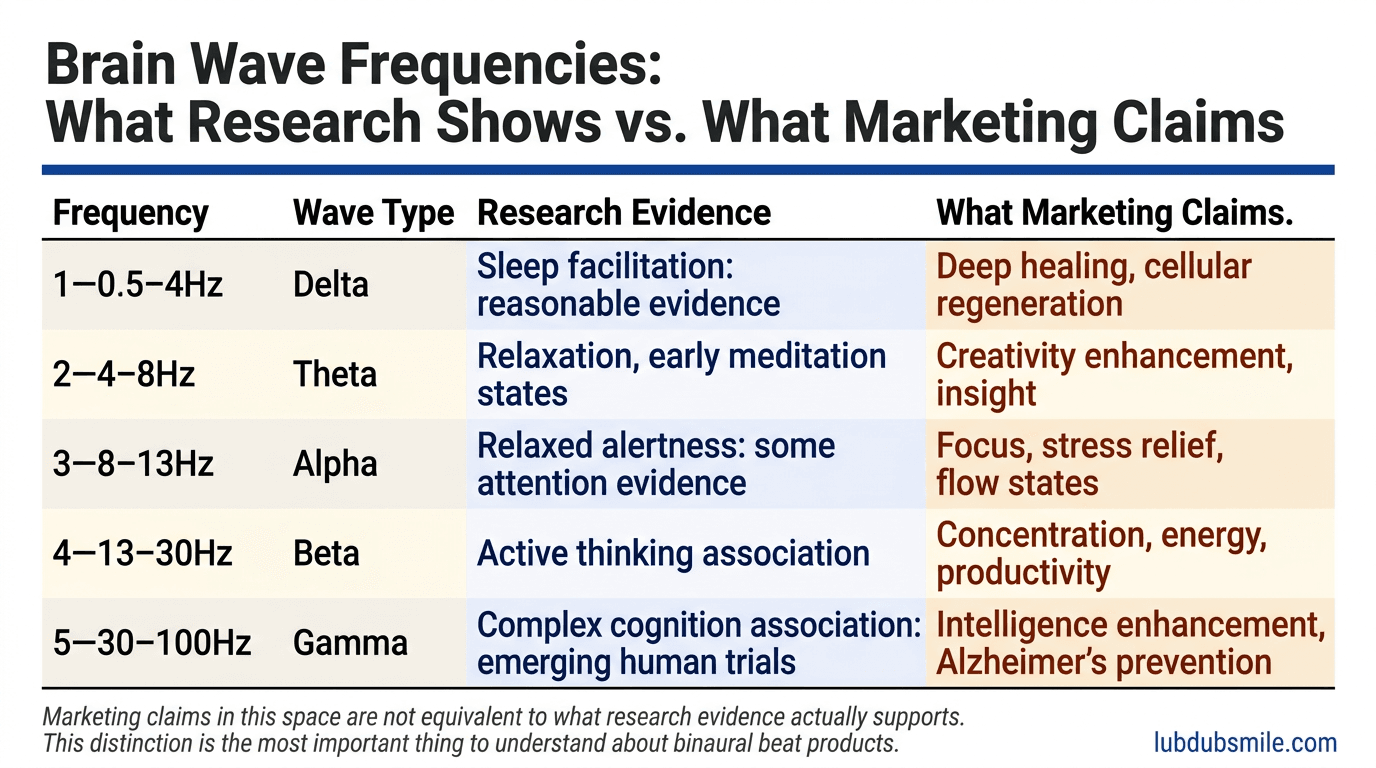
The marketing claims in the right column are not equivalent to what the research in the middle column actually supports. This distinction is the single most important thing to understand about binaural beat products.
Safety Considerations Including Epilepsy Risk
Adults with epilepsy or seizure disorders should not use binaural beats or other audio entrainment tools without medical consultation. Rhythmic auditory stimulation can trigger seizures in susceptible individuals through auditory driving mechanisms. Adults with significant psychiatric conditions, including schizophrenia and bipolar disorder, should consult healthcare providers before using audio entrainment tools.
Individuals with hearing impairment affecting one ear should understand that binaural beats require both ears and may not produce the intended effect with hearing asymmetry. Adults who experience anxiety, depersonalization, or unusual perceptual experiences while using audio entrainment should discontinue use and consult a healthcare provider.
For adults over 40 with no neurological or psychiatric history and no seizure history, binaural beats at moderate volumes through quality headphones carry minimal direct physical risk. The more significant risk in this population is the opportunity cost of substituting audio tools for foundational cognitive health practices with stronger evidence. Sleep hygiene practices carry stronger evidence for cognitive function than most audio entrainment tools and are a more appropriate starting point for adults with sleep-related cognitive concerns.
Honest Assessment: Potentially Useful, Often Overstated
Binaural beats occupy a reasonable place in a cognitive health toolkit when you use them for what the evidence actually supports: relaxation, stress reduction, anxiety management, and sleep onset facilitation. They do not occupy the place the marketing assigns them: direct cognitive enhancement tools producing specific cognitive outcomes from specific frequency exposures.
Neurofeedback: The Most Evidence-Supported Tool in This Category
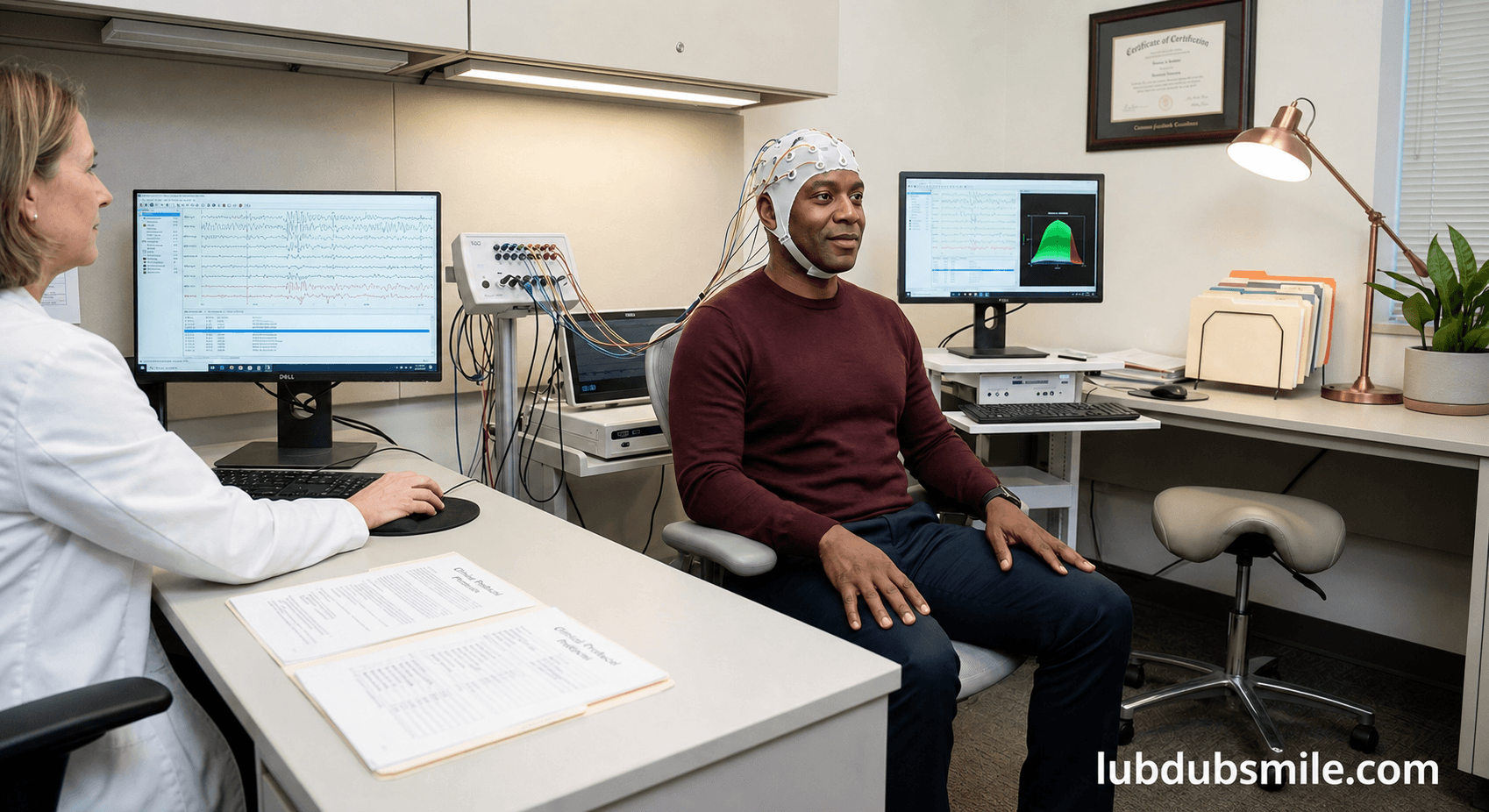
What Neurofeedback Actually Is
Neurofeedback is a biofeedback modality in which real-time EEG measurement of a person’s brain wave activity provides feedback typically visual or auditory that the person uses to learn to regulate their own neural oscillatory patterns. Clinical neurofeedback involves a trained practitioner, clinical-grade EEG equipment, individualized protocol development, and typically 20 to 40 sessions.
Consumer neurofeedback devices headbands and apps that use simplified EEG sensors to provide relaxation feedback operate very differently. Consumer devices measure a fraction of what clinical EEG measures, use simplified algorithms, and lack the individualized protocol development that characterizes clinical neurofeedback. Evidence does not support the assumption that consumer devices provide effects equivalent to clinical neurofeedback.
The Evidence Base for Neurofeedback
Neurofeedback has the strongest evidence base of any tool in this category. The evidence is strongest for ADHD, where multiple randomized controlled trials and meta-analyses documented effects on attention and impulsivity that compare reasonably with behavioral interventions. Researchers continue debating the evidence in terms of effect sizes and comparison to medication.
The Association for Applied Psychophysiology and Biofeedback rates neurofeedback as “probably efficacious” for ADHD based on accumulated evidence. This is a meaningful endorsement from a professional organization with evidence standards though not equivalent to FDA approval or the evidence levels behind established pharmacological treatments.
Is Neurofeedback Worth the Cost for Cognitive Support?
For adults over 40 with ADHD diagnoses or significant attention difficulties affecting daily functioning, clinical neurofeedback has a reasonable evidence base that justifies consideration particularly when patients do not prefer or tolerate medication well. For adults without specific diagnoses seeking general cognitive enhancement, the evidence is considerably weaker. A full clinical neurofeedback course typically costs $2,000 to $8,000 a substantial investment for uncertain return in non-clinical populations.
Adults with significant cognitive concerns should consult healthcare providers rather than self-directing into neurofeedback as a first response. Understanding when to seek professional mental health support helps establish the appropriate boundary between self-directed cognitive tools and professional evaluation.
Specific Applications With Reasonable Evidence
Beyond ADHD, neurofeedback has accumulated reasonable evidence for anxiety reduction, peak performance training in athletes and musicians, and adjunct treatment for some sleep disturbances. The anxiety evidence parallels the binaural beats relaxation findings both modalities show consistent effects on arousal regulation, with less consistent evidence for direct cognitive enhancement in non-clinical populations.
Clinical neurofeedback for age-related cognitive decline specifically remains an area where evidence is emerging rather than established. Some studies show promising results for memory and attention in older adults, but the research has not yet reached the level that would justify neurofeedback as a standard cognitive decline prevention tool.
Clinical Neurofeedback vs. Consumer Devices
The distinction between clinical and consumer neurofeedback deserves clear statement: these are not equivalent products at different price points. Clinical neurofeedback involves individualized assessment, protocol development, real-time EEG monitoring with clinical-grade equipment, practitioner interpretation, and session-by-session protocol adjustment based on individual response patterns. Consumer devices provide simplified feedback based on crude EEG proxies, with no individualized protocol, no practitioner oversight, and no adjustment based on clinical response. Adults evaluating neurofeedback should apply this distinction consistently.
Gamma Frequency Stimulation: Emerging Research Worth Watching
What Does the Research on Gamma Frequency Stimulation Actually Show?
The MIT Picower Institute research led by neuroscientist Li-Huei Tsai is the most genuinely interesting and carefully reported research in audio-adjacent cognitive support. The core finding: exposing mice with Alzheimer’s-like pathology to 40Hz flickering light and sound stimulation reduced amyloid plaques and tau tangles, improved memory performance on behavioral tests, and appeared to engage brain immune cells in clearing pathological proteins.
This is a genuinely significant finding in mice. The leap from “this worked in mouse models of Alzheimer’s” to “40Hz audio products treat or prevent Alzheimer’s in humans” is the precise gap between legitimate science and pseudoscientific marketing that this article clarifies.
Human trials are underway. Preliminary results are cautiously encouraging. Some studies reported improvements in cognitive measures in early Alzheimer’s patients following gamma stimulation protocols. Human results remain early, effect sizes are uncertain, researchers have not fully established the mechanisms in humans, and the gamma stimulation used in research involves carefully calibrated combinations of light and sound delivered under controlled conditions.
The Gap Between Research Findings and Commercial Products
The gamma frequency space illustrates the research-to-marketing gap with particular clarity. The MIT research generated substantial commercial exploitation. Products claiming to “replicate” the Tsai lab protocols appear throughout the consumer market, citing animal research and preliminary human findings as clinical validation of consumer product effectiveness.
The actual Tsai lab protocols involve specific timing, specific intensity calibration, specific combinations of light and sound stimulation, and controlled conditions. Consumer audio products do not replicate these conditions. Buying a “40Hz binaural beats” audio file and expecting the cellular clearance effects researchers observed in mouse models is not a conclusion the research supports.
What the gamma research does suggest legitimately: 40Hz stimulation is worth watching closely as human trials mature. Among the more interesting emerging areas in cognitive neuroscience, researchers should not act on it prematurely through commercial products whose relationship to the actual science is nominal at best.
Music, Cognitive Function, and Evidence-Based Applications
The Mozart Effect: What Research Actually Found
The “Mozart Effect” is perhaps the most famous example of legitimate research that popular culture comprehensively misrepresented. The original 1993 study by Rauscher, Shaw, and Ky found that college students who listened to Mozart for 10 minutes performed better on spatial reasoning tasks for approximately 15 minutes afterward compared to students who sat in silence or listened to relaxation tapes.
What the research found: a temporary, modest improvement in one type of spatial reasoning task in college students. What popular culture concluded: classical music makes people smarter. The commercial market then built an entire industry of infant Mozart products claiming to enhance intelligence none of which the original research supported, in infants or otherwise.
The Mozart Effect replication record is mixed. Some studies replicate short-term spatial reasoning improvements; many do not. The effect, when it appears, likely reflects arousal and mood effects rather than specific Mozart properties. The practical implication for adults over 40 is minimal beyond what any engaging, enjoyable auditory experience provides.
Music Therapy and Cognitive Function in Aging Adults
Music therapy a clinical discipline involving trained music therapists using music systematically to address therapeutic goals has a more robust evidence base for specific populations than general music listening. For adults with dementia, music therapy shows consistent evidence for improved mood, reduced agitation, and maintenance of some cognitive and communicative functions. For healthy aging adults, active music engagement learning to play an instrument, participating in group music-making shows evidence for cognitive stimulation effects that passive listening does not replicate.
The distinction between active and passive musical engagement matters significantly for cognitive function. Learning to play piano at 55 provides genuine cognitive stimulation through motor learning, auditory processing, and sustained attention demands. Listening to relaxing music in the background potentially benefits stress reduction and mood, but does not provide equivalent cognitive engagement. Adults exploring morning routines for wellbeing might consider incorporating active musical practice as a cognitively richer alternative to passive background listening.
Background Music and Cognitive Performance
Research on background music and cognitive performance shows strongly context-dependent results. The optimal stimulation framework suggests that background music enhances performance on tasks researchers consider boring or understimulating, but impairs performance on tasks requiring significant cognitive resources. Introverts and extroverts respond differently. Task type matters enormously music helps repetitive tasks; music hurts complex problem-solving.
For adults over 40 using background music for cognitive performance, the practical guidance from this research is specific. Background music may support sustained engagement with repetitive or moderately demanding tasks. It likely impairs performance on tasks requiring significant working memory or complex reasoning. Adjusting musical environment to task demands, rather than assuming music universally enhances performance, reflects what the evidence actually supports.
Sound-Based Stress Reduction and Cognitive Benefits
How Chronic Stress Impairs Cognitive Function After 40
Sustained cortisol elevation from chronic stress directly damages hippocampal volume over time researchers can measure this on brain imaging in chronically stressed adults. The hippocampus is the brain structure most directly involved in forming new memories and consolidating information from working memory to long-term storage.
Adults who successfully reduce chronic stress through evidence-based approaches protect cognitive function through a mechanism with substantially stronger evidence than direct audio cognitive enhancement claims. This indirect pathway deserves more emphasis than it typically receives in audio cognitive tool discussions, precisely because the evidence for it is considerably stronger than evidence for direct frequency-based cognitive enhancement.
Mindfulness Meditation With Audio Support: Legitimate Evidence
Mindfulness meditation has accumulated a substantial evidence base for stress reduction, anxiety management, and cognitive function support through stress pathway mechanisms. NIH research on mindfulness and cognitive aging supports mindfulness practice as a component of healthy cognitive aging, though evidence for direct cognitive enhancement beyond stress-related pathways remains more modest.
Audio-guided mindfulness meditation represents one of the more evidence-aligned applications of audio tools for cognitive support. The audio component serves as a scaffold for meditation practice guiding attention, cuing breath awareness, providing structure for beginners. The cognitive benefit comes from the meditation practice; the audio enables and supports it. The audio is a delivery vehicle, not the active mechanism. Building emotional regulation skills through practices like mindfulness meditation provides durable cognitive support that no passive audio listening replicates.
Nature Sounds and Attention Restoration Theory
Attention Restoration Theory, developed by psychologists Rachel and Stephen Kaplan, proposes that natural environments support recovery from directed attention fatigue by engaging involuntary attention through what they call “soft fascination.” Urban noise and demanding cognitive environments deplete directed attentional resources; natural environments allow them to restore.
Research on nature sounds supports modest attention restoration effects. Studies found that listening to natural soundscapes reduces cortisol, lowers blood pressure, and improves performance on attention tasks after cognitively fatiguing work ends. The effects are real and documented. They are also relatively modest and operate primarily through stress recovery mechanisms rather than direct cognitive enhancement. Adults integrating micro-moments of calm into demanding workdays may find nature soundscapes a practical attention restoration tool with modest but genuine evidence behind them.
What Doesn’t Have Evidence Despite Marketing Claims
“Brainwave Synchronization” Products With Weak Evidence
A large category of audio cognitive products promises to synchronize brain waves to specific frequencies for specific outcomes: creativity at theta, productivity at beta, enlightenment at gamma. The evidence base for these specific outcome-frequency relationships in healthy adults is substantially weaker than the marketing presents.
Brain wave patterns are dynamic, individual, and context-dependent. The idea that you can reliably drive a specific brain wave state through audio exposure and that this state will reliably produce the promised cognitive outcome involves multiple assumptions current research does not adequately support. Researchers have documented some entrainment effects. Specific cognitive outcome production through particular frequency targeting is considerably less established than the marketing implies.
Subliminal Audio for Cognitive Enhancement
Subliminal audio products claiming to embed cognitive enhancement suggestions below conscious auditory perception lack credible scientific support for cognitive enhancement claims. The scientific consensus on subliminal auditory messaging: while very brief subliminal stimuli can influence simple perceptual and attitude measures under controlled laboratory conditions, independent research does not support the robust cognitive enhancement effects subliminal audio products claim.
How to Identify Pseudoscientific Audio Products
Red flags that reliably signal pseudoscientific audio cognitive products include:
- Specific outcome guarantees: “This frequency will improve your memory by X%”
- Animal research cited as human evidence: “Studies show 40Hz reduces Alzheimer’s plaques”
- Testimonials as primary evidence: User reports substituting for controlled research
- Proprietary frequency claims: “Our exclusive 432Hz tuning activates DNA”
- Quantum or quantum-adjacent language: Quantum coherence, quantum consciousness, quantum healing
- No peer-reviewed citations: Or citations that do not support the claims made
- Mechanism specificity without evidence: Detailed mechanistic explanations without clinical validation
- Before/after cognitive performance claims: Without controlled comparison conditions
The Foundation That Audio Tools Support, Not Replace
Sleep: The Strongest Audio-Supported Cognitive Intervention
Of all audio-supported pathways to cognitive function, sleep support carries the strongest evidence. Chronic sleep deprivation and poor sleep quality directly impair memory consolidation, executive function, and processing speed in ways researchers have well established and measured in dose-dependent fashion.
Audio tools that genuinely improve sleep quality through relaxation facilitation, background noise masking, or sleep onset support provide cognitive benefit through a mechanism with exceptionally strong evidence behind it. Delta-range binaural beats for sleep onset, nature sounds for sleep environment optimization, and audio-guided relaxation for sleep quality improvement represent the most defensible audio-supported cognitive interventions available. Healthy aging research in your 40s and beyond consistently identifies sleep optimization as among the highest-leverage cognitive health investments adults can make.
Exercise as Primary Cognitive Health Intervention
No audio tool approaches the cognitive benefit evidence behind regular aerobic exercise. Exercise increases brain-derived neurotrophic factor (BDNF), supports hippocampal neurogenesis, reduces inflammatory markers researchers implicate in cognitive decline, and improves sleep quality addressing multiple cognitive health pathways simultaneously with evidence that dwarfs anything in the audio cognitive tool literature.

Adults over 40 building cognitive health protocols should understand that 30 minutes of moderate aerobic exercise three to four times per week produces cognitive benefits that no audio tool replicates or approximates. Audio tools used during exercise motivating music, engaging podcasts may support exercise adherence, providing cognitive benefit through that mechanism. That is among the most cognitively impactful audio applications available. Considering morning versus evening workout timing alongside audio support strategies can help adults build the exercise habits that deliver the strongest cognitive returns.
Social Engagement and Cognitive Reserve
Social engagement represents another primary cognitive health intervention with substantially stronger evidence than any audio tool. Maintaining rich, challenging social relationships builds cognitive reserve the brain’s resilience against age-related cognitive decline through mechanisms involving complex language processing, emotional regulation, perspective-taking, and sustained attentional demands.
Audio tools do not replicate social cognitive engagement. A stimulating conversation with a friend or colleague activates cognitive systems that passive audio listening does not touch. Adults building comprehensive cognitive health protocols should position audio tools as adjuncts to social engagement, not substitutes for it.
Where Audio Tools Fit in Comprehensive Cognitive Health
Audio tools fit appropriately in a comprehensive cognitive health approach as adjunct supports to evidence-based primary interventions not as replacements for them. The hierarchy is clear:
Primary interventions (strong evidence): Regular aerobic exercise, adequate sleep (7 to 9 hours), social engagement, cognitively stimulating activities, stress management, cardiovascular health management, and nutritional adequacy.
Secondary supports (moderate evidence): Mindfulness practice, structured cognitive training, learning new complex skills such as musical instruments or languages, and regular preventive health monitoring.
Adjunct tools (emerging to modest evidence): Audio relaxation for stress reduction and sleep support, binaural beats for anxiety management, clinical neurofeedback for specific indications, and audio-guided meditation as a meditation scaffold.
Understanding this hierarchy prevents the most common misuse of audio cognitive tools: substituting a low-evidence adjunct for a high-evidence primary intervention because the adjunct feels more novel, accessible, or technologically appealing. Cellular health after 40 research reinforces this hierarchy foundational biological health interventions produce cognitive benefits that targeted audio tools cannot match.
Practical Guidance for Adults Over 40
Starting With What Has the Strongest Evidence
For adults over 40 wanting to use audio tools as part of a cognitive health approach, start with the applications carrying the strongest evidence and clearest mechanisms:
Sleep optimization: Use delta-range or nature sound audio for sleep onset if you experience sleep initiation difficulties. The cognitive benefit comes through sleep quality improvement, which carries overwhelming evidence for cognitive function.
Stress management: Use audio-guided mindfulness meditation, nature soundscapes, or binaural beats at delta or theta frequencies for relaxation and stress reduction. The evidence for relaxation effects is reasonable, and the cognitive benefits through stress reduction pathways are real.
Exercise accompaniment: Use music you find motivating and enjoyable during aerobic exercise. This supports exercise adherence, and exercise is the highest-evidence cognitive intervention available.
Learning engagement: Consider learning to play a musical instrument rather than passively listening. Active musical learning provides genuine cognitive stimulation that passive audio exposure does not replicate.
How to Trial Audio Tools Responsibly
Adults who want to evaluate audio tools for themselves should approach trials with genuine rigor. Define what you are trying to improve specifically before starting. Track relevant outcomes consistently sleep quality, stress levels, attention duration on specific tasks using measures that would capture real change rather than general impression. Use tools for a defined trial period of four to eight weeks. Compare outcomes honestly to your baseline.
Other factors might explain improvements you observe better sleep routine, reduced stress from regular practice, placebo response, or natural variation alongside or instead of the specific audio mechanism. Be particularly cautious about attributing changes to specific audio mechanisms without eliminating these alternatives. Screen time management and digital balance practices often produce cognitive improvements that people incorrectly attribute to cognitive tools they began simultaneously.
Red Flags in Audio Cognitive Tool Marketing
When evaluating audio cognitive tool products, marketing language reliably signals the evidence quality behind the product. Products that describe specific mechanisms in confident clinical language while citing animal research as human evidence, guarantee specific cognitive outcomes from specific frequency ranges, and rely primarily on testimonials and neuroscience-adjacent terminology rather than peer-reviewed human trials are operating considerably ahead of the evidence that supports them.
Regulators have not applied requirements to this market that would force marketing claims to align with evidence. Adults over 40 making purchasing and usage decisions in this space are essentially self-regulating. The evidence hierarchy, the distinction between animal and human research, and the specific red flags enumerated above are the practical tools for that self-regulation.
When to Prioritize Medical Evaluation Over Audio Tools
Several cognitive changes warrant medical evaluation before and regardless of any audio tool exploration. Progressive memory changes that affect daily functioning forgetting appointments, repeating questions, getting lost in familiar places require clinical assessment. Sudden cognitive changes, particularly changes in personality, language, or spatial function, require urgent medical evaluation. Cognitive changes accompanied by other neurological symptoms headaches, vision changes, balance problems require prompt medical attention.
Audio tools provide no diagnostic information. They cannot distinguish normal age-related cognitive slowing from early pathological processes, medication side effects, sleep disorders, thyroid dysfunction, depression, or other treatable conditions that present as cognitive symptoms. Adults who use audio tools instead of seeking medical evaluation for concerning cognitive changes risk delaying diagnosis and treatment of conditions that respond to intervention. Preventive health screenings by age provide the clinical baseline that no audio cognitive tool can replace.
Frequently Asked Questions
Do binaural beats actually improve cognitive function?
The evidence is more modest than the marketing suggests. Binaural beats show consistent evidence for relaxation and anxiety reduction, which may support cognitive function indirectly through stress reduction and sleep quality improvement. Direct evidence for cognitive enhancement in healthy adults is considerably weaker, more variable across studies, and less consistently replicated than commercial products imply. Individual responses vary significantly. Use binaural beats for relaxation support with reasonable confidence; approach direct cognitive enhancement claims with considerably more skepticism.
Is neurofeedback worth the cost for cognitive support?
It depends significantly on your specific situation. For adults with ADHD diagnoses or significant attention difficulties, clinical neurofeedback has a reasonable evidence base that may justify the cost, particularly when patients do not prefer or tolerate medication. For adults without specific diagnoses seeking general cognitive enhancement, the evidence is weaker and a full clinical course typically $2,000 to $8,000 represents a substantial investment for uncertain return. Consumer neurofeedback devices do not provide equivalent effects to clinical neurofeedback and should not be evaluated as if they do.
What are the safest audio tools for adults with no neurological history?
Audio-guided meditation, nature soundscapes, and music listening carry minimal direct risk for adults with no neurological or psychiatric history. Binaural beats at moderate volumes through quality headphones carry low direct risk for this population. The primary risk is not physical but rather the opportunity cost of substituting low-evidence audio tools for high-evidence primary cognitive health interventions like exercise, sleep optimization, and stress management. Adults with epilepsy, seizure disorders, significant psychiatric conditions, or significant neurological history should consult healthcare providers before using audio entrainment tools.
Can audio tools help with age-related memory concerns?
Audio tools may provide modest indirect support through stress reduction and sleep quality improvement both of which meaningfully affect memory function. They do not directly treat or reverse age-related memory changes. Adults experiencing memory concerns that affect daily functioning should prioritize medical evaluation to identify any treatable contributing factors sleep disorders, thyroid dysfunction, depression, medication effects, and cardiovascular risk factors all influence memory and respond to appropriate medical care. Audio tools do not substitute for this evaluation.
When should I see a doctor instead of trying audio tools?
Seek medical evaluation before trying audio tools if your cognitive concerns are progressive, functionally disruptive, or accompanied by other symptoms. Progressive memory changes, sudden cognitive changes, and cognitive changes affecting your ability to work, manage finances, or navigate familiar environments all require medical attention. Audio tools address none of the treatable conditions that may underlie these symptoms. Use audio tools as a complement to evidence-based care, not as an alternative to it. If you are uncertain whether your cognitive changes warrant medical evaluation, the answer is almost always yes.
Evidence Summary and Medical Guidance
What Current Evidence Supports
The honest summary of what audio-based cognitive support evidence actually supports is considerably more modest than the market suggests and considerably more useful than blanket dismissal of the entire category:
Reasonable evidence: Audio relaxation tools for stress reduction and sleep quality improvement; clinical neurofeedback for ADHD and anxiety in clinical populations; music therapy for mood and behavioral function in dementia; mindfulness meditation with audio support for stress and anxiety.
Emerging evidence worth watching: Gamma frequency stimulation for Alzheimer’s pathology. The MIT research is genuinely interesting; human trial results are preliminary and warrant monitoring as they mature.
Weak or absent evidence: Specific frequency-to-cognitive-outcome claims in healthy adults; subliminal audio for cognitive enhancement; most consumer brain optimization audio products; consumer neurofeedback devices as equivalent to clinical neurofeedback.
What to Approach With Skepticism
The marketing apparatus in this space has substantially outpaced the research. Approach with significant skepticism any product claiming specific cognitive outcomes from specific frequency exposures; any product citing animal research as human clinical evidence; any product claiming to replicate MIT gamma research through consumer audio; any product promising cognitive enhancement without peer-reviewed human trial evidence.
Skepticism here is not the same as dismissal. Some audio tools have genuine, if modest, evidence behind them. Maintaining this distinction allows you to benefit from what carries reasonable support while avoiding the waste and potential opportunity cost of tools that operate primarily on neuroscience-adjacent marketing.
When Medical Evaluation Is the Right First Step
Adults over 40 should treat significant cognitive concerns as medical matters first and self-optimization opportunities second. Medical evaluation can identify sleep disorders masquerading as cognitive decline. It can identify depression one of the most common and treatable causes of cognitive symptoms in midlife. It can identify thyroid dysfunction, B12 deficiency, medication effects, and cardiovascular risk factors that directly affect cognitive function and respond to appropriate treatment.
Audio tools cannot identify any of these conditions. They cannot distinguish normal aging from early pathological processes. They cannot replace the clinical judgment that determines whether cognitive changes require urgent attention, watchful monitoring, or lifestyle optimization. Adults who pursue audio tools while deferring medical evaluation of concerning cognitive symptoms risk delayed diagnosis of treatable conditions.
How This Field May Evolve
The most intellectually honest prediction: this field will develop in ways that increase the distinction between evidence-based and pseudoscientific approaches rather than validating the current market broadly. The gamma frequency research will either demonstrate meaningful human effects as trials mature which would justify considerably more clinical attention or fail to replicate robustly in humans, as many animal-model findings do. Neurofeedback evidence will continue accumulating, likely clarifying which populations and protocols produce the most reliable effects. Binaural beats research will continue producing mixed findings that support relaxation applications and challenge cognitive enhancement claims.
Adults over 40 who maintain honest, evidence-calibrated engagement with this space neither dismissing all audio tools nor accepting all marketing claims will benefit appropriately from genuinely supported applications and update their approach as evidence develops.
Summary
Audio tools support stress and sleep management well; the cognitive enhancement claims in their marketing are not well supported.
This article provides educational information about audio-based cognitive tools for general health-conscious adults. It is not medical advice. Adults experiencing cognitive changes, memory problems, or neurological symptoms should consult healthcare providers not audio-based tools as first-line response. Only qualified healthcare providers can evaluate cognitive health concerns appropriately.
Certain audio-based tools, particularly binaural beats and brain entrainment technologies, carry specific risks for individuals with epilepsy, seizure disorders, or certain mental health conditions. Consult healthcare providers before using these tools if you have any neurological or psychiatric conditions.
The research on audio-based cognitive tools ranges from emerging to preliminary to non-existent. This article distinguishes between different evidence quality levels; readers should approach marketing claims in this space with significant skepticism.
This content is for educational purposes and does not substitute for professional psychological or therapeutic help.